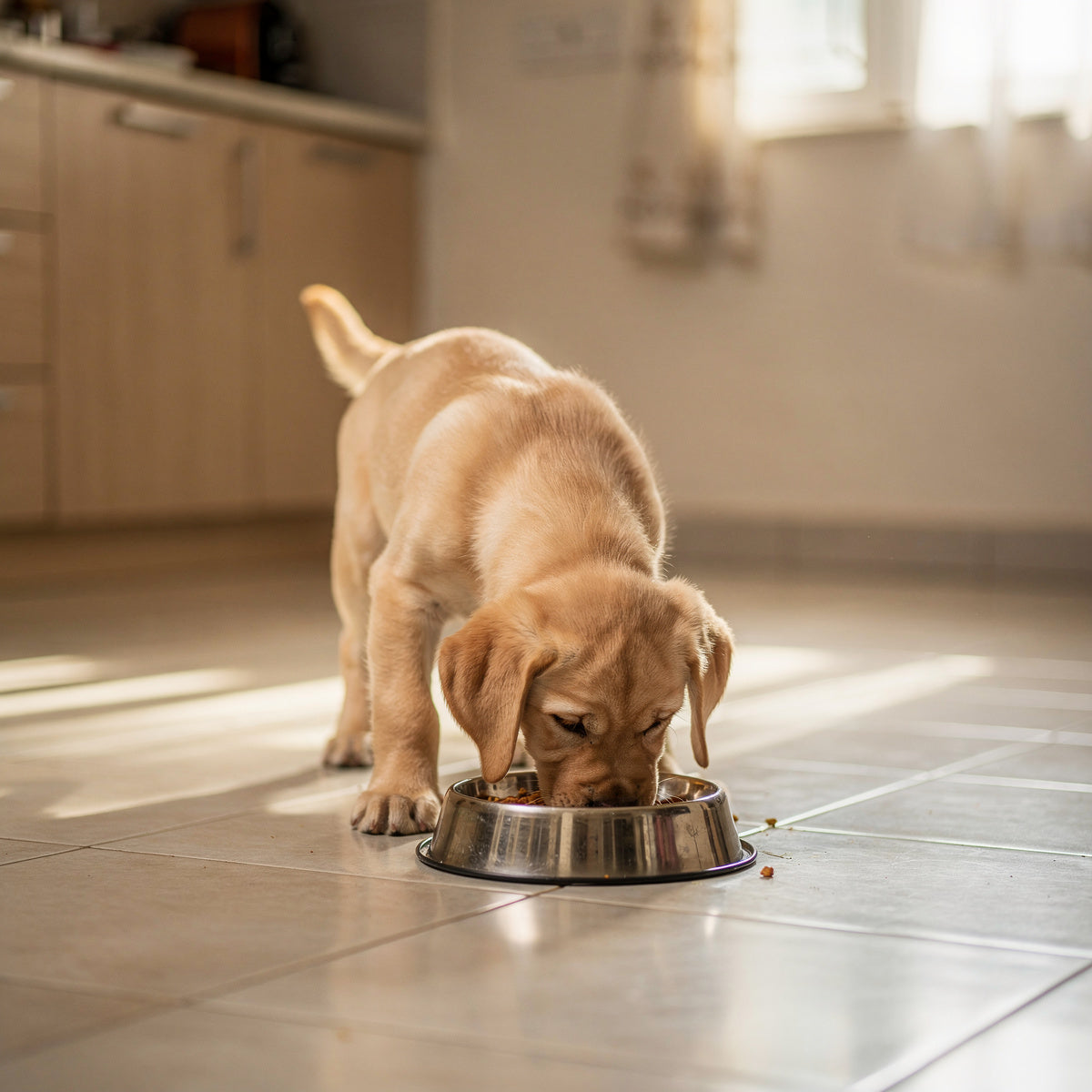
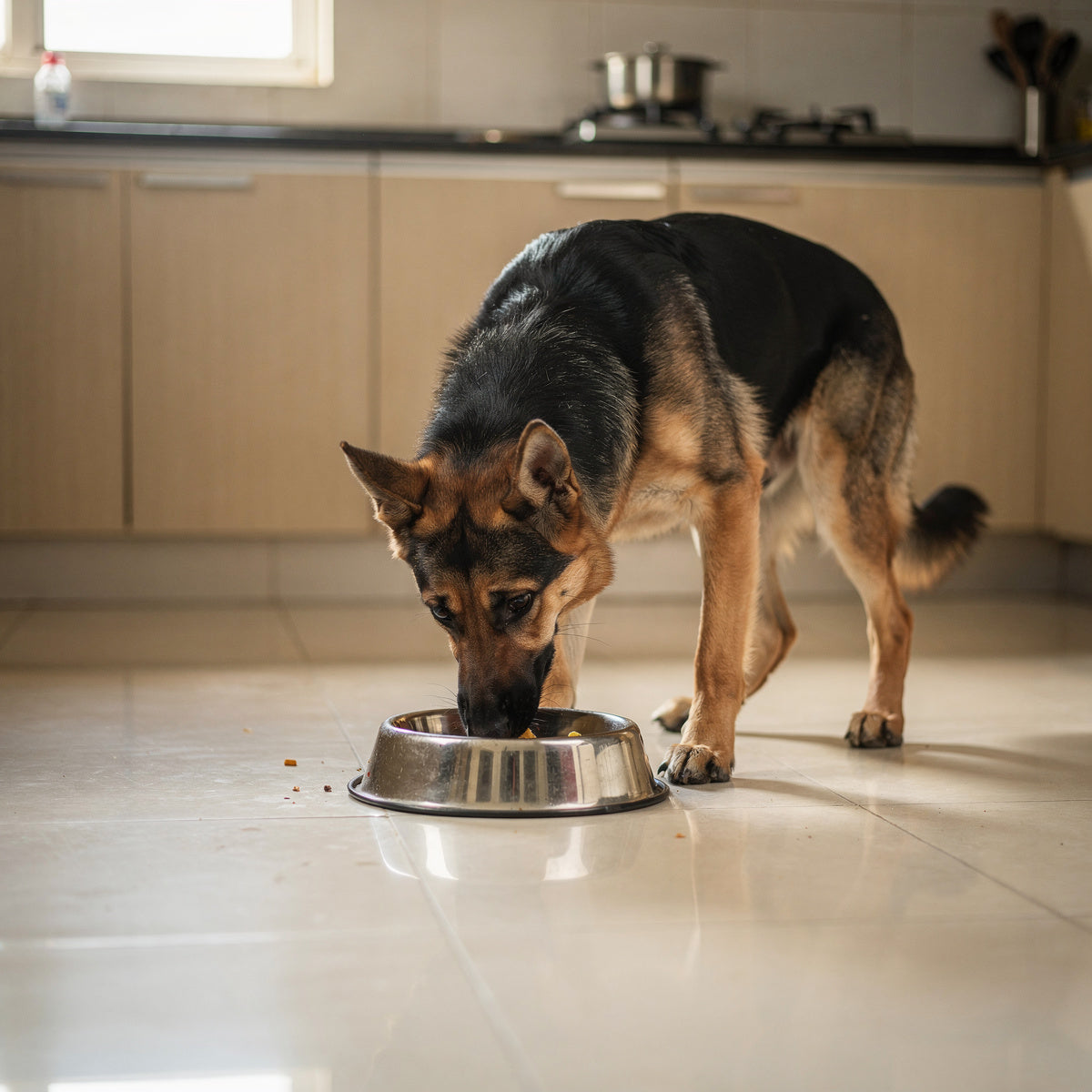
How to Switch Your Dog's Food Without Stomach Trouble
Switching your dog to a new food doesn't have to mean three days of digestive chaos. Here's the exact approach our Gachibowli team recommends for a smooth, stress-free diet transition.
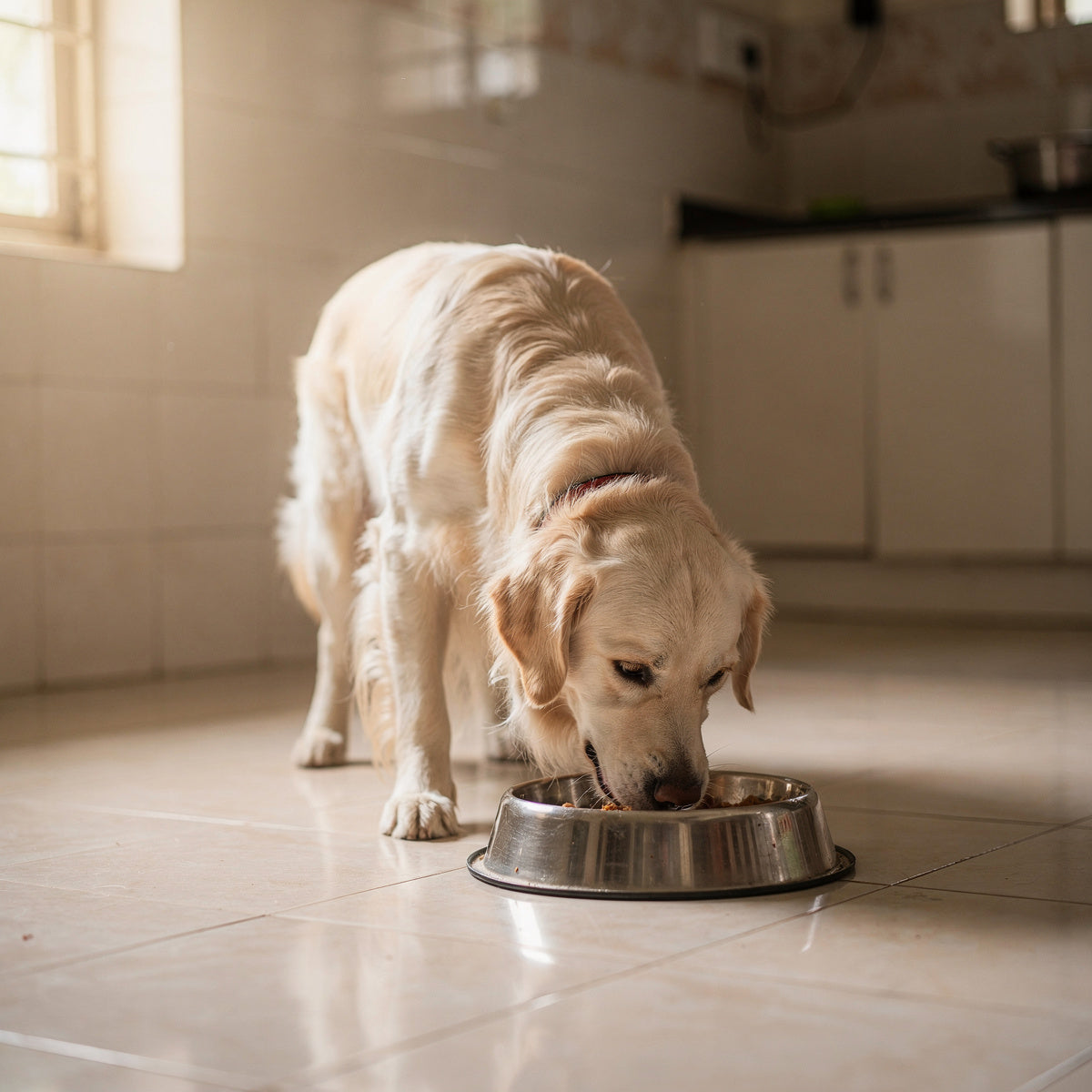
Switching your dog's food seems straightforward until your dog spends the next two days with an upset stomach and you're questioning every decision you've made. We hear this story regularly at our store in Gachibowli. Someone picks up a better kibble, excited to upgrade their dog's diet, swaps it in overnight, and by day two their dog is refusing the bowl or having loose stools. Not a failure on your part — just a process that needs a little more patience than most people expect.
Whether you're moving from a budget kibble to something grain-free, switching from dry food to wet, or transitioning a puppy onto adult food, the approach is basically the same. Slow and steady. Your dog's gut bacteria need time to adjust to new ingredients, and skipping that adjustment window is what causes all the drama.
Why does switching dog food cause digestive issues?
Your dog's digestive system is built around whatever it's been eating. The gut bacteria, the enzyme production, the pace of digestion — all of it calibrates to the current diet over time. When you introduce a new food with different protein sources, fat levels, or fibre content, the system needs time to recalibrate. Think of it less like swapping one similar product for another and more like moving your dog's internal machinery from one operating mode to another. Do it gradually and the machinery adjusts. Do it overnight and things get chaotic.
Hyderabad's heat is also worth keeping in mind. During summer, dogs already tend to have slightly more sensitive digestion — we notice more customers coming in with queries about loose stools during April and May specifically. If you're planning a diet switch, doing it during cooler months or at least keeping your dog well-hydrated makes the process easier on their system.
The 10-day switching dog food schedule that actually works
There's nothing magic about the number, but a 10-day transition gives most dogs enough time to adjust without any serious digestive complaints. Here's how we recommend structuring it:
For the first three days, keep 75% of the old food and add 25% of the new one to the bowl. Your dog may sniff around the new bits, eat selectively, or wolf the whole thing down. Either reaction is fine at this stage. Days four through six, move to a 50-50 split. This is often where you'll notice any early signs of sensitivity — softer stools, slightly gassy behaviour, or mild reluctance to eat. If that happens, don't panic. Just hold the 50-50 ratio for an extra two days before moving forward. Days seven through nine, flip to 75% new food and 25% old. By day ten, you're feeding the new food completely.
If you're transitioning a senior dog, a dog with a known sensitive stomach, or one that's been on the same food for years, stretch the whole process to 14 days. It costs you nothing but time, and it makes a real difference for dogs whose systems are slower to adapt.
What should you watch for during the transition?
You don't need to obsessively track everything, but a few things are worth paying attention to. Stool quality is the clearest signal — you're looking for formed, consistent stools. Some softening on the first few days of each phase is normal. Liquid diarrhoea, blood in the stool, or vomiting are not normal and mean you should stop the transition and call your vet.
Energy levels matter too. A dog that goes noticeably flat or refuses to eat for more than a day or two during the switch is telling you something. We had a customer last month with a 4-year-old Indie mix who started the switch to a high-protein adult kibble and became unusually lethargic by day five. Turned out the new food had a significantly higher fat content than what she'd been eating, and her system was struggling. They slowed down, stretched to a 14-day schedule, and she finished the transition without any further problems.
Coat condition and appetite are secondary things to notice over the first few weeks post-switch. A good quality food should show results in your dog's coat within three to four weeks — less itching, more shine, less shedding in extreme cases. If you're not seeing any improvement after a month, the food might not be the right fit for your dog specifically, regardless of how premium it is.
Does meal timing matter when you're changing dog food?
Yes, more than people realise. Consistency in feeding times gives your dog's body a predictable rhythm — stomach acid production, appetite signals, digestive readiness all follow a schedule. When you're already asking the gut to adapt to new ingredients, throwing irregular meal times into the mix makes the whole thing harder. Feed at the same times every day during the transition. Morning and evening, or whatever your routine is, just keep it consistent.
Also, avoid free-feeding during a food switch. Controlled portions at set times let you actually notice whether your dog is eating well and allow you to track stool output accurately. A dog grazing from a constantly topped-up bowl gives you almost no useful information about how the transition is going. Browse our bowls and feeders collection if you're looking for something that makes portioned feeding a bit easier to manage.
Choosing the right food to switch to in the first place
We'll be honest — this part matters more than the transition technique itself. No amount of careful transitioning will help if the new food isn't suited to your dog. A few things to check before you commit to a bag:
Look at the first three ingredients. In a good quality kibble, those should be named animal proteins — chicken, lamb, fish, egg. If corn, maize, or soy derivatives lead the list, the protein quality is lower regardless of what the packaging says. For dogs with joint issues, look for added glucosamine. For puppies under 12 months, make sure the food is specifically formulated for growth — adult food simply doesn't have the right calcium-to-phosphorus ratio for developing bones.
Indian pet parents often ask about vegetarian dog food, especially in households where the owners themselves are vegetarian. Dogs can survive on a vegetarian diet, but it requires careful formulation to avoid protein and amino acid deficiencies. If you're considering this, we'd strongly recommend talking to a vet before making the switch rather than just picking a vegetarian kibble off the shelf. You can also consult a vet if you want a second opinion before committing to a new diet.
A few things that can make the switch harder
Table scraps are the biggest saboteur of any food transition. If your dog gets biryani leftovers or dal chawal off your plate during the 10-day window, the digestive picture gets murky fast. You won't know if any stomach upset is from the new food or the people food. Keep human food out of the equation entirely while the transition is underway.
Treats also count. If you're rewarding your dog with chews or treat biscuits during this period, factor them into the daily calorie total and choose simple, single-ingredient options. Rawhide and highly processed treats add unnecessary digestive load when the gut is already working hard to adapt.
Also, don't switch foods right before or after a stressful event — boarding, a long drive, fireworks season, a house move. Stress affects gut motility in dogs the same way it does in humans. If Diwali is coming up and your building goes loud for a week, maybe wait until things settle before starting a diet change. Speaking of stressful events, if your dog needs to board while you're travelling, our boarding facility keeps dogs on their existing diet during their stay, which is one less thing to worry about during the transition window.
Switching dog food done right is genuinely one of the best things you can do for your dog's long-term health. Better ingredients mean better energy, better coat condition, better digestion over time. The 10-day process feels slow when you're excited about the upgrade, but your dog's gut will thank you for it. If you need help picking the right food or figuring out whether a particular formula suits your dog's breed or age, come into the store. We're in Hyderabad and this is exactly the kind of question we enjoy answering. You can also check out our full dog products range to find the right food, feeders, and accessories for your dog's new routine.
Frequently asked questions about switching dog food
Can I switch my dog's food overnight if they have a strong stomach?
Even dogs that seem iron-stomached can develop loose stools or refuse food after an abrupt switch. The digestive adjustment isn't just about tolerance — it's about the gut bacteria needing time to catch up to new ingredients. A 7 to 10-day gradual transition is worth doing regardless of how robust your dog seems.
My dog is refusing the new food. What should I do?
First, check whether the refusal is consistent or just the first day or two — many dogs are suspicious of anything new and come around once the smell becomes familiar. If refusal continues past three days, try warming the food slightly to bring out the aroma, or add a small spoon of low-sodium chicken broth over the top. If your dog is skipping meals entirely for more than two days, it's worth getting a vet opinion to rule out an underlying issue.
How do I know if the new food is actually better for my dog?
Give it at least four to six weeks after the full transition before making a judgement call. Signs that the food is working well include firmer stools, improved coat shine, steady energy throughout the day, and healthy weight maintenance. If your dog is constantly itching, having loose stools, or seems lethargic after a month on the new food, the formula might not suit them — even if it's a premium brand.
Is it okay to switch between different protein sources regularly?
Rotating proteins can be beneficial for dogs that don't have food sensitivities, as it reduces the risk of developing intolerances and provides broader nutritional variety. However, each switch still needs the same gradual 10-day transition. Don't rotate proteins more often than once every few months, and if your dog has a history of allergies or sensitive digestion, stick to a single protein source and check with your vet before rotating.