Hamster Care in India: A Beginner's Guide for New Owners
Hamsters make brilliant apartment pets, but they need more specific care than most beginners expect. Here's what the Cuddle Paws team in Gachibowli actually recommends for new hamster owners in India.
Every week or so, someone walks into Cuddle Paws Co asking about hamsters for the first time. Usually it's a parent with a curious 10-year-old in tow, or a young professional in one of the Gachibowli apartments who wants some company without the commitment of a dog. And honestly? We love that conversation. Hamsters are genuinely great pets — they don't need walks, they don't bark at 2 AM, and watching one stuff its cheek pouches with food never gets old.
But they do need proper care. That's the part people sometimes underestimate. A hamster living in the right setup, with the right food and handling, can be active and healthy for 2 to 3 years. Get the basics wrong and you'll have a stressed, sick little animal on your hands within weeks. This guide covers everything you need to know about hamster care in India, from picking the right cage to understanding when your hamster might be unwell.
What Kind of Cage Does a Hamster Actually Need?
The cage is the single most important purchase you'll make for your hamster, and it's also where most beginners go wrong. The tiny cages you see in some pet shops look cute but they're far too small. A dwarf hamster — like a Roborovski or Campbell's — needs at least 2 square feet of floor space. A Syrian hamster, the larger, fluffier variety most people picture when they think of hamsters, needs closer to 4 square feet. That's not a guideline, that's a minimum.
In Hyderabad's climate, ventilation matters too. A wire-sided cage with a solid base is usually a better choice than a fully enclosed plastic tank because air circulates more freely. Avoid placing the cage near a window with direct afternoon sun — temperatures in Gachibowli can hit 40°C in summer, and hamsters are surprisingly sensitive to heat. A cool, shaded corner of a room works far better. Keep them away from air conditioning vents too; the sudden cold blast stresses them out.
Once you have the cage sorted, browse our Hamster and Guinea Pig products — we carry cage accessories, bedding, and enrichment items suited to the Indian climate and apartment lifestyle.
Setting Up the Cage: What Goes Inside?
A cage is just a box until you fill it properly. Here's what every hamster setup needs, and why each item matters.
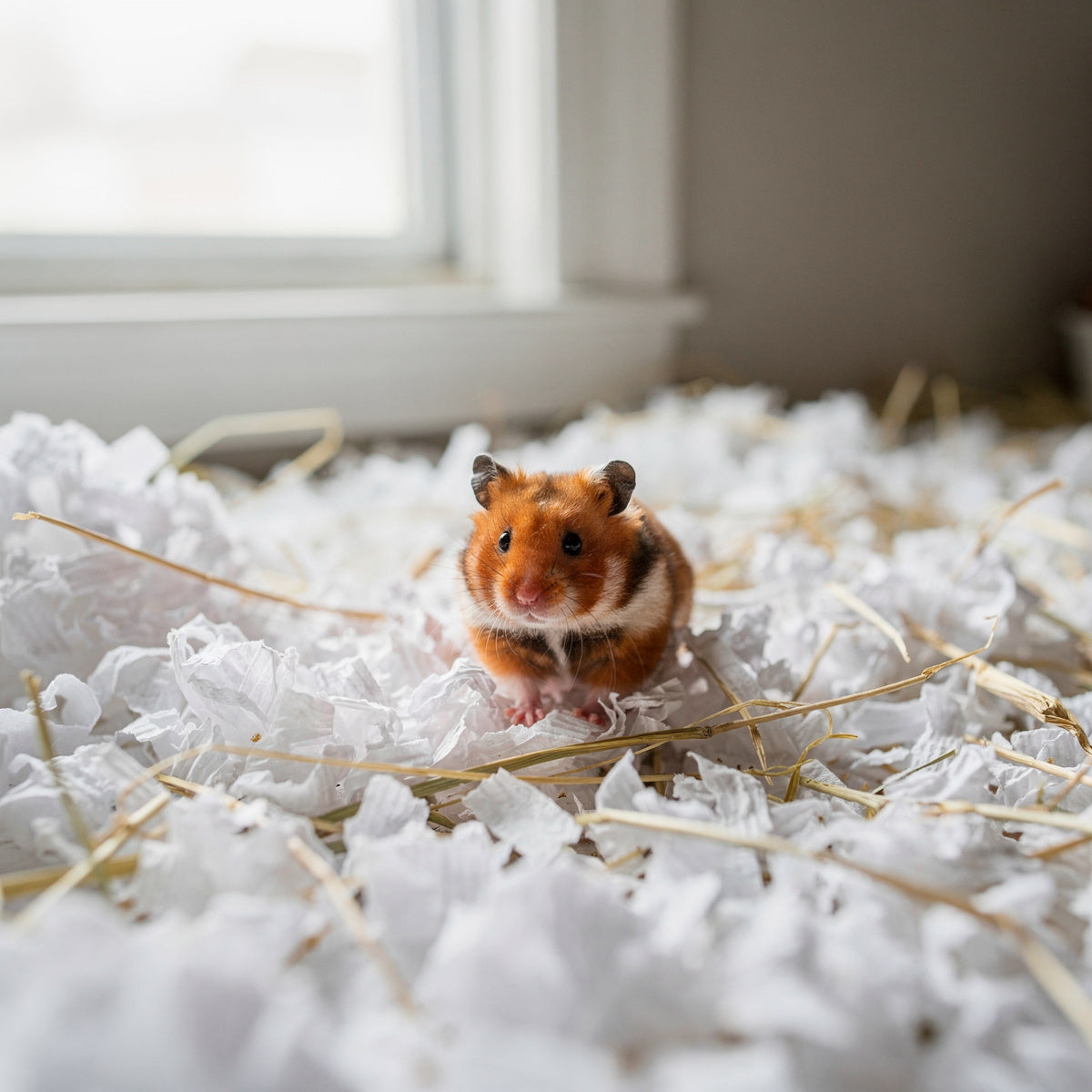
Bedding is the foundation — literally. Hamsters are burrowing animals, and they need enough bedding to dig into. Aim for at least 6 inches deep across most of the cage. Shredded paper bedding or aspen wood shavings work well. Avoid cedar or pine shavings; the aromatic oils in those woods can cause respiratory issues. We've seen a few hamsters come in with persistent sneezing that cleared up once the owner switched bedding.
A wheel is non-negotiable. Hamsters run several kilometres a night in the wild, and without an outlet for that energy they develop repetitive behaviours and anxiety. For a Syrian hamster, use a wheel with at least an 8-inch diameter — smaller wheels force them to arch their backs while running, which causes spinal problems over time. The wheel should have a solid running surface, not rungs or mesh.
Hiding spots matter more than people realise. Hamsters are prey animals. Even in a safe home, they feel exposed without places to retreat. A small wooden hideout, a ceramic igloo, or even a cardboard tube gives them the security they need. If your hamster is hiding constantly and refusing to come out, that's usually fine — it means they feel safe in their hideout. Forcing them out when they don't want to leave is where bites happen.
Chew toys are about dental health. Hamster teeth grow continuously throughout their lives. Without something to gnaw on, their teeth overgrow and that becomes a serious health problem. Plain wooden blocks, untreated wooden chews, or compressed hay sticks all work. Skip anything with artificial dyes or strong scents.
A water bottle attached to the cage side is cleaner than a bowl — bowls get soiled with bedding quickly. Make sure the sipper tube actually releases water when the hamster licks it; test it yourself before installing.
What Do Hamsters Eat in India?
Hamsters are omnivores, which surprises some people. They eat grains, seeds, vegetables, and small amounts of protein. A good commercial hamster mix forms the base of their diet — something that includes grains, seeds, and pellets together. In Indian stores, you'll find a few decent imported options; we stock a couple of reliable brands at Cuddle Paws that we've tested and trust.
Fresh vegetables make a good supplement a few times a week. Cucumber, carrot, broccoli, and leafy greens all work. Given how warm Hyderabad gets, fresh vegetables also help with hydration. Just remove any uneaten pieces after a few hours so they don't rot in the cage. Foods to avoid entirely: onion, garlic, citrus fruits, raw potato, and anything overly sweet or salty.
One thing we always mention to new owners — hamsters are hoarders. They'll stuff food into their cheek pouches and stash it somewhere in the bedding. This is completely normal behaviour. It does mean you should check the cage for old, rotting food when you spot clean, especially with fresh items.
How Do You Handle a Hamster Without Getting Bitten?
A hamster that bites is almost always a hamster that's frightened or hasn't been handled enough. The key is patience in the first few weeks. Don't try to pick up a new hamster for at least three to five days — let them settle into the cage, get used to your smell, and associate your presence with food rather than threat.
Start by letting the hamster sniff your hand inside the cage. Don't grab. Let them climb onto your palm if they choose to. Syrian hamsters tend to tame more quickly than dwarf species; Roborovski hamsters in particular are fast and skittish and are honestly better as watch-and-observe pets than hands-on ones. If you have children who want to handle the hamster regularly, a Syrian is the better choice.
Always pick up a hamster with two hands cupped together, close to a surface in case they jump. Never wake a sleeping hamster to handle them — they're naturally nocturnal and being woken during the day is one of the fastest ways to earn a bite.
How Much Exercise Does a Hamster Need?
Between their wheel and in-cage exploration, a properly set-up cage gives hamsters most of the exercise they need. You can supplement with a hamster ball for short supervised sessions outside the cage — 10 to 15 minutes at most, on a flat, clean surface away from stairs. We're not huge fans of the very small hamster balls because they restrict movement too much. If you use one, make sure it's well-ventilated and that you're watching the whole time.
Signs Your Hamster Might Be Sick
This section matters. Hamsters are small animals that hide illness instinctively, which means by the time symptoms are obvious, things can deteriorate quickly. Get to know your hamster's normal behaviour so you notice changes early.
Watch for: wet tail (a bacterial infection that causes severe diarrhoea — it's an emergency), lethargy during what would normally be active hours, weight loss, laboured breathing, a dull or patchy coat, or any discharge from the eyes or nose. Lumps anywhere on the body should be checked by a vet promptly. Hamsters are also prone to diabetes, particularly dwarf species — excessive thirst and urination are early signs.
If something seems off, don't wait to see if it improves. Small animals go downhill fast. A vet who is experienced with small animals can help you figure out what's going on.
Do Hamsters Need Baths?
No — and please don't give them one. Hamsters are self-grooming animals and water baths strip the natural oils from their coat and can cause them to go into shock, particularly in air-conditioned rooms where they can get cold quickly. If you notice your hamster is dirty in one spot, a dry sand bath is the appropriate option. A small dish of chinchilla sand (not dust) placed in the cage lets them roll around and clean themselves naturally. Some hamsters love it; others ignore it entirely.
Keeping Things Clean Without Stressing Your Hamster
Daily spot cleaning — removing soiled bedding and old food — keeps odour down and keeps your hamster healthy. A full cage clean every week to ten days is usually sufficient for a single hamster. When you do a full clean, save a small handful of old bedding to put back in. It sounds counterintuitive, but it keeps some of the familiar scent in the cage and helps your hamster feel less disoriented after everything changes.
Use a mild, pet-safe disinfectant and rinse the cage thoroughly before adding fresh bedding. Strong chemical smells are another source of respiratory stress for hamsters.
Hamster care in India is absolutely manageable once you understand what these animals actually need — which is quite different from what their small size might suggest. The setup investment upfront pays off in a healthy, active, entertaining little pet. If you're just getting started, our hamster products collection has everything from cages and bedding to wheels and enrichment toys, and we're always happy to help you put together the right setup in store.
Read next: Hamster Price in India: What It Really Costs to Own One; Hamster Wheel vs Exercise Ball: Which One Does Your Hamster Actually Need?; How Long Do Guinea Pigs Live? Lifespan Guide for Indian Owners.
Frequently Asked Questions About Hamster Care in India
Can hamsters survive the heat in Hyderabad?
They can, with the right setup. Keep the cage in a well-ventilated room away from direct sunlight and out of the path of direct AC airflow. Temperatures above 30°C for extended periods are risky — hamsters can go into a torpor-like state when overheated. A cool, shaded corner of a room, ideally between 18°C and 26°C, is ideal.
How often should I feed my hamster?
Once a day in the evening works well, since hamsters are most active at night. Measure the portion so you're not overfeeding — a tablespoon of dry mix per day is a rough guide for most hamsters, supplemented with small amounts of fresh vegetables two or three times a week.
Can I keep two hamsters together in one cage?
It depends on the species. Syrian hamsters are solitary and must be housed alone — two Syrians in the same cage will fight, sometimes fatally. Dwarf hamsters can sometimes be kept in same-sex pairs if introduced as young littermates, but it's not guaranteed. When in doubt, single housing is safer.
Where can I find a vet for my hamster in Hyderabad?
Not all vets are experienced with small animals, so this is worth asking about before you need it. Our vet clinic at the Gachibowli shop is not running at the moment, so please find a vet who sees small animals such as hamsters. It's a good idea to bring your hamster in for a health check soon after you bring them home, rather than waiting until something goes wrong.