Why Your Cat's Fur Looks Dull and How to Fix It
A dull, rough coat on your cat usually means something is missing from the inside — and in most cases, it's fixable. Here's what's really going on and how to bring back the shine.
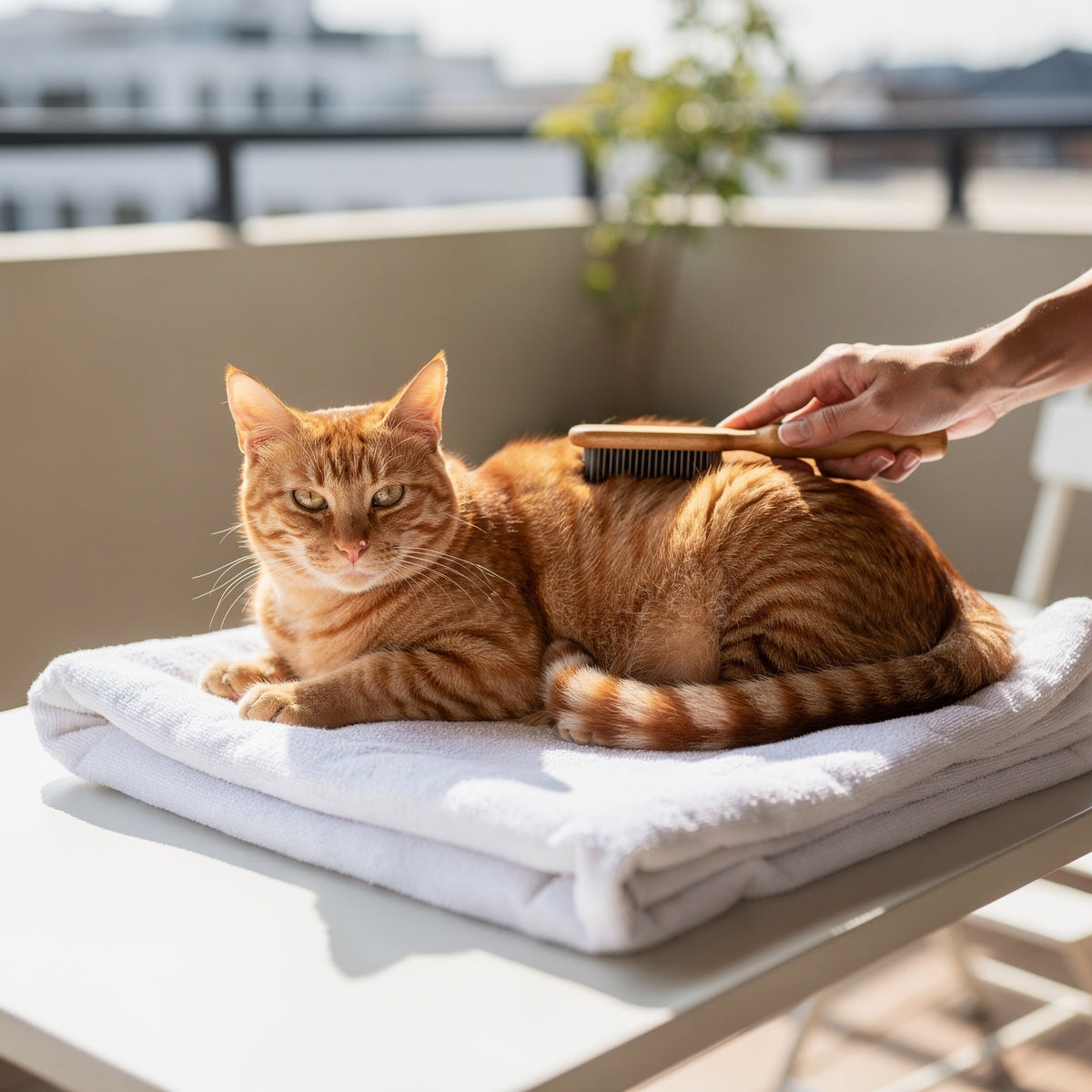
A cat with a glossy, smooth coat is usually a cat who's doing well on the inside. So when you start noticing that your cat's fur has gone a bit flat, dull, or rough to touch — or you're suddenly finding way more hair on your sofa than usual — it's worth paying attention. It doesn't always mean something serious, but it almost always means something needs to change.
We see this fairly often at our store in Gachibowli. Cat parents come in saying things like, "She used to have such beautiful fur, but lately it just looks... off." Sometimes the issue is diet. Sometimes it's the dry air from constant AC, which is basically every apartment in the IT corridor from March to June. Sometimes it's both. The good news is that most coat problems in cats respond really well once you identify what's missing.
What Actually Causes a Cat's Coat to Lose Its Shine?
Cats are actually pretty efficient self-groomers, so when their coat starts looking rough despite regular grooming, the problem is almost always coming from the inside. The most common cause we come across is diet — specifically, food that's low in essential fatty acids or doesn't have enough variety to cover all the nutrients a cat needs.
Omega-3 and Omega-6 fatty acids are what give fur that soft, well-conditioned look. Without enough of them, the skin gets dry and the coat turns brittle. A lot of affordable dry cat foods skimp on these, and if your cat is a picky eater who only tolerates one brand, there's a decent chance they're not getting enough.
Beyond fatty acids, deficiencies in Biotin, Zinc, and Vitamin E can all show up as coat problems. Biotin in particular affects hair follicle strength — low Biotin often means more shedding and thinner-looking fur. Zinc affects the skin's ability to repair itself and maintain texture. And Vitamin E matters for protecting the skin against damage, especially in cats who spend time outdoors in Hyderabad's heat and pollution.
Stress is another factor people underestimate. A new baby in the house, shifting homes, a change in routine — cats feel all of it, and it can show on their skin and coat. Dehydration is also surprisingly common, especially in cats who eat only dry food and don't drink enough water on their own.
Which Nutrients Actually Help Restore a Cat's Coat?
Let's get specific, because "give your cat supplements" isn't actually useful advice on its own.
Omega-3 fatty acids are where most vets start, and for good reason. Fish oil-based Omega-3s reduce skin inflammation, help the skin retain moisture, and within a few weeks you typically see softer fur with more natural sheen. If your cat's coat looks dry and dull at the same time, Omega-3 deficiency is the first thing to rule out.
Biotin is especially useful if shedding is your main complaint. It strengthens individual hair follicles and supports healthier regrowth. Some cats on Biotin supplements show noticeably reduced shedding within four to six weeks. It also benefits claw health, which is a nice bonus.
Zinc and Vitamin E work together to support the skin's outer barrier. Zinc helps the skin heal micro-damage and maintain its texture, while Vitamin E protects cells from oxidative stress. These matter more in older cats or cats recovering from illness, but they're useful for any cat with persistently flaky skin.
If you'd rather not track individual nutrients, a good cat-specific multivitamin that covers all of the above is a reasonable approach — particularly if your cat's diet is already decent and you just want to fill in any gaps.
Should You Change the Food or Add Supplements?
Honestly, sometimes it's the food that's the real fix. If your cat is on a budget dry food with no wet food at all, switching to a higher-quality option — one with real fish or chicken listed as the first ingredient and added Omega-3s — can make a visible difference on its own. Wet food is also worth adding into the rotation because it increases hydration, which has a direct effect on skin health.
That said, even cats on good food sometimes benefit from a targeted supplement, especially if the coat problem has been going on for a while. We usually suggest starting with an Omega-3 supplement for 4-6 weeks and reassessing. If there's no improvement by then, adding Biotin or a full multivitamin makes sense.
One thing we always tell customers — don't use human supplements on your cat. This comes up more than you'd think. Human fish oil capsules or biotin tablets might seem like the same thing, but the dosages are completely different and some formulations contain additives that aren't safe for cats. Always use products made specifically for cats.
Grooming Still Matters — Even With Supplements
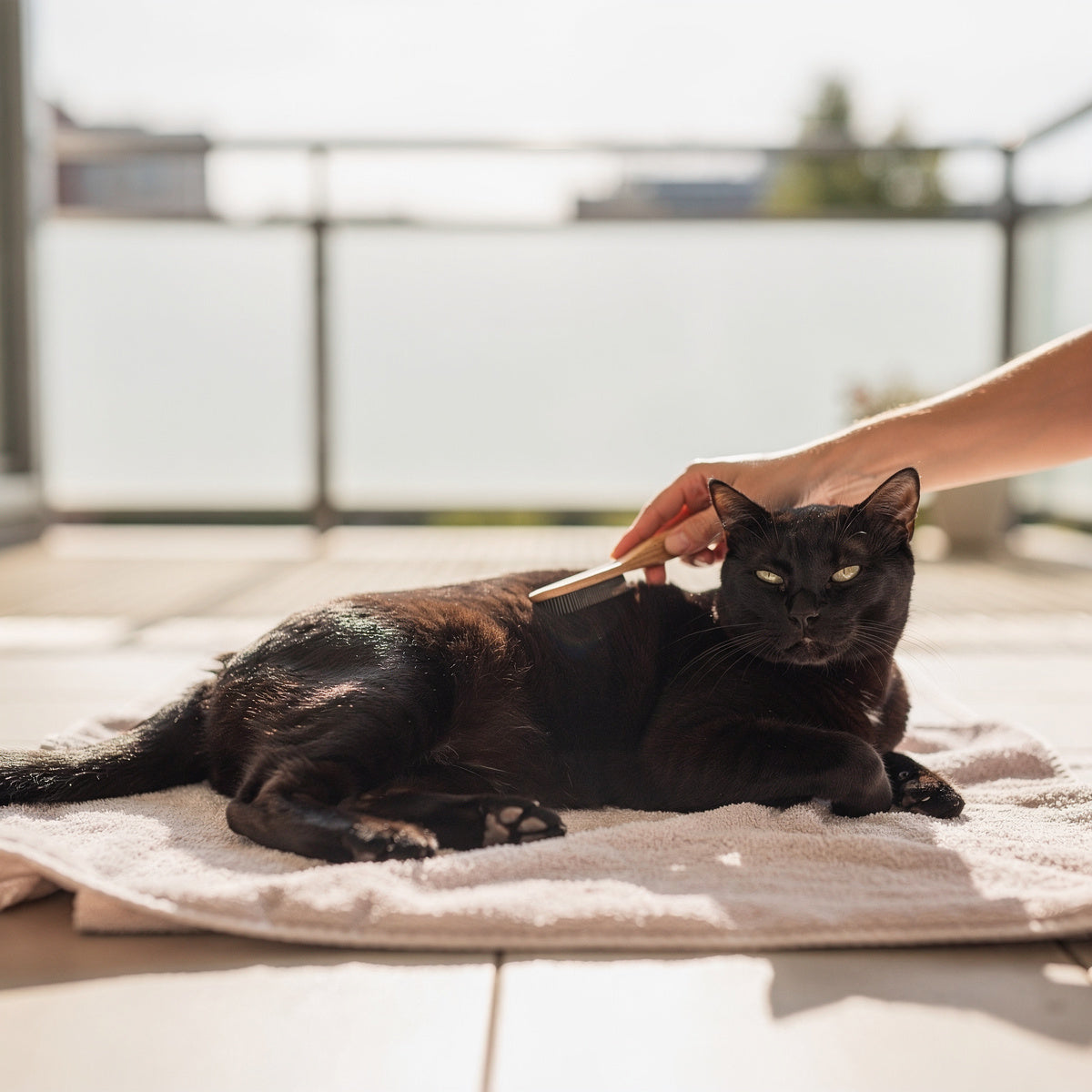
Supplements work from the inside, but grooming takes care of the outside, and you need both. Regular brushing removes dead fur before it mats, distributes natural skin oils along the coat, and lets you catch any new issues — like flakes, bald patches, or skin irritation — early. For most shorthair cats, brushing two or three times a week is enough. Longhair breeds need it daily.
We also recommend checking your cat for signs of fleas or ticks, especially if they have outdoor access. In Hyderabad's climate, ticks are active year-round and can cause significant skin irritation that mimics nutritional coat problems. If you're treating the diet but ignoring potential parasites, you won't see the improvement you're hoping for.
You can browse our full range of cat products at Cuddle Paws, including grooming supplies, to make this part of your routine easier. Our vet clinic at the Gachibowli shop is not running at the moment, so please see your own vet.
For cats who've never had supplements before, the improvement usually becomes visible around the four-week mark. The fur feels softer first, then the shine comes back, and shedding tends to settle down last. Stay consistent and don't expect overnight results — coats take time to turn around, but they do turn around.
We had a customer earlier this year with a four-year-old Persian mix who had been shedding badly for months. They'd tried changing food twice with no improvement. We suggested adding an Omega-3 liquid supplement to her wet food daily. Six weeks later, the owner came back in to show us photos — the difference was obvious. More often than not, it really is that straightforward once you find the right missing piece.
If you want personalised advice on what to give your cat specifically, come visit us at our Hyderabad shop or reach out to our team — we're happy to help you figure it out without guesswork.
FAQs About Cat Dull Coat and Skin Problems
My cat eats well but still has a dull coat — what's going on?
Eating well doesn't always mean eating the right things. A lot of standard dry cat foods lack adequate Omega-3 fatty acids, which are the main drivers of coat shine and skin moisture. Even if your cat is eating enough calories, they may still be short on specific nutrients. Adding a fish oil supplement or switching to a food with better fat profiles often solves this.
Is dull fur in cats common during Hyderabad summers?
Yes, and it's something we notice a lot between March and June. The combination of heat, dry air from air conditioning, and reduced water intake in some cats can dry out the skin significantly. Increasing wet food, keeping water bowls fresh and full, and adding Omega-3s usually helps manage this seasonally.
How do I know if my cat needs supplements or a vet visit?
If the coat change came on gradually and your cat is otherwise eating, drinking, and behaving normally, it's usually nutritional and worth trying supplements first. But if you see bald patches, inflamed or broken skin, your cat scratching constantly, or any change in eating or energy levels, get a vet involved. Those signs point beyond nutrition. Book this with a vet.
Can I give my kitten the same skin and coat supplements as an adult cat?
Not necessarily. Kittens have different nutritional requirements and their systems are more sensitive to dosage. Always check that any supplement you're using is labelled safe for kittens, and ideally confirm with a vet before starting. Adult cat formulas are generally not appropriate for cats under 12 months.