How to Groom Your Cat Without the Scratches
Cat grooming doesn't have to be a daily standoff. From choosing the right brush to reading your cat's stress signals, here's what actually works.
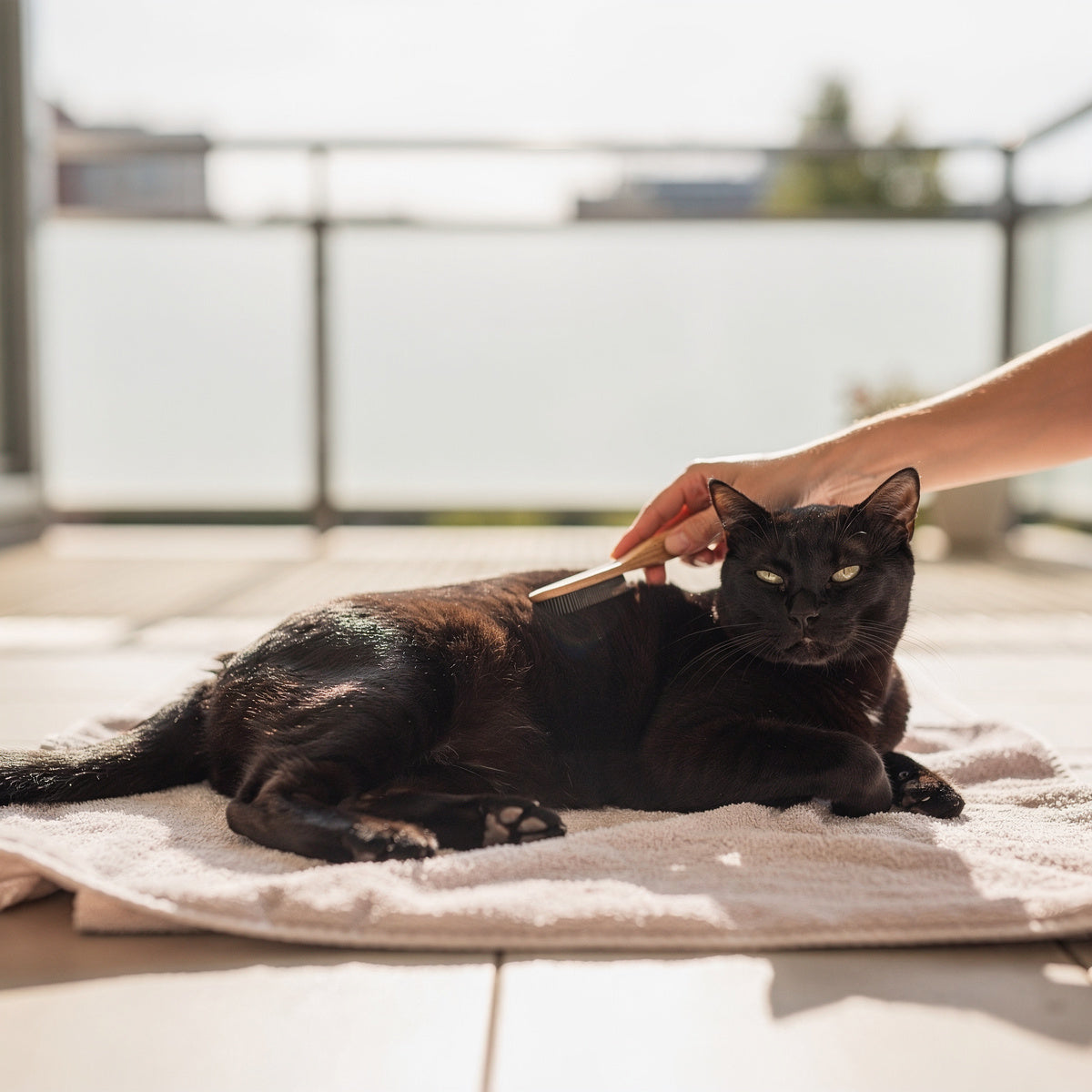
Cat grooming has a reputation. You pick up the brush, your cat spots it from across the room, and suddenly she's vanished behind the sofa. Sound familiar? We hear this at our Gachibowli store at least a few times a week. The truth is, most cats don't hate grooming itself — they hate being surprised by it, rushed through it, or handled with the wrong tools. Fix those three things and you'll be amazed how quickly the dynamic shifts.
Why do cats get so stressed during grooming?
Cats are control freaks — and that's not an insult. Their entire sense of safety is built around knowing what's happening, when, and who's touching them. Grooming, from their perspective, involves being held still, having their body handled, and sometimes experiencing mild tugging or discomfort. If that's the only context they have for the brush, of course they're going to bolt.
We had a customer come in a few months ago with a 4-year-old Persian mix who had never been brushed without a struggle. The owner had been sneaking up with the comb because the cat ran whenever she saw it. Classic chase-catch-groom-release cycle. The cat wasn't being difficult — she had simply learned that the comb meant an unpleasant ambush. Took about three weeks to unlearn that, but it happened.
The point is: the stress usually starts with us, not the cat. Once you change your approach, their response changes too.
Start before there's anything to groom
If your cat is still a kitten, you have a real advantage here. Touch her paws, ears, and tail during calm moments — not grooming moments. Just casually, while she's sleepy or being held. You're building a history of neutral touch, so that when the brush comes out later, it doesn't register as a threat. Kittens who get handled this way from 8 to 12 weeks are noticeably easier to groom as adults.
For older cats who already have complicated feelings about grooming, the same principle applies but it takes longer. Let the brush sit near her food bowl for a few days. Let her sniff it on her own terms. The goal is for the tool to become boring before it becomes useful.
The right brush actually matters more than technique
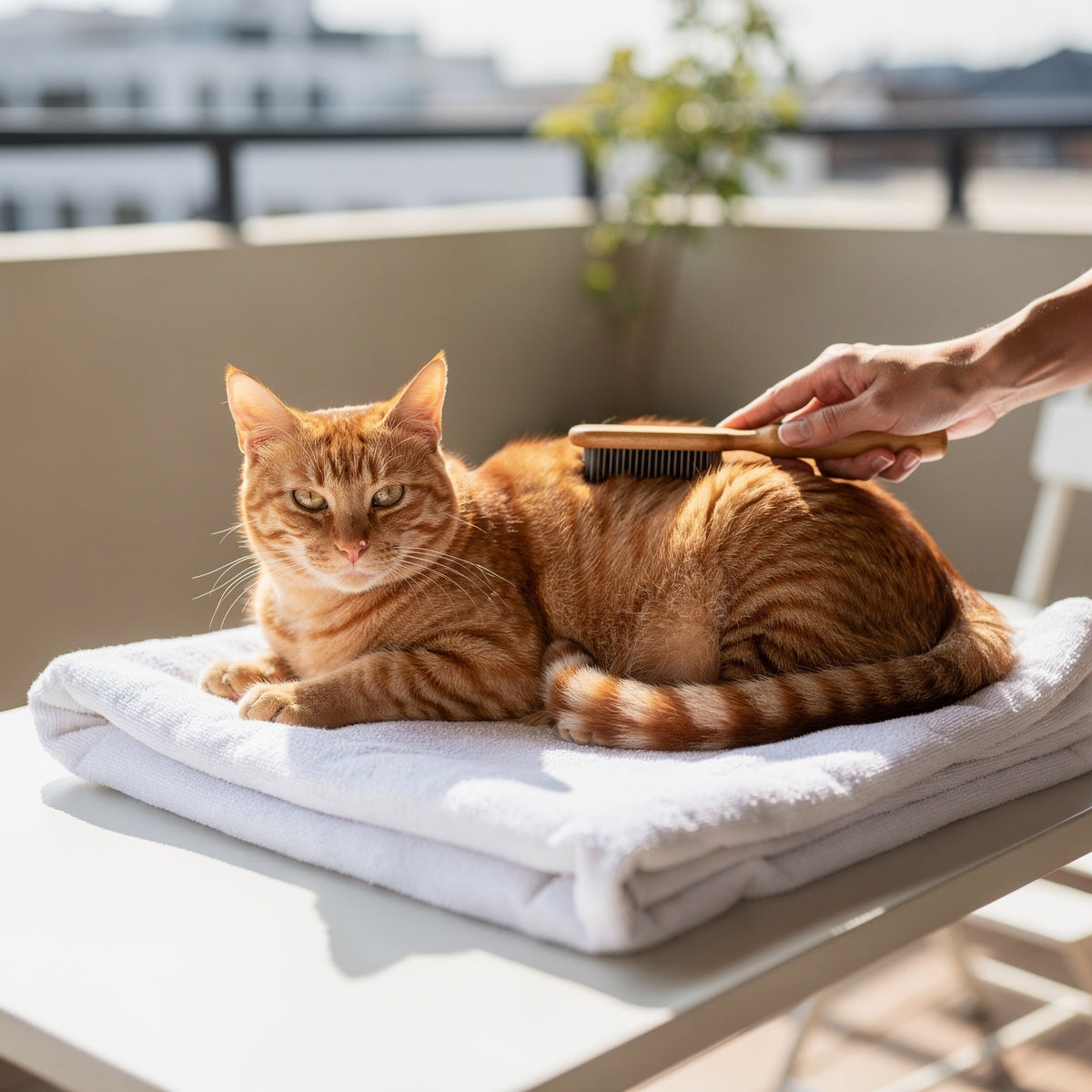
This is where a lot of well-meaning cat parents go wrong. A stiff slicker brush on a short-haired cat like a domestic shorthair or a Bombay mix is overkill — it can scratch the skin and create a negative association fast. Short coats usually do well with a soft rubber grooming mitt or a fine-toothed comb used lightly.
Long-haired cats — Persian, Himalayan, Maine Coon, or the beautiful Indian Longhair mixes you see around Hyderabad — are a different situation entirely. Their coats mat quickly, especially in our climate where humidity makes fur clump. For these cats, you want a wide-toothed detangling comb first, followed by a slicker brush. Never try to rip through a mat in one motion. Work from the tip of the fur inward, in small sections. It takes patience, but it saves your cat a lot of discomfort — and saves you from some well-deserved scratches.
Browse our cat products collection if you're looking for grooming tools suited to your cat's coat type. We stock options for everything from fine single coats to thick double-layered fluff.
Keep sessions short, especially at first
Five minutes of calm grooming is worth more than twenty minutes of fighting. Seriously. If your cat starts flicking her tail, flattening her ears, or her skin is rippling along her back — those are stress signals, and it's time to stop. Not in a defeated, dramatic way. Just put the brush down, offer a treat, and let her walk away if she wants to. You're building trust in increments, not racing to finish.
One thing that helps: always end the session on a positive note before the cat reaches her limit. If she tolerates two minutes today, stop at ninety seconds. Give her a treat. Let her feel like she chose to leave. That small psychological shift makes the next session easier.
Treats aren't bribery — they're information
Some people feel odd giving treats during grooming, like they're tricking their cat. But you're not tricking her. You're giving her a reason to form a new association. Pair the brush with something she loves — a small piece of freeze-dried chicken, a lick of wet food, whatever she's most excited about — and her brain starts filing "brush" under "good things" instead of "threats."
Over time, you need fewer treats because the habit itself becomes comfortable. But in the early stages, don't be stingy. The treat is doing real work.
Your energy sets the tone more than you realise
Cats read tension incredibly well. If you're nervous about getting scratched, or frustrated because the last three sessions went badly, they feel that before you even pick up the comb. Take a breath. Sit at their level. Move slowly. Speak in a low, even tone — not exaggerated baby talk, just calm and steady. You'll notice even a resistant cat often settles when the person holding the brush is genuinely relaxed.
If grooming at home has become genuinely stressful for both of you, there's no shame in bringing your cat to professionals. Our grooming services at Cuddle Paws are designed specifically for cats who need a patient, experienced hand. We've worked with some very opinionated cats in our time, and we've rarely met one who couldn't be won over eventually.
Don't skip the ears, eyes, and nails
Grooming isn't only about the coat. Ears should be checked weekly — in Hyderabad's heat and humidity, ear infections and mite infestations can develop quickly, especially in cats who spend time near windows or have outdoor access. Wipe the outer ear gently with a damp cotton pad if you see buildup. Any dark, crumbly discharge or persistent scratching at the ears warrants a vet visit.
Nails are another thing many cat owners avoid. Indoor cats don't wear their nails down naturally, and overgrown nails can curl and cause discomfort or snag on soft furnishings. Trim just the clear tip — never cut into the pink quick. If you're unsure, ask us to show you the first time. It takes about two minutes once you're comfortable. A vet can also help if your cat needs a nail trim alongside a health check.
Grooming is also how you catch problems early
This is something people don't talk about enough. Regular grooming means you're running your hands over your cat's body consistently. You'll notice lumps, skin irritation, unusual hair loss, or parasites far earlier than you would otherwise. In a city like Hyderabad where ticks and fleas are genuinely active year-round, that matters. We've had customers catch early-stage flea infestations during a brushing session that they would have missed for weeks otherwise.
Monthly grooming checks are a good minimum. Weekly is better for long-haired cats or cats who go outdoors.
Frequently Asked Questions
How often should I groom my cat in Hyderabad's climate?
Short-haired cats generally need brushing once or twice a week. Long-haired cats need it at least three to four times a week to prevent matting — Hyderabad's humidity makes their coats mat faster than in drier climates. During summer, even short-haired cats shed more, so increasing brushing frequency helps reduce hairballs.
My cat bites when I try to brush her. What should I do?
Biting during grooming is almost always a stress response, not aggression. Go back to basics: introduce the brush without using it, pair its presence with treats, and shorten your sessions drastically. If the biting is accompanied by hissing or growling, consider a professional grooming session first to reset the experience, then reintroduce home grooming slowly.
Can I bathe my cat at home, or is that a bad idea?
Most cats don't need regular baths — their self-cleaning is actually very effective. There are exceptions: cats with skin conditions, very long-haired cats prone to matting, or cats who've gotten into something sticky or toxic. If you do bathe at home, use a cat-specific shampoo (not human or dog shampoo), keep the water lukewarm, and dry thoroughly since wet cats in air-conditioned rooms can get cold quickly.
Are there any grooming tools specifically good for Indian cat breeds or mixed breeds?
Most Indian cats are domestic shorthairs or medium-hair mixes, so a soft slicker brush or rubber grooming glove works well day-to-day. For the occasional Persian or Himalayan mix, a wide-toothed metal comb is the real workhorse. Avoid fine-toothed combs on thicker coats — they pull rather than glide, which the cat will not appreciate.