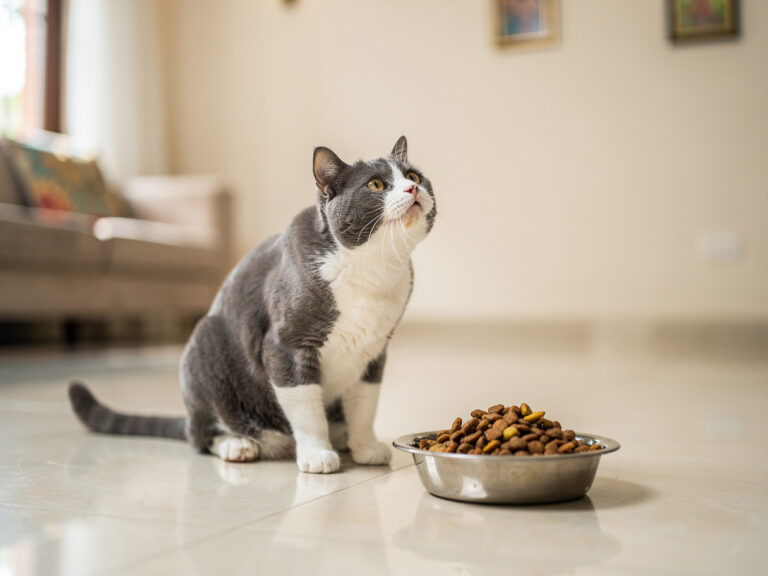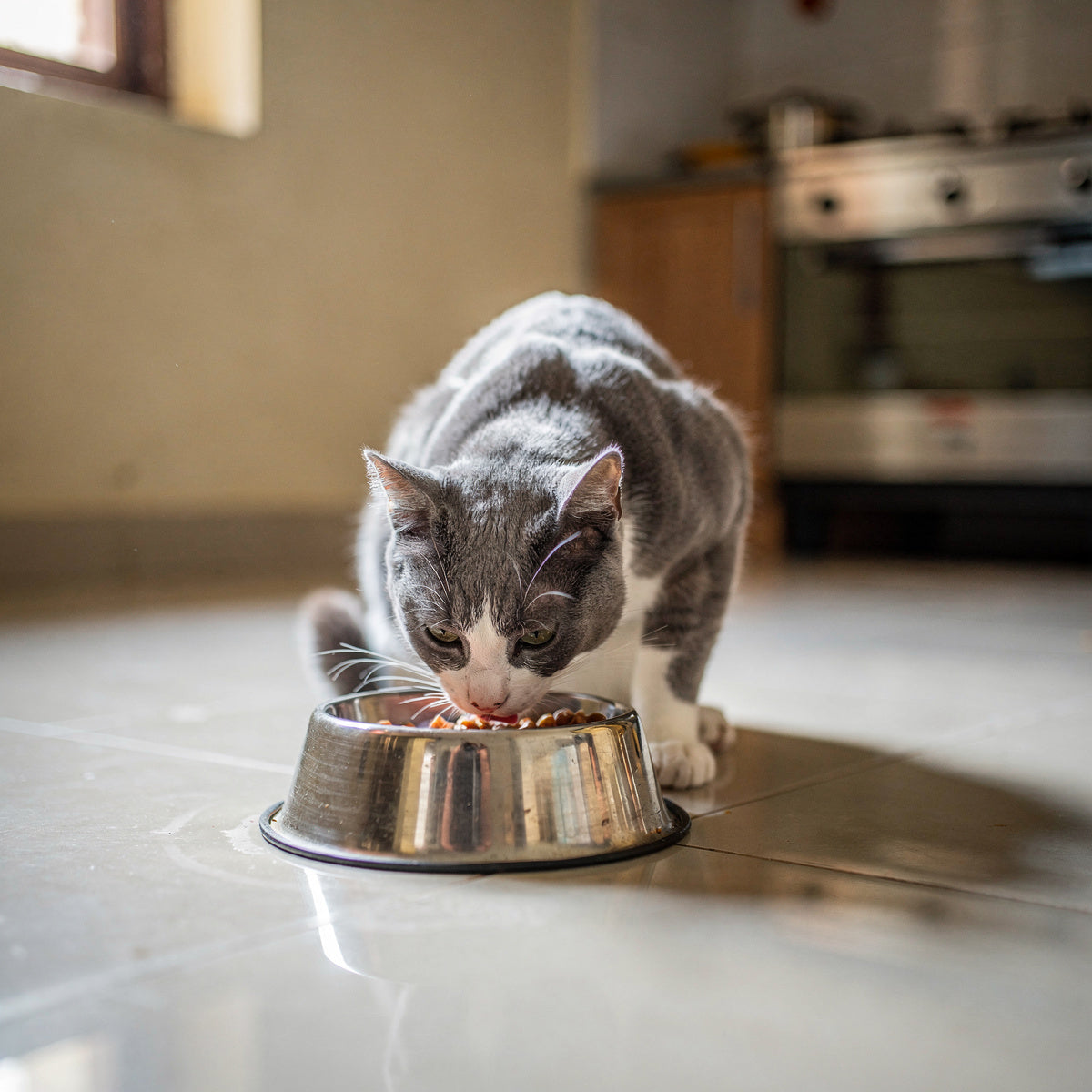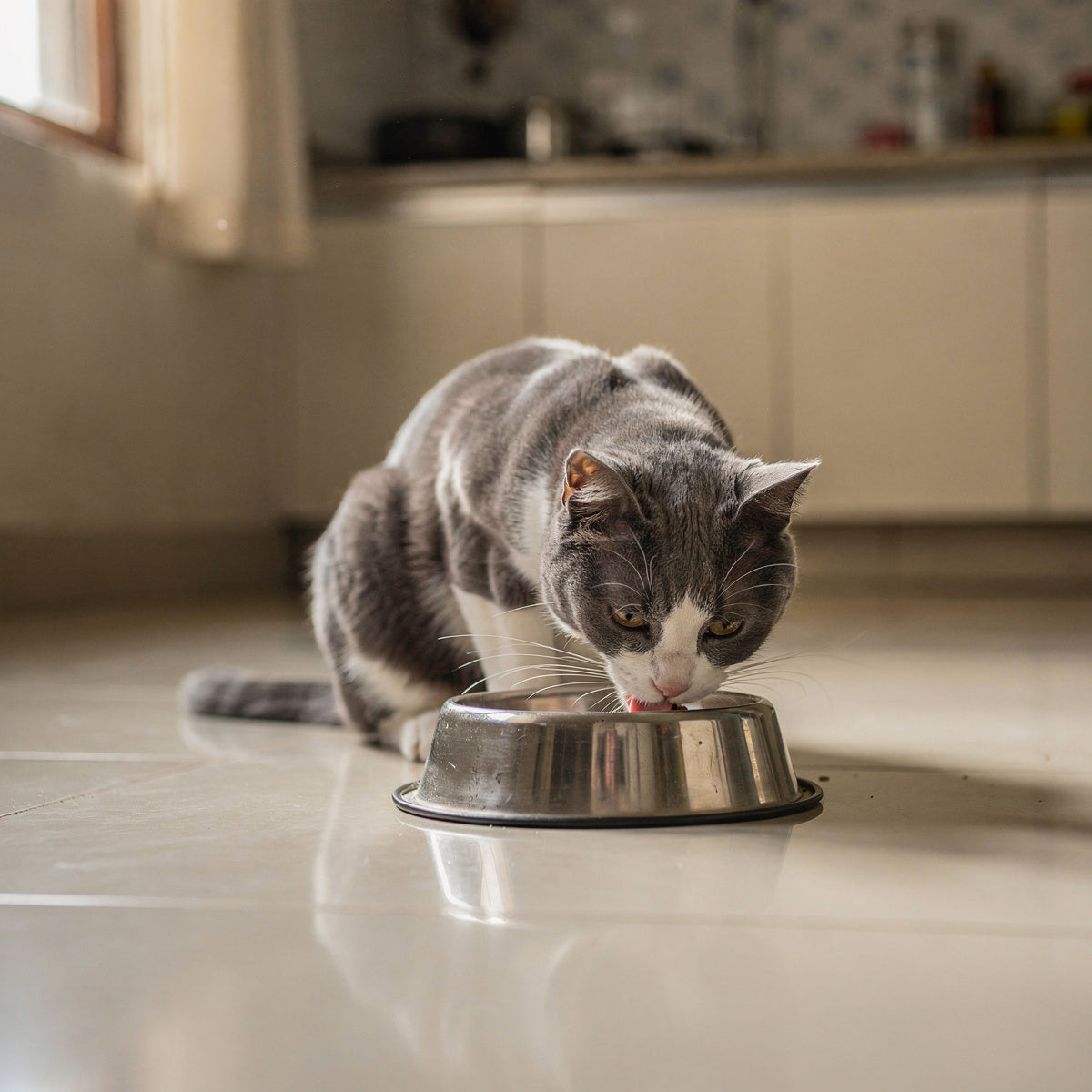
How much does it cost to feed a cat in India?
A four-kilo cat costs about Rs 225 a month on the cheapest complete dry food and over Rs 9,000 on pouches alone. Real prices, worked per day.
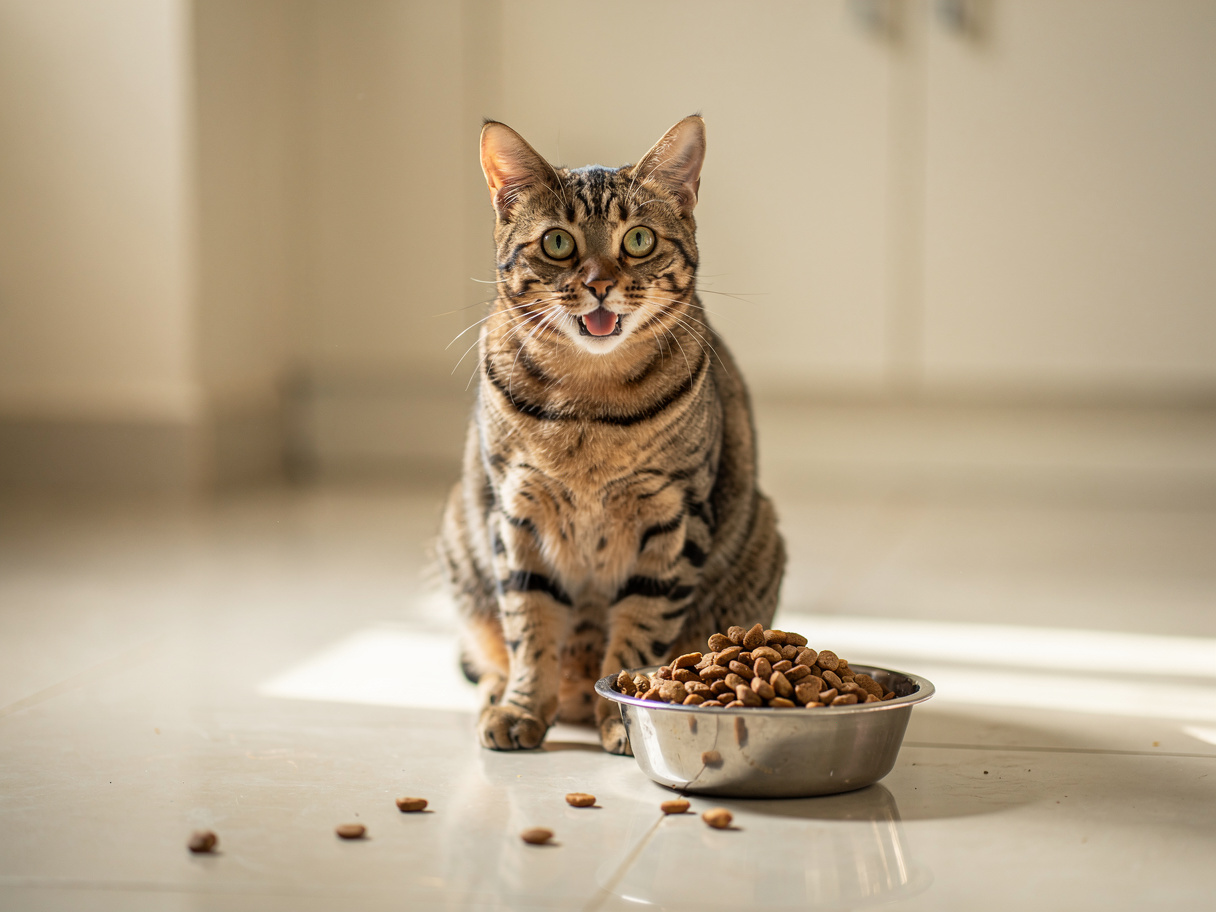
Feeding one adult cat costs about Rs 225 a month if you buy the cheapest complete dry food on our shelf, and more than forty times that if you feed only wet pouches. Most Hyderabad owners land somewhere sensible in between: dry food as the base, one wet pouch a day.
Key Takeaways
- Price per kilo only compares dry food with dry food. A wet pouch is mostly water, so compare what a day costs instead.
- The cheapest complete dry food and a supermarket brand differ by about Rs 8 a day. Wet-only feeding is a different league.
- Weigh the portion. The amount printed on the bag sets your bill, and it is often more than the cat needs.
What does cat food cost per kilo in Hyderabad?
Our cat shelf starts near Rs 130 a kilo and runs to nearly Rs 3,000. That is the widest price range of anything in the shop, and almost all of the cheap end is dry food.
At the bottom are the big Indian bags. Maxi Adult Ocean Fish comes to about Rs 138 a kilo in the 6.5 kg bag, and its label claims a complete and balanced food for adult cats. Purepet sits alongside it at much the same money.
The supermarket shelf is next. Whiskas Ocean Fish is about Rs 286 a kilo in the seven-kilo bag. Then the premium bags: Royal Canin Fit 32 is about Rs 750 a kilo in the ten-kilo bag, and the Farmina and Orijen bags above it climb past Rs 1,500. You can see the whole spread, sorted by price, on the cat dry food shelf.
Per kilo is a fair comparison between two bags. It stops being a fair comparison the moment a pouch enters the conversation.
Why does wet food cost so much more?
Because you are buying water. Canned and pouched food is roughly four fifths water. Dry food is almost none. So a kilo of wet food contains a fraction of the food that a kilo of kibble does, and the cat has to eat far more grams of it to get the same meal.
That is not a small effect. Smylo Chicken with Tuna and Rosemary tells you on its own pack that a cat this size needs four to five pouches a day if pouches are all it eats. Four of them, bought in the largest box, is about Rs 312 a day. The cheapest canned food in the shop, Me O Tuna in Jelly, works out around Rs 103 a day fed the same way. Both are well above any bag of dry food, including the ones at the top of the shelf.
There is still a good reason to buy some. A cat eating wet food drinks less from its bowl, because the water arrives in the food instead. In a city where most cats stay indoors through a long, hot summer, that is worth paying for.
So what should you actually feed?
Dry food as the base, with one wet pouch a day.
That is not a compromise we invented to sell both. Royal Canin's own feeding table for a cat of this weight gives two options for the same day: 54 g of dry food, or 36 g of dry food plus one pouch. Mixed feeding is the manufacturer's own default.
Priced on our shelf, a supermarket bag plus one Smylo pouch comes to about Rs 88 a day, or roughly Rs 2,650 a month. That is around six times the cost of dry food alone, and a little over a quarter of what feeding nothing but pouches would cost.
If money is tight, the honest answer is that the cheapest complete dry food is not a failure. A bag that says complete and balanced for adult cats is doing the job it claims. What you gain going up the shelf is better ingredients, smaller kibble, formulas built for an indoor or a neutered cat, and in the premium ranges a feeding guide precise enough to be useful. What you do not gain is a different category of nutrition.
Two things are not worth the money. Pouring bone broth over a cheap bag does not upgrade it: the broth's own label calls it a topper rather than a meal, and says plainly that it adds water and not calories. And a trial box is for finding out whether your cat will eat something, not for feeding it.
What about a kitten, or a second cat?
The kitten bag is not the expensive part. Whiskas sells its kitten food and its adult food within a rupee of each other per kilo on our shelf, and most brands are similar. What raises the bill is the kitten: a growing cat eats more than its size suggests and eats more often, so the kitten year costs noticeably more than the years after it.
A second cat roughly doubles the food, with one saving attached. Two cats finish a large bag before it goes stale, which makes the big pack a sensible buy rather than a gamble. One cat working through a 20 kg bag during a Hyderabad monsoon is exactly where a cheaper price per kilo turns into food you throw away.
How much should go in the bowl?
The portion matters more to your bill than the brand does, and it is the part you control.
Start with the pack's guide, then stop trusting it. One study read the feeding directions off hundreds of cat food packs and found they do not line up with what a cat is predicted to need, and that dry foods ask for more than wet ones do. A guide that runs high means you buy food the cat does not need, and the cat puts on weight you then have to take off.
So weigh the food rather than using a cup. Weigh the cat once a month. If your cat is already heavy, ask your vet for a target weight before you cut the portion, because a cat losing weight too fast gets ill. Bring the cat's weight to the counter at our Hyderabad shop and we will work the daily portion and the monthly cost out with you before you buy a bag.
The research behind this
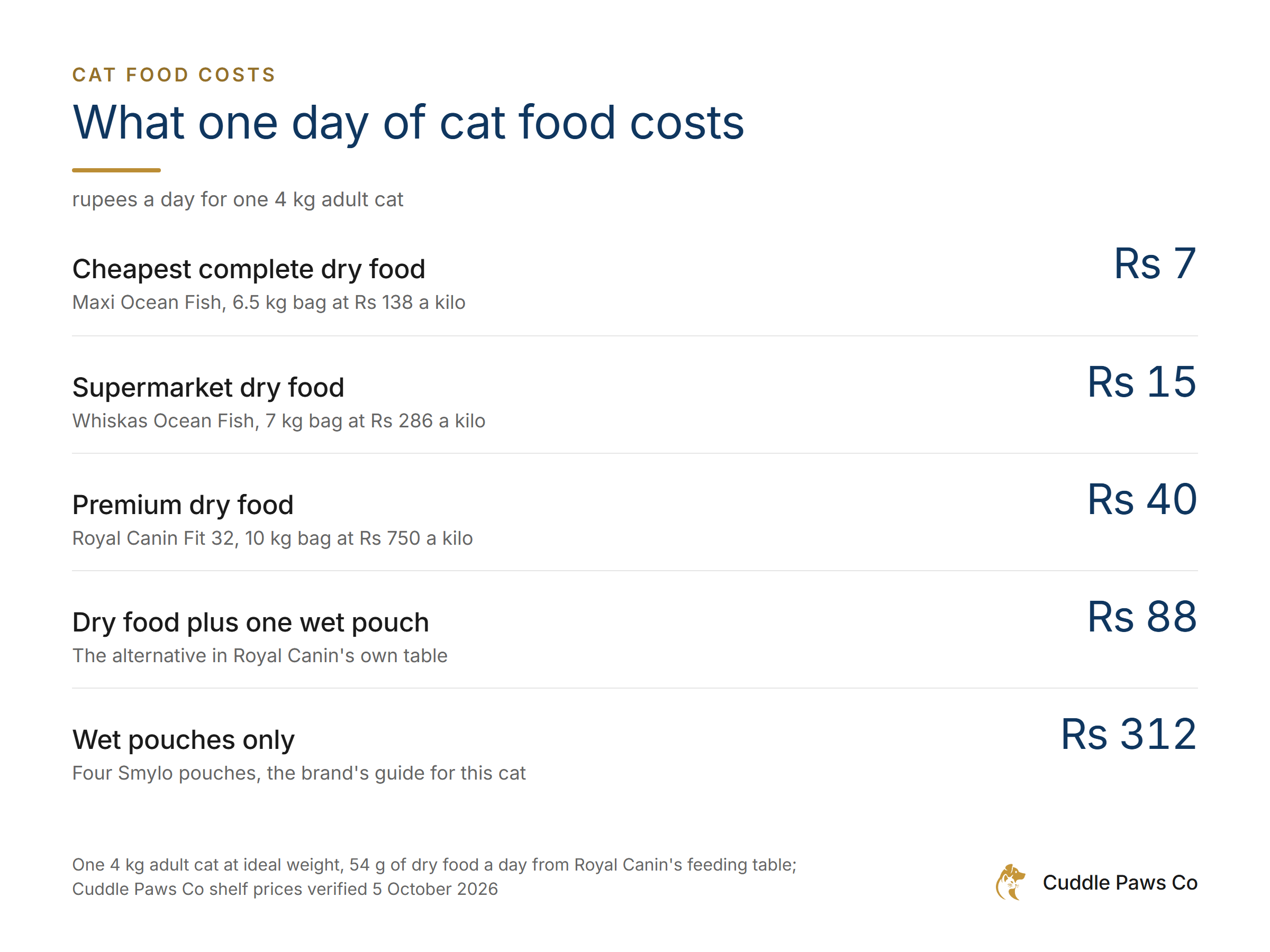
The figure in full. One 4 kg adult cat at ideal weight, eating 54 g of dry food a day, which is the amount in Royal Canin's published feeding table for Fit 32. Prices verified against our live product pages on 5 October 2026 and divided by that portion. A month is taken as thirty days.
| What you feed | Per day | Per month | Price basis |
|---|---|---|---|
| Cheapest complete dry food | Rs 7 | Rs 225 | Maxi Adult Ocean Fish, 6.5 kg at Rs 899, so Rs 138 a kilo |
| Supermarket dry food | Rs 15 | Rs 465 | Whiskas Ocean Fish Adult, 7 kg at Rs 2,005, so Rs 286 a kilo |
| Premium dry food | Rs 40 | Rs 1,215 | Royal Canin Fit 32, 10 kg at Rs 7,498, so Rs 750 a kilo |
| Dry food plus one wet pouch | Rs 88 | Rs 2,650 | 36 g of the Whiskas bag plus one Smylo pouch at Rs 78 from the 64-pouch box |
| Wet pouches only | Rs 312 | Rs 9,350 | Four Smylo pouches a day at Rs 78 each |
Source: Cuddle Paws Co product pages, and the feeding table published by Royal Canin, which lists a 4 kg cat at ideal weight as "54 g (36 g + 1 pouch)".
The unit nobody uses. Tufts University's veterinary nutrition service priced a set of cat foods by calorie rather than by weight, for a cat needing 260 kcal a day, and reported that "the daily costs ranged from 23 cents to nearly $6 for the same amount of calories". They also found that "all of the dry foods, even the most expensive, were still cheaper per day than the least expensive canned foods". Those are US dollars on a US shelf and we have not converted them, but the shape holds here: our dearest dry row still sits well below our cheapest wet one.
Why the water matters. The MSD Veterinary Manual gives the moisture content of canned pet food as 60% to more than 87%, against 3% to 11% for dry food, and notes that animals eating mostly canned food "generally drink less water than those consuming predominantly dry diets". Smylo's pouch label puts itself at 80% moisture maximum and 75 kcal per 100 g, which is why four of them make a day's food. Its bone broth is 97% moisture and the product page says so directly: "It is a topper, not a meal: at 97% moisture it adds water, not calories."
On pack feeding guides. A 2025 University of Guelph thesis analysed "feeding guideline data from 790 cat food labels" sold in Ontario, Canada, comparing them with predicted requirements from the National Research Council and the American Animal Hospital Association, and found that "dry foods generally recommended higher energy intake than wet foods" and that label claims such as weight management and all-life-stage changed the recommendation. It is a Canadian sample, not an Indian one, and it does not tell you that any specific bag overfeeds. It does tell you that the number on the back is a starting point.
What we could not find. Nobody has published a survey of what Indian cat owners actually spend on cat food. There is no figure to cite and we have not estimated one. Every rupee in this post is a price on our own shelf on a stated date, divided by one portion from one published feeding table. A larger or more active cat eats more, and a kitten eats more again.
Frequently Asked Questions
How much does cat food cost per month in India?
For one adult cat of about four kilos, roughly Rs 225 a month at the cheap end of the dry food shelf, around Rs 465 for a supermarket brand, and about Rs 1,215 for a premium bag. Feeding only wet pouches takes it past Rs 9,000.
Is cheap cat food bad for my cat?
Not automatically. A bag labelled complete and balanced for adult cats is formulated to cover an adult cat's needs, and the cheapest ones on our shelf carry that claim. What you get going up the shelf is better ingredients and more specific formulas, not a different category of food. If your cat has a diagnosed problem, that is a conversation for your vet rather than a shelf decision.
Is wet food worth the money?
One pouch a day is worth it for most cats, because the water comes with it and cats are poor drinkers. Feeding only wet food is a large bill for a benefit that mostly arrives with the first pouch. If your cat will not drink at all, that is worth a vet visit rather than more pouches.
How much dry food should I give my cat a day?
Around 54 g for a four-kilo adult cat at a healthy weight, going by Royal Canin's published table, and less if the cat is overweight. Check your own bag, because guides differ between brands. Weigh it rather than using a cup.
Does a bigger bag always work out cheaper per kilo?
Usually, but not always, and it is worth checking. On our shelf the 6.5 kg Maxi bag is cheaper per kilo than the 20 kg one. Dry food also goes stale and can get damp once opened, so a bag your cat cannot finish in a few weeks is a false saving in a Hyderabad monsoon.
अक्सर पूछे जाने वाले सवाल
एक बिल्ली का खाना महीने का कितना खर्च होता है?
एक वयस्क बिल्ली, जिसका वज़न चार किलो के आसपास है, सबसे सस्ते complete dry food पर महीने में लगभग दो सौ पच्चीस रुपये में खा लेती है। सुपरमार्केट वाले ब्रांड पर यह खर्च चार सौ रुपये से कुछ ऊपर जाता है। अगर आप सिर्फ़ wet food की पाउच खिलाएँगे तो यही खर्च नौ हज़ार रुपये से पार चला जाता है।
सस्ता cat food खिलाना ठीक है या नहीं?
ठीक है, बशर्ते पैकेट पर complete and balanced लिखा हो। हमारी दुकान में सबसे सस्ते बैग पर भी यह लिखा होता है, और उसका मतलब है कि वयस्क बिल्ली की पूरी ज़रूरत उसमें आ जाती है। महँगे बैग में सामग्री बेहतर होती है, खाना बदल नहीं जाता। बिल्ली को कोई बीमारी हो तो खाना डॉक्टर से पूछकर चुनें।
रोज़ कितना खाना देना चाहिए?
चार किलो की स्वस्थ बिल्ली के लिए रोज़ करीब चौवन ग्राम dry food काफ़ी है। अपने बैग पर लिखी मात्रा भी देख लें, क्योंकि हर ब्रांड की सलाह अलग होती है। कप से अंदाज़ा लगाने की जगह खाना तराज़ू पर तोलकर दें, और महीने में एक बार बिल्ली का वज़न भी कर लें।
Sources
- Comparing kitty's calorie costs, Petfoodology, Tufts University Cummings School of Veterinary Medicine, 2022
- Nutritional Requirements of Small Animals, MSD Veterinary Manual
- Energy Requirements and Feeding Guidelines in Cats, Poblanno Silva, University of Guelph, 2025
- Fit 32 feeding guide, Royal Canin Professionals
- Smylo Chicken with Tuna & Rosemary Adult Cat Wet Food, Cuddle Paws Co product page
- Smylo Chicken Bone Broth for Cats, Cuddle Paws Co product page
Prices are current as of October 2026 and do change. The figure on each product page is the live one.