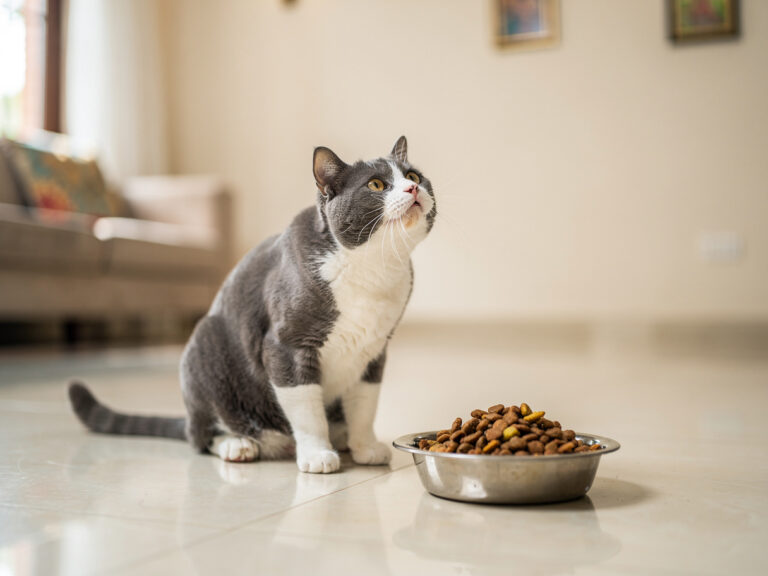
Dry Cat Food vs. Homemade Meals: What's Best for Your Cat?
Homemade cat food feels caring, but it often falls short of what cats actually need nutritionally. Here's what we see on the ground in Gachibowli and why dry food usually wins for everyday feeding.
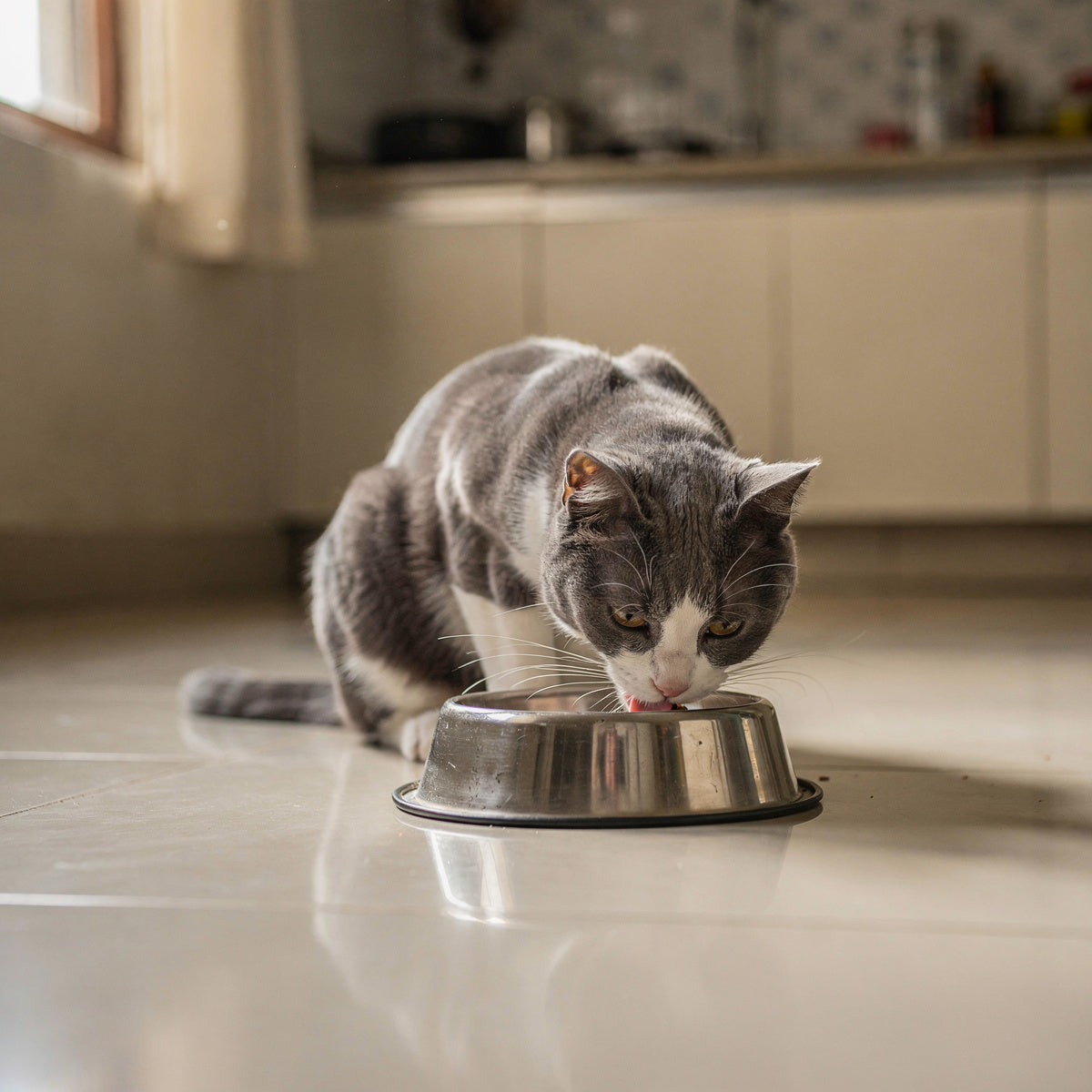
Every cat parent in Gachibowli we've ever spoken to has asked this question at some point. You're cooking dal-chawal for the family, your cat is weaving around your ankles, and it just feels natural to drop a little something in her bowl. We get it. But the real answer to whether homemade food or dry kibble is better for your cat is less about what's convenient for you and more about what a cat's body actually needs — and those two things are often very different.
Why do so many Indian cat owners try homemade food first?
The instinct makes sense. We feed our families home-cooked food, we trust what goes into it, and there's a certain comfort in knowing exactly what your cat is eating. Plenty of our customers at Cuddle Paws have come in after months of feeding their cats rice with chicken gravy or boiled fish, genuinely believing they were doing the right thing. A few of them were, to be fair. But most were unknowingly creating nutritional gaps that only showed up later — dull coats, weight loss, lethargy, or in more serious cases, taurine deficiency, which directly affects heart health in cats.
Cats are obligate carnivores. That phrase gets thrown around a lot, but here's what it actually means in practice: unlike dogs or humans, cats cannot synthesize certain amino acids on their own. Taurine is the big one. It has to come from their food, specifically from animal tissue. A homemade diet built around fish curry or egg whites might sound protein-rich, but unless you're carefully calculating every micronutrient in every meal, you're almost certainly missing something. Most home cooks are.
What does dry cat food actually get right?
Good quality dry cat food is formulated by veterinary nutritionists to meet standards set by AAFCO or similar bodies. That doesn't mean every bag on the shelf is excellent — it absolutely isn't — but it does mean that a decent kibble from a reputable brand covers the full spectrum of what your cat needs: the right protein-to-fat ratio, the right minerals, the right amino acid profile, and the correct levels of vitamins A and D, which cats also cannot produce independently.
Brands like Royal Canin, Drools, Whiskas, and Me-O are widely available in Hyderabad and serve different budget brackets. We stock several of these at our Hyderabad shop, and if you're ever unsure which one suits your cat's age or health condition, just ask us — we're happy to walk you through it in person. You can also browse our cat products collection online if you want to see what's available before you visit.
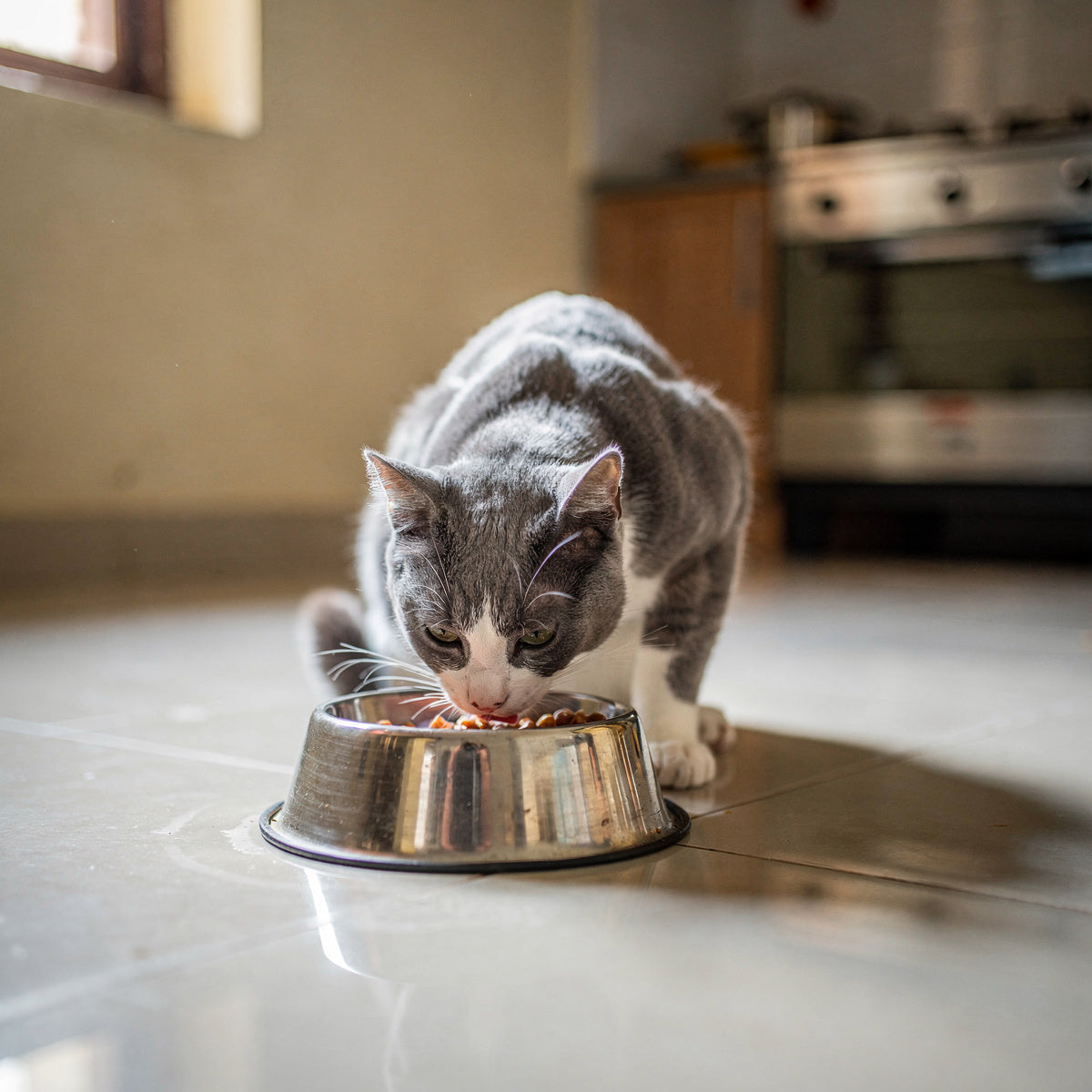
There's also the dental angle. Dry kibble has a mild abrasive effect on teeth as cats chew, which helps reduce tartar buildup. This matters more than most people realize. Dental disease is one of the most common health issues we see in cats above 4-5 years old, and it's expensive to treat. A cat who eats only soft or wet food — homemade or otherwise — is at higher risk. That alone makes kibble worth considering, especially for indoor cats who don't have the varied chewing habits of outdoor ones.
Is homemade cat food ever a good idea?
Honestly, yes — but only if you're doing it properly, and properly is harder than it sounds. If you want to feed your cat a home-cooked diet, you need to work with a vet who can prescribe a fully balanced recipe, which typically means adding a veterinary-grade supplement to cover the gaps. Just feeding boiled chicken or fish without supplementation isn't a home diet — it's an incomplete one.
We have customers who rotate a vet-approved raw or cooked diet with good quality dry kibble, and their cats do beautifully. The mix gives them variety in texture and flavour while the kibble provides nutritional insurance. If that kind of careful approach interests you, a vet can help you figure out a plan that actually works for your cat's specific age, weight, and health history.
What we'd caution against is the casual version — a bit of whatever you made for dinner, plus some biscuits when you remember. That inconsistency is where real nutritional problems develop over months and years.
What about cats with health issues or special dietary needs?
This is where dry food has a significant edge. If your cat has been diagnosed with kidney disease, urinary tract issues, diabetes, or food allergies, there are prescription and specialty dry food formulations designed specifically for those conditions. Recreating that kind of precision at home, meal after meal, is genuinely difficult without clinical guidance.
We had a customer last month whose 6-year-old Persian was developing early signs of kidney stress. The vet had recommended a low-phosphorus, controlled-protein diet. She had been trying to manage it with home-cooked food and was struggling to keep her cat interested while also hitting the right nutritional targets. Switching to a renal-support dry food made the whole thing more manageable — and the cat actually liked it, which is half the battle with Persians.
If your cat is dealing with a health condition, a good vet consultation before you decide on any feeding approach is non-negotiable. Food is medicine for sick cats, and guessing doesn't cut it.
Practical tips for switching your cat to dry food
If you've been feeding your cat homemade food for a while and want to transition to dry kibble, don't do it overnight. Cats have notoriously sensitive digestive systems and a strong aversion to sudden change. Start by mixing a small amount of dry food into their current meals — about 20 to 25 percent — and gradually increase the proportion over 7 to 10 days. If you see loose stools or your cat refuses to eat entirely, slow the transition down further.
One thing that helps a lot: make sure fresh water is always available. Dry food has much lower moisture content than homemade meals, so cats on kibble need to drink more than they naturally feel inclined to. Many cats are notoriously bad at self-hydrating. A cat water fountain can actually solve this problem quite well — the moving water triggers a cat's instinct to drink, and we've seen cats who barely touched a still water bowl drink much more consistently from a fountain. It's a small investment that makes a real difference.
Storage matters too, especially in Hyderabad's heat and humidity. Dry kibble left open in the bag will go stale quickly. Use an airtight container, keep it away from direct sunlight, and always check the expiry date before buying in bulk. We store our in-store stock in climate-controlled conditions for exactly this reason.
So which one should you choose?
For most cat owners — especially those with busy lives in Hyderabad's IT corridors, apartment setups, and variable schedules — a quality dry food is the more reliable choice for daily feeding. It's not the lazy option. It's the nutritionally complete one. Supplement that with occasional wet food or a vet-approved home meal if you want variety, and you've got a feeding approach that's both practical and genuinely good for your cat.
If you're still figuring out which dry food suits your cat's breed, age, or condition, come see us at our Hyderabad shop. We'll ask you a few questions, hear what your cat's like, and point you toward something that makes sense rather than just something that sells. That's kind of what we're here for.
Frequently Asked Questions
Can I feed my cat rice and fish at home instead of buying cat food?
You can, but it won't be nutritionally complete on its own. Fish and rice lack taurine, specific vitamins, and the correct mineral balance that cats need. Long-term, this kind of diet can cause heart problems and other deficiencies. If you want to include homemade elements, combine them with a quality dry food or consult a vet for a proper supplemented recipe.
Is dry cat food safe in India's hot climate?
Yes, as long as you store it correctly. Hyderabad's heat and humidity can cause kibble to go stale or even grow mold if left in an open bag. Always transfer dry food to an airtight container, keep it in a cool and dry spot, and use it within 6 weeks of opening. Buying smaller bags more frequently is better than buying in bulk if storage is a concern.
My cat doesn't drink much water — is dry food still okay?
This is a fair concern. Dry food is low in moisture, so cats on kibble do need to drink more. If your cat is a reluctant drinker, consider adding a wet food meal once a day or investing in a water fountain, which tends to encourage cats to drink more. Chronic dehydration in cats can lead to urinary issues over time, so it's worth taking seriously.
What dry cat food brands are good for Indian cats?
Royal Canin, Drools, Whiskas, and Me-O are all widely available and generally well-formulated. Royal Canin has breed-specific and life-stage options that are worth considering if you have a Persian, Maine Coon, or a kitten under 12 months. Drools is a decent budget-friendly option made in India. The best one depends on your cat's age, health, and how fussy they are — and that's exactly the kind of question we're happy to help you figure out in store.