Which tick treatment actually works for dogs?
Shampoos don't prevent ticks. Which spot-on or tablet to use for your dog in Hyderabad, how to get the dose right, and when to see a vet.
Anti-tick shampoos and powders don't stop ticks. They kill the ticks on your dog that day, then stop working. To keep ticks away, use a spot-on, a tablet or a tick collar, and keep it going all year, not only in the monsoon.
Key Takeaways
- Shampoos and powders only treat ticks already on your dog. Spot-ons, tablets and collars prevent new ones.
- Buy the dose for your dog's weight. A dose made for a smaller dog won't protect a bigger one.
- Check your dog after walks and wash bedding in hot water, because most fleas live in the house.
Why ticks get worse after the rains
Ticks and fleas breed fastest in warm, damp weather. The ones that hatch during the rains reach dogs in the weeks after, which is why late August and September are our busiest time for tick fever.
Tick fever is the real danger, more than the itching. Ticks carry blood infections, and the early signs are easy to miss: a tired dog, a smaller appetite, a mild fever. By the time the gums look pale, your dog needs blood tests and weeks of treatment.
Which product to use
Spot-ons. A few drops between the shoulder blades, once a month. This is the cheapest real protection. Savavet Fiprofort Plus starts at Rs 194 for small dogs and goes up to Rs 515 for the largest. It also stops flea eggs from growing into adults, not just killing the fleas you can see.
Monthly tablets. A chewable tablet once a month. These suit dogs that swim, get bathed often, or cuddle small children, because nothing sits on the coat to wash off or rub onto anyone. Simparica costs Rs 546 to Rs 637 a tablet, depending on your dog's weight.
Three-month tablets. One tablet protects for about three months. Bravecto starts at Rs 1,650. Month for month it costs about the same as a monthly tablet, and you can't forget a dose you only give four times a year.
Shampoos and powders. Use these when a dog already has a lot of ticks. A medicated bath or Extick powder at Rs 170 clears the ticks on the dog today. Then start a spot-on or tablet. They are step one, never the whole plan.
Get the dose right
Every product is dosed by weight. A dose meant for a smaller dog won't protect a bigger one, and then it looks as if the product doesn't work. If you're not sure what your dog weighs, we'll weigh them at the counter. It takes a minute.
Check these before you buy:
- Puppies: most products have a minimum age, often eight weeks.
- A cat at home: some dog tick products are poisonous to cats, even through touching the dog. Tell us if you have a cat.
- Dogs that swim or get bathed every week: choose a tablet, because water washes spot-ons off.
- Pregnant, nursing or unwell dogs: ask a vet first.
Two habits that stop ticks coming back
Check your dog by hand after walks: between the toes, inside the ear flaps, under the collar and in the armpits. Ticks go for thin skin. You're feeling for a small bump, anything from a sesame seed to a grape.
Clean the house as well. Most fleas don't live on your dog. They live in bedding, carpets and sofa gaps. Wash bedding in hot water, vacuum well, and empty the vacuum outside. Skip this and the fleas come back a couple of weeks after a treatment that seemed to work.
How to remove a tick
Use fine tweezers or a tick hook. Grip the tick close to the skin and pull straight up, slowly and steadily. Don't twist or jerk.
Don't use kerosene, petrol, nail polish or a match. They make the tick push its gut contents into the bite, which makes infection more likely, not less.
If the head stays in, leave it. It works its way out like a splinter. Clean the spot and keep an eye on it.
When to see a vet
See a vet if your dog stays tired for more than a day, stops eating, or has pale gums, nosebleeds or bruising on the belly. Tick fever treats well when it's caught early.
The research behind this
Most of this page comes from what we saw at our clinic after every monsoon, and from the product labels. Two points are worth their source.
Only adult fleas live on the animal. The European parasite guideline, ESCCAP, says "only the adult stages are found on the host with eggs and immature stages being found in the environment." That is why cleaning the house matters as much as treating the dog.
Some dog tick and flea products contain permethrin, which is poisonous to cats. The PDSA notes that a cat can be poisoned "if a cat comes into contact with permethrin on a dog, for example when grooming or sharing a bed."
Frequently Asked Questions
Does anti-tick shampoo prevent ticks?
No. It kills the ticks on your dog during the bath and then stops working. Use a monthly spot-on, a tablet or a collar to keep new ticks off.
How often should I use a tick spot-on on my dog?
Once a month, all year round. In Hyderabad ticks stay active well beyond the monsoon, so stopping in the cooler months leaves a gap.
Which is better for dogs, a tick tablet or a spot-on?
Both work. Tablets suit dogs that swim, are bathed often or live with small children, because nothing stays on the coat. Spot-ons cost less.
What are the signs of tick fever in dogs?
Tiredness, a smaller appetite and a mild fever come first. Pale gums, nosebleeds or bruising mean your dog needs to see a vet quickly.
अक्सर पूछे जाने वाले सवाल
क्या एंटी-टिक शैम्पू से टिक दोबारा नहीं आते?
नहीं। शैम्पू सिर्फ़ उसी दिन कुत्ते पर मौजूद टिक मारता है, उसके बाद उसका असर खत्म हो जाता है। नए टिक रोकने के लिए हर महीने spot-on या tablet देना ज़रूरी है, और यह पूरे साल चलना चाहिए।
कुत्ते के शरीर से टिक कैसे निकालें?
बारीक चिमटी से टिक को त्वचा के बिल्कुल पास से पकड़ें और धीरे-धीरे सीधा ऊपर खींचें। मरोड़ें नहीं। मिट्टी का तेल, पेट्रोल या जलती माचिस का इस्तेमाल बिल्कुल न करें, इससे इन्फेक्शन का खतरा बढ़ता है।
टिक फीवर के लक्षण क्या होते हैं?
कुत्ता सुस्त रहे, खाना कम खाए या हल्का बुखार हो, तो ध्यान दें। अगर मसूड़े फीके पड़ जाएँ, नाक से खून आए या पेट पर नील के निशान दिखें, तो जल्दी vet को दिखाएँ।
Sources
- ESCCAP Guideline 3: Control of Ectoparasites in Dogs and Cats, Fifth Edition, April 2016 — European Scientific Counsel Companion Animal Parasites
- Permethrin toxicity in cats — PDSA Pet Health Hub
Prices are current as of September 2026 and do change. The figure on each product page is the live one.
Tick Prevention for Dogs Monsoon Checklist
Good prevention is a routine, not a one-time bath or spray. The right approach depends on your dog’s age, weight, health history, coat type, and how often they go outdoors. Your veterinarian can recommend an appropriate preventive format and schedule, whether that is a topical treatment, an oral chew, a collar, or another option.
Keep parasite prevention on schedule
The most common monsoon mistake is letting a monthly preventive lapse because the dog has been indoors more often. Protection only works as intended when it is given or applied on time and according to the label or veterinary advice. Set a recurring phone reminder and record the date, especially in multi-pet homes where it is easy to lose track.
Never split a product between dogs, use a cat product on a dog, or choose a dose based on guesswork. Some ingredients and formulations are species-specific, and the wrong product can be harmful. If your dog is pregnant, very young, unwell, taking other medication, or has a history of seizures or skin sensitivity, ask your veterinarian before starting or changing prevention.
Check your dog after every wet walk
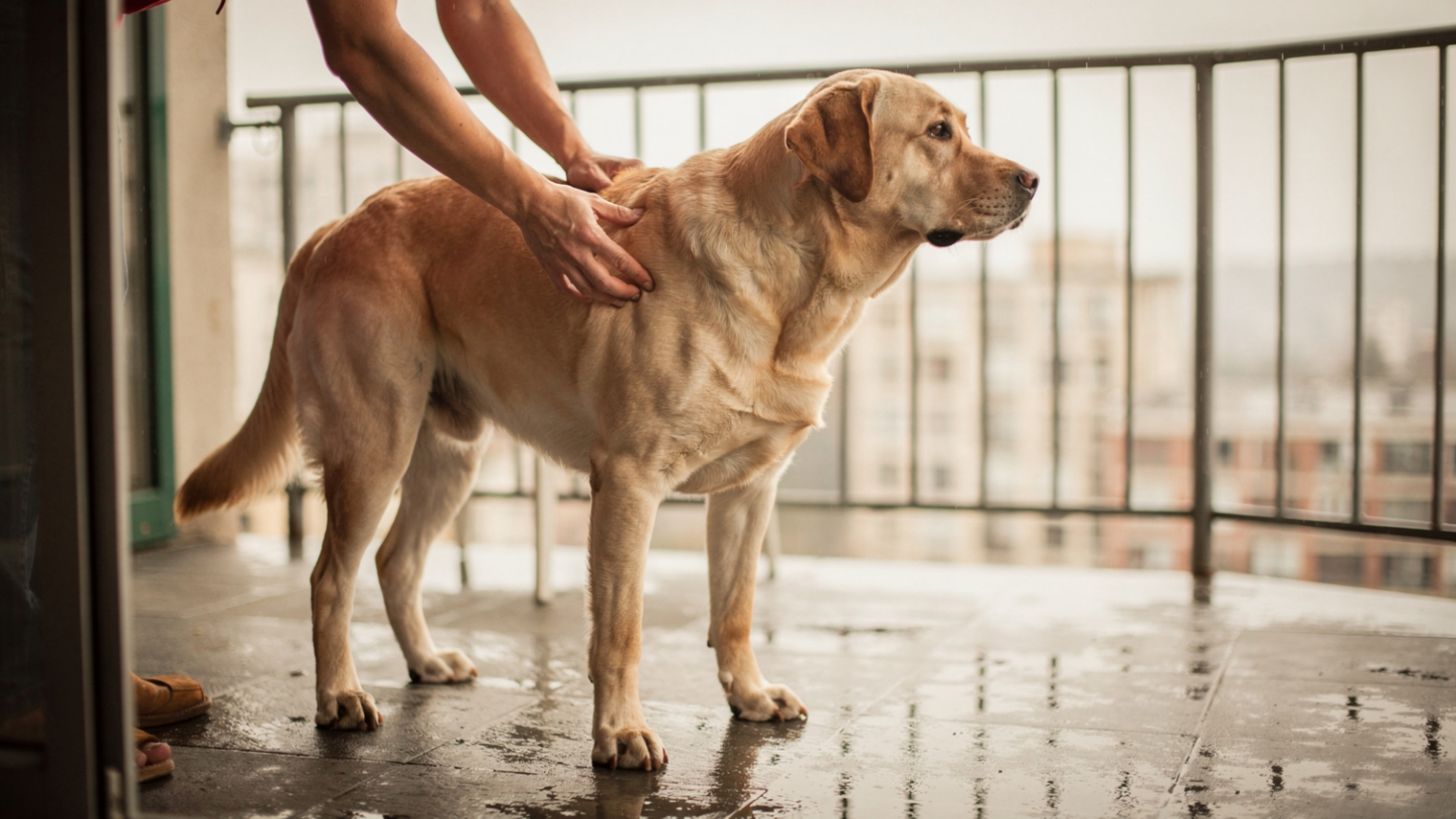
A two-minute inspection after a walk is one of the most useful monsoon habits you can build. Run your fingers slowly through the coat, feeling for small bumps. Look closely around the ears, under the collar, beneath the front legs, between the toes, around the groin, under the tail, and along the belly. Ticks often settle in warm, hidden areas before they become easy to see.
Long-haired dogs need a little more effort. Use a comb to separate the fur in sections, particularly around the neck and rear legs. For dogs who dislike handling, pair checks with treats and keep the experience calm. The goal is for your dog to see the inspection as part of coming home, not as a struggle.
If you find a tick attached, remove it carefully with a proper tick-removal tool or fine-tipped tweezers. Grip it close to the skin and pull upward steadily without twisting or crushing the body. Clean the area afterward and watch for swelling, redness, or changes in your dog’s behavior. When in doubt, let a veterinarian handle removal, especially if the tick is embedded deeply or your dog will not stay still.
Do not rely on bathing alone
Regular bathing and grooming help you spot parasites early, but shampoo is rarely a complete prevention plan. Rainy-season baths can also become excessive if you are trying to wash away every possible exposure. Too much bathing may dry out the skin, weaken the coat barrier, and leave an already itchy dog more uncomfortable.
Choose a gentle dog shampoo and dry thoroughly after baths or rain-soaked walks. Pay attention to the belly, paw pads, armpits, and skin folds. A damp coat held under a collar or harness can irritate the skin and make it harder to notice bites or early tick activity.
Make Your Home Less Welcoming to Ticks
The dog is only one part of the equation. Ticks can drop off in bedding, upholstery, crates, car mats, and shaded outdoor areas. If you find ticks on your dog, treat it as a home-cleaning cue as well.
Wash bedding, blankets, soft toys, and washable covers on a regular schedule. Vacuum rugs, sofa gaps, baseboards, and the area around your dog’s bed, then empty the vacuum promptly. Keep entry mats dry and avoid leaving wet towels or raincoats piled near where your dog rests.
If you have a balcony, yard, or ground-floor outdoor space, trim back dense grass and clear damp leaf piles where possible. You do not need a perfectly bare outdoor area, but reducing clutter and wet vegetation near your dog’s usual route can lower exposure. In apartment communities, choose paved or well-maintained walking paths after rain when you have the option.
For households with more than one pet, prevention needs to be coordinated. One untreated animal can keep the tick cycle going. Ask your veterinarian about safe, species-appropriate protection for every pet in the home. Do not assume products that are safe for dogs are safe around cats.
Grooming Helps You Catch Problems Early
Monsoon grooming is partly about cleanliness and partly about visibility. A clean, brushed coat makes daily inspections easier, while trimming excess fur around paws or sanitary areas can reduce how much mud and moisture your dog carries indoors. It is not necessary to shave every long-haired dog short for the season. In fact, an inappropriate clip can affect coat function and skin comfort.
Focus instead on practical maintenance: brushing out tangles, checking the skin beneath mats, keeping nails manageable for slippery floors, and drying paws after walks. Professional grooming can be useful when a coat is matted, difficult to inspect, or carrying persistent dampness and debris. If your dog has irritated skin, scabs, or a strong odor, skip cosmetic experimentation and seek veterinary guidance.