Why Baked Dog Food Is Better Than Extruded Kibble
The way dog food is made matters as much as what goes into it. Here's why baked dog food preserves more nutrition than standard extruded kibble — and what that means for your dog.
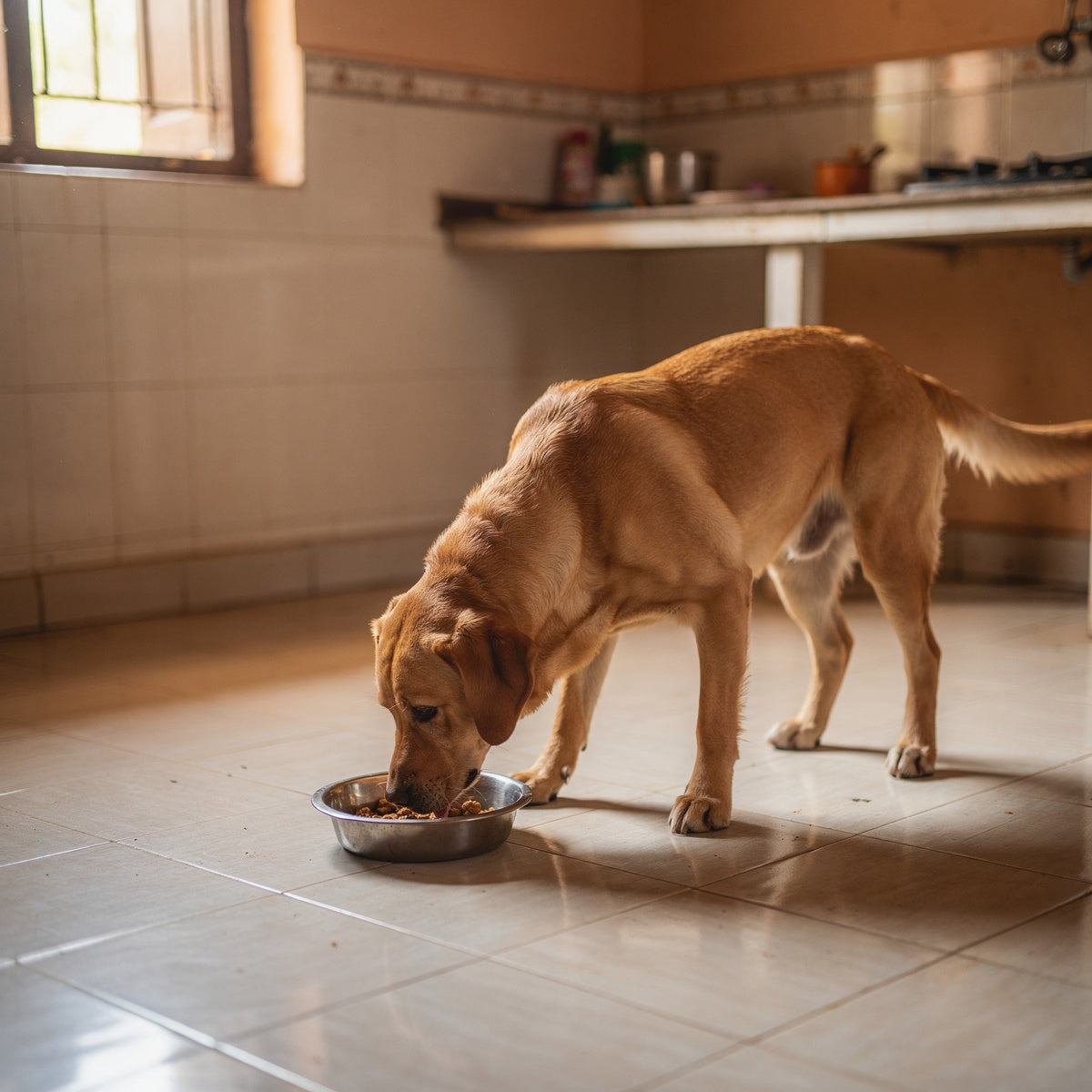
Most dog parents in Gachibowli spend a fair amount of time reading ingredient labels on pet food packaging. Protein percentages, crude fat, omega-3 content — the list goes on. But here's something that rarely gets talked about: how the food was actually made. The manufacturing process changes what survives into the bag. And if you're comparing baked dog food against the standard extruded kibble most brands sell, the difference is worth understanding before your dog's next meal.
What actually happens when kibble is extruded?
Extrusion is the standard process behind probably 90% of dry dog food on the market. Raw ingredients get mixed into a dough, then forced through a machine at extremely high temperatures — sometimes upward of 150 to 200 degrees Celsius — under intense pressure. The result is those uniform little pebbles your dog has likely been eating for years. The process is fast, cheap to run at scale, and produces a long shelf life. Those are its real advantages, not nutritional ones.
The problem is heat. Many vitamins, particularly B vitamins and vitamin C, break down significantly under the temperatures required for extrusion. Enzymes and some amino acids take a hit too. This is why most extruded foods get a vitamin and mineral premix sprayed or added back in after processing — you're essentially replacing what was cooked out. It works, but it's a workaround rather than ideal nutrition.
Frying is even more extreme, though you see it less commonly in India now. High oil content, heavy heat, and the result tends to sit harder in a dog's stomach — especially for breeds already prone to digestive sensitivity like Indian Pariah dogs, Beagles, or older Labradors.
How is baked dog food actually different?
Baked pet food uses lower temperatures over a longer cook time — closer to how you'd roast something in a home oven than how a factory extrudes at high pressure. The ingredients go in, moisture is reduced gradually, and what comes out keeps more of its original nutritional structure intact.
We had a customer earlier this year with a four-year-old Golden who kept having loose stools despite being on a mid-range kibble that looked decent on paper. We suggested trying a baked format, partly because the digestibility tends to be better — the slower, gentler cooking breaks down the food in a way that's easier on a dog's gut before it even reaches the stomach. Within about two weeks, the owner messaged us saying the dog's digestion had settled noticeably. Now, that's one case. But it's consistent with what the science suggests about baked food being more bioavailable for dogs with sensitive systems.
Flavour is another thing worth mentioning. Dogs that are fussy eaters — and some really are, particularly smaller breeds like Shih Tzus and Pomeranians which are popular in Hyderabad apartments — often take to baked food more readily. The natural aromas are better preserved. You're not masking the smell of compromised ingredients with artificial palatants, which is something the cheaper extruded foods rely on heavily.
Does baked dog food suit Indian dogs and the Hyderabad climate?
This is a fair question. Hyderabad runs hot for most of the year, and in summer, dogs are already under thermal stress. A food that's easier to digest means the body isn't working as hard to process a meal, which matters when your dog is panting through a 38-degree afternoon in Kondapur. Digestive load is real, even if it's invisible to us.
Indian dogs — whether Indie mixes, INDog types, or imported breeds acclimatising to local conditions — benefit from consistent nutrition rather than nutritional variability caused by processing losses. Baked formats help with that consistency. The vitamins and minerals listed on the label are more likely to be genuinely present in usable form, rather than partially degraded and partially replaced.
One thing to keep in mind: baked food is typically denser calorie-for-calorie than extruded kibble. If your dog is used to a certain cup measurement, you may need to slightly reduce portion size when switching. Check the brand's feeding guide and adjust based on your dog's weight and activity level rather than just eyeballing it.
What should you look for when choosing a baked dog food?
First, confirm the manufacturing process actually is baking. Some brands use the word loosely in marketing. Look for specific mentions of oven-baked at low temperatures, or a description of the process on their website. If it just says "baked goodness" in the tagline without any technical detail, that's worth investigating further.
Second, check the protein source. A baked food made from low-quality protein won't outperform a well-formulated extruded food just because of the cooking method. You want a named protein — chicken, lamb, fish — listed as the first ingredient. Not "poultry meal" as a catch-all vague ingredient.
Third, think about your dog's life stage. Puppies, adults, and senior dogs have different requirements. Baked foods come in life-stage formulas too, so there's no reason to settle for an adult formula if your dog is still under a year old.
If you're browsing options, our dog products collection includes a curated selection of foods and feeding accessories we've personally vetted. We don't stock everything — only what we'd feed our own dogs.
Switching your dog to baked food: do it gradually
Don't swap cold turkey. A sudden change in diet — even to something better — can cause loose stools or an upset stomach simply because the gut microbiome needs time to adjust. The standard approach is a 7 to 10 day transition: start with about 25% new food mixed with 75% old food, then move to 50/50, then 75% new, then full switch. If you notice any digestive upset, slow the transition down further.
Pair the food switch with fresh water access. Baked food has lower moisture content than wet food, and while dry kibble is similar, your dog should always have water available. If your dog doesn't drink enough on their own, a water fountain can genuinely help — the movement of water encourages dogs (and cats) to drink more. We've seen this work well in households where the dog was chronically under-drinking.
And when you do settle on a new food, pick the right bowl setup. Flat bowls, slow feeder bowls, elevated feeders — it all depends on your dog's size and eating habits. Our bowls and feeders range has options for every breed and feeding style.
If you have questions about which food format suits your specific dog — age, breed, health history — come into our Hyderabad shop or reach out to us directly. We talk through this kind of thing every day and would rather you ask than guess.
Read next: Best Dental Treats for Dogs: What Actually Works; How Much Does Dog Food Really Cost in India? A Price-Per-Kg Breakdown; Henlo Dog Food: Is It Actually Worth the Price?
Frequently asked questions
Is baked dog food available in India?
Yes, a few brands now offer oven-baked formats in India. Availability has improved significantly over the last two years, and you can find them both online and in specialty pet stores like ours in Hyderabad.
Is baked dog food good for dogs with sensitive stomachs?
Generally, yes. The gentler cooking process produces a more digestible food, which tends to suit dogs with chronic loose stools or food sensitivities. That said, digestive issues can have multiple causes — if your dog has ongoing problems, a vet check is worthwhile alongside any diet change. A vet can help assess what's going on.
Is baked dog food more expensive than regular kibble?
Usually, yes. The process is slower and less scalable than high-speed extrusion, so the cost per kilogram tends to be higher. Many pet parents find that because baked food is calorie-dense, the actual cost per serving works out closer than the sticker price suggests — you feed slightly less volume. Still, it's a premium format and that's worth knowing upfront.
Can I mix baked kibble with wet food?
Absolutely. Mixing formats is a good way to increase variety and moisture in your dog's diet. Just account for the combined calorie total when measuring portions, especially if your dog is watching their weight.