
Why Cats Scratch and How to Actually Stop the Damage
Your cat is not scratching your furniture out of spite — there are real biological reasons behind it. Here is how to understand the habit and redirect it effectively.
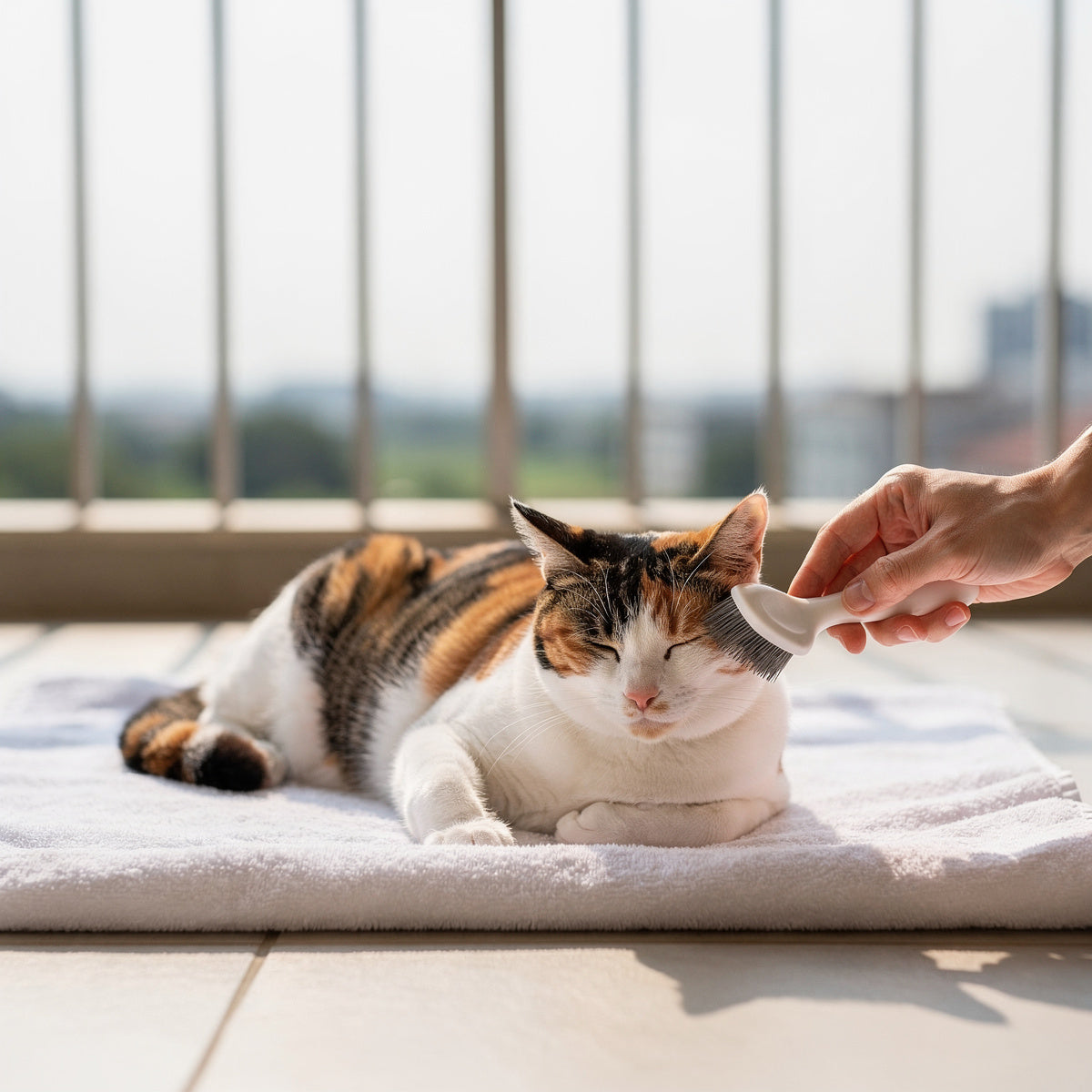
If you have a cat at home, you already know the feeling. You walk into the living room and find the corner of your sofa looking like something tried to climb it. Again. It's one of the most common complaints we hear from cat parents who visit us here in Gachibowli — and honestly, one of the most misunderstood problems in cat care. The scratch marks are not a personality flaw. Your cat is not doing this out of spite. There is a completely logical reason behind cat scratching furniture, and once you understand it, the fix becomes much easier to find.
What Is Your Cat Actually Doing When She Scratches?
Scratching is not random destruction. It is a built-in behavior that serves several purposes at once, and your cat's body is literally designed for it.
First, there is the claw maintenance angle. A cat's claws grow in layers. The outermost layer gets old and dull, and scratching physically strips it away to expose the newer, sharper claw underneath. It is more like a nail file than an act of aggression. If you have ever noticed little curved claw sheaths on your floor near where your cat scratches, that is exactly what is happening.
Then there is the territorial piece. Cats have scent glands tucked between the pads of their paws. Every time your cat drags her claws down the side of your sofa, she is leaving two signals at once — a visible mark and a scent message. In multi-cat households, or even in apartments where outside cats can be smelled through windows and balcony doors (very common in Gachibowli's high-rises), this territorial reassurance matters a lot to them.
Scratching is also how cats stretch. A good long scratch session pulls the muscles from the toes all the way up through the shoulders. Cats who are kept strictly indoors, which most apartment cats in Hyderabad are, do not get the kind of full-body movement that outdoor cats do. Scratching fills part of that gap.
Finally, and this one surprises people — scratching is a self-soothing behavior. When a cat is overstimulated, anxious, or even excited, scratching brings the arousal level down. It is calming. So if your cat goes straight to the sofa cushion right after a loud delivery person knocks on the door or after a particularly rowdy play session, that is not coincidence.
How Do You Know If the Scratching Has Become a Problem?
Some scratching is completely normal and manageable. But there are times when the behavior signals that something needs attention.
The most obvious sign is furniture damage that is getting worse despite having a scratching post available. If your cat has a post but still consistently chooses your couch, the post is probably wrong for her — wrong height, wrong texture, wrong location. We will get into that shortly.
Watch for broken or jagged claws. If a claw snags instead of shredding cleanly, your cat may scratch more frantically and in more places trying to fix the discomfort. Broken claws can also get infected, especially in Hyderabad's humidity, so it is worth a closer look.
Behavioral changes matter too. A cat who suddenly scratches more than usual, or scratches in new spots she previously ignored, may be dealing with stress. New furniture, a renovation, a new family member, a neighbor's dog — all of these can trigger anxiety-driven scratching. We had a customer come in last year with a three-year-old Persian mix whose scratching had gone from occasional to constant after they moved from a villa in Kondapur to a smaller flat. The cat had no vertical space and no outlet. That was the whole problem.
Why Does My Cat Ignore the Scratching Post I Already Bought?
This is probably the most frustrating situation cat parents face. You buy a post, you put it in a corner, your cat looks at it once and goes back to your curtains. Here is the honest reason: most of the budget scratching posts sold at general pet shops are too short and too wobbly.
Cats need to fully extend their bodies when they scratch. For a medium-sized cat, that means a post that is at least 60 to 70 cm tall. If the post wobbles when they push against it, they will immediately reject it — instinctively, a shaky surface feels unsafe. The base needs to be heavy or bolted down.
Texture matters just as much as height. Some cats want sisal rope. Others prefer the rough texture of corrugated cardboard. A few actually like carpet. If your cat is going after the sofa, notice which part — the fabric on the armrest or the firmer wooden frame underneath. That tells you something about the texture she is looking for.
Location is the third factor people overlook. Cats do not scratch in hidden corners. They scratch in prominent spots because the point is to leave a visible territorial signal. Put the post near the sofa she has been using, or near where she sleeps and spends most of her time. A post tucked behind a door in the spare bedroom will be ignored every single time.
How to Redirect Cat Scratching Without Punishing Your Cat
Punishment does not work with cats. Spraying water, making loud noises, or physically moving her away from the sofa will make her anxious without teaching her anything useful. The goal is redirection, not correction.
Start by making the scratching post more attractive than the sofa. Rub a little dried catnip into the sisal if she responds to it. Hang a toy near the top of the post. Spend a minute each day playing near it so she associates that area with good things. When she uses the post, even briefly, acknowledge it. Some cats respond to a calm verbal reward. Others want a treat. You know your cat.
At the same time, make the furniture less appealing. Double-sided tape along the areas she targets works well because cats hate the sticky sensation on their paws. You can also use furniture protector panels — clear plastic sheets that cover the corner of the sofa. They are temporary tools, not permanent fixtures. Once the habit shifts, you remove them.
Nail trims are genuinely underused as a management tool. A cat with trimmed nails still scratches, but the damage to furniture is dramatically reduced. If you have never trimmed your cat's nails before, come see us at the store — we can show you the technique, and we also offer grooming services at Cuddle Paws if you would rather have someone handle it for you.
For cats who are clearly scratching from anxiety rather than habit, the environment matters more than the post. Adding vertical space — cat shelves, a tall cat tree, even a cleared windowsill with a view — can reduce overall stress significantly. Hyderabad apartments tend to be compact, but vertical space takes up zero floor area and makes a huge difference to a cat's sense of security.
What About Cats Who Scratch Excessively or Suddenly?
If your cat was previously fine and has suddenly started scratching intensely, and you have already ruled out environmental changes, it is worth a vet visit. Skin irritation, allergies, and claw problems can all trigger compulsive scratching. We see a fair number of cats during Hyderabad's monsoon season with fungal skin issues that go unnoticed until the scratching becomes hard to miss. See a vet if you want a quick check before it becomes a bigger problem.
For multi-cat households, make sure there are enough scratching surfaces to go around. The general rule is one post per cat, plus one extra. Competition over resources is a real stressor in cats and often shows up as behavioral changes including increased scratching.
Building the Right Setup for Your Cat at Home
The best long-term approach combines a few things: the right scratching surface in the right place, regular nail maintenance, and an environment where your cat feels settled. It sounds like a lot, but most of it is a one-time setup effort.
Browse our full range of cat products to find scratching posts, nail care tools, and everything else your cat needs to stay comfortable at home. If you are also thinking about a proper resting space — cats who feel safe tend to scratch less out of anxiety — take a look at our dog and cat beds. A dedicated, comfortable spot to rest goes a long way toward reducing stress-driven behaviors.
Your sofa can be saved. It just takes understanding what your cat is actually asking for and giving her a better option to ask with.
Frequently Asked Questions About Cat Scratching
Is it okay to declaw a cat to stop scratching?
No. Declawing is not a nail trim — it is the surgical removal of the last bone in each toe. It is painful, causes long-term mobility problems, and is considered inhumane by most veterinary associations. It is also completely unnecessary when the scratching behavior can be managed through redirection and environmental changes. Please do not do this.
My cat scratches the floor, not just furniture. Is that normal?
Yes, especially around the food bowl area or near the litter box. Cats sometimes scratch the floor as part of an instinct to bury or cover things. If it is happening constantly and seems obsessive, mention it to a vet, but occasional floor scratching is not a cause for concern.
Can I use a spray to stop my cat from scratching the sofa?
Cat deterrent sprays can work as a temporary measure. Look for ones with citrus or bitter apple scents — most cats strongly dislike both. Spray the targeted area lightly and reapply every few days. Use it alongside a scratching post, not instead of one. The spray tells her where not to go; the post tells her where to go instead.
How often should I trim my cat's nails in Hyderabad's climate?
Every three to four weeks is a reasonable schedule for most indoor cats. In humid conditions like Hyderabad's monsoon months, claws can sometimes feel softer and may snag more easily, so keeping them trimmed is especially helpful during that period. If your cat resists nail trims at home, we are happy to help at our grooming studio.