How to Keep Your Dog Cool in Hyderabad Summer
Hyderabad summers cross 42°C and your dog has almost no way to cool down on their own. Here's what actually works to keep them safe — from walk timing to home cooling to spotting heat stroke early.
Hyderabad in April is one thing. Hyderabad in May is a different animal entirely. By the time we hit peak summer, temperatures around Gachibowli regularly cross 42°C, and the roads bake well past that. For your dog, that's not just uncomfortable — it can become dangerous faster than most people expect. We see it every year at Cuddle Paws: customers rushing in with a lethargic dog, asking what went wrong. Usually, the answer is heat, and usually, it was preventable.
Dogs cool themselves almost entirely through panting. That's it. No sweating through skin, no way to strip off a layer. When the air they're breathing is already 40°C, panting doesn't do much. Their core temperature rises, organs start struggling, and if nothing changes, cells begin to fail — all within 10 to 15 minutes of serious overheating. This guide covers what you actually need to know to keep your dog safe through a Hyderabad summer, without overcomplicating it.
Why Do Some Dogs Overheat Faster Than Others?
Breed matters a lot here. Pugs, French Bulldogs, and Shih Tzus — the flat-faced (brachycephalic) breeds — are in a different category of risk. Their shortened airways mean panting is already inefficient on a good day. In summer, they're working twice as hard to do half the cooling. If you have one of these dogs, your heat precautions need to start earlier and go further than they would for other breeds.
That said, don't get complacent if you have a Labrador or a Golden Retriever. We had a customer a couple of summers ago with a healthy 4-year-old Lab who went for a 20-minute midday walk near the Financial District. The dog came back barely able to stand. Labs are athletic, yes, but they're also big-bodied and enthusiastic enough to push through warning signs that a smarter (lazier) dog might heed. Indian Pariah Dogs and Indie mixes tend to cope better — they've had generations to adapt to this climate — but even they need help when temperatures are extreme.
Age and weight are factors too. Puppies under six months and dogs over 8 years are more vulnerable. So are overweight dogs — extra body fat traps heat. If your vet has been suggesting your dog could lose a few kilos, summer is a good reminder of why that conversation matters.
What Does Heat Stroke Actually Look Like?
Catching this early is everything. The first signs are easy to miss if you're not watching for them: excessive panting that seems out of proportion to activity, drooling more than usual, and a dog that's just not acting right — slower, less responsive, maybe stumbling slightly. Their gums can shift from pink to pale or a deep, angry red. If you get to this stage and don't act, it escalates quickly to vomiting, seizures, and collapse.
Normal body temperature for a dog is 38 to 39°C. Once it crosses 41°C, you're in emergency territory. You don't need to memorize that number — just know that if your dog has been in the heat and is showing any of the above signs, you treat it as urgent. Get them somewhere cool, wet their paws and belly with room-temperature water (not ice cold — that constricts blood vessels and slows cooling), and get to a vet. A vet handles exactly these situations, and it is always better to go in as a precaution than to wait and see at home.
When Should You Walk Your Dog in Hyderabad Summer?
Before 8 AM, and after 7 PM. That's the honest answer. We know the IT crowd in Gachibowli has brutal schedules, but the 6 AM walk before work is genuinely your dog's best option from April through June. Midday and afternoon walks on roads that have been absorbing sun all day aren't just hot — they're physically harmful to paws. Do the back-of-hand test on the pavement before you let your dog walk on it. If you can't hold your hand there comfortably for five seconds, your dog's paw pads will burn. Roads near Cyber Towers and along the ORR are some of the worst for this — very little shade, heavy traffic heat radiation.
Keep walks shorter too. A dog that normally does 45 minutes in January can manage 20 minutes in May, especially in the early morning when it's still relatively cool. High-energy dogs might protest, but they'll thank you later.
Practical Ways to Keep Your Dog Cool at Home
Most apartments in Gachibowli have AC, which genuinely helps. But a few things make a bigger difference than people realize. First, water access. Your dog should have clean, fresh water available constantly — not the bowl you filled this morning that's now lukewarm and half-evaporated. In summer, we strongly recommend switching to a water fountain or auto-feeder setup that keeps water circulating and cool. Dogs drink significantly more when the water is fresh and moving, and hydration is your first line of defence against overheating.
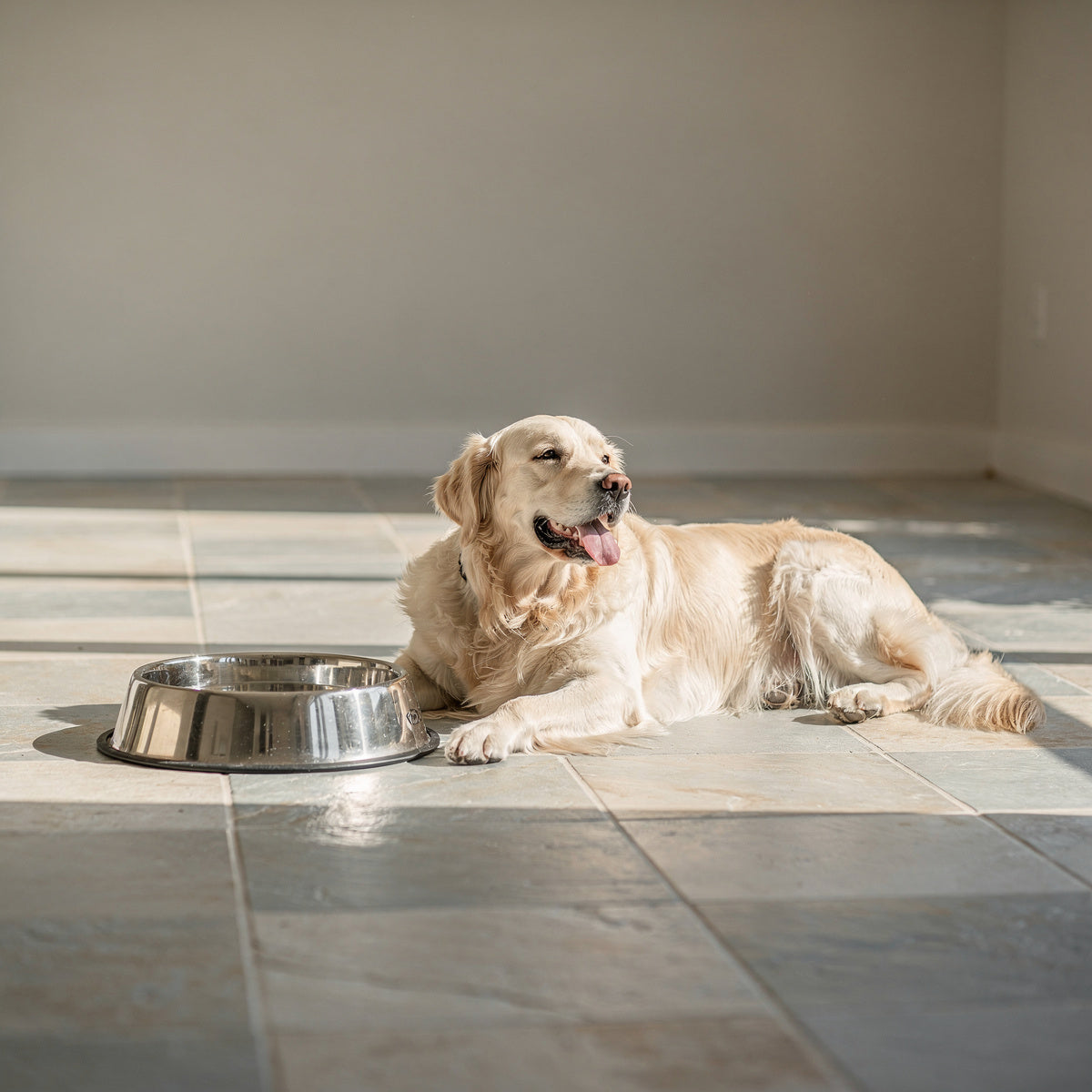
Second, where your dog rests matters. Stone or tile floors are naturally cooler than beds or carpets, and most Indian dogs figure this out themselves — you'll find them flattened on the bathroom floor in peak summer. Let them. If you want to give them something designed for it, a raised mesh bed allows air circulation underneath, which is far better than a thick padded bed that traps body heat. We stock both standard and elevated beds if you want to look at options.
Frozen treats are genuinely useful, not just cute. A basic recipe: blend plain curd with some cucumber and a little boiled chicken, pour into an ice cube tray, freeze. Dogs love it and it helps bring their temperature down from the inside. Avoid anything with grapes, onions, or xylitol — common sense, but worth saying.
If you need to transport your dog during the day — vet visits, travel, errands — keep them in a well-ventilated carrier with the car AC running before they get in. Never leave a dog in a parked car, even for five minutes. A car in Hyderabad sun heats up to oven temperatures within minutes.
Should You Shave Your Dog's Coat in Summer?
This comes up constantly and the answer is: it depends, and usually no. Double-coated breeds like Huskies, Samoyeds, and German Shepherds have coats that actually insulate against heat as much as cold. Shaving them removes that protection and can lead to sunburn and coat damage that takes years to recover. Single-coated breeds like Labradors or Beagles can get a trim to reduce density, but a full shave isn't necessary or helpful.
What does help is regular grooming through summer — brushing out dead undercoat allows better airflow to the skin. If your dog is heavily matted, that's a genuine heat risk because mats trap moisture and prevent the coat from doing anything useful. Our grooming team handles summer coat management all season and can advise on what makes sense for your specific breed.
FAQs — What Hyderabad Pet Parents Ask Us Most
My dog refuses to drink water in summer. What can I do?
Try switching from a regular bowl to a fountain — the movement and freshness make a real difference. You can also add a splash of plain chicken broth (no onion, no salt) to the water to make it more appealing. Some dogs will eat cucumber slices or watermelon (seedless) as a hydration source if they won't drink directly. If your dog is consistently refusing water and seems lethargic, that's a vet visit — it could signal something beyond just preference.
Is it safe to take my dog to Necklace Road or Hussain Sagar in summer?
Early morning, yes — before 8 AM when the surface hasn't fully heated yet and there's shade near the lake. Later in the day, no. The open stretches around Hussain Sagar get brutal by 10 AM, and the concrete retains heat for hours after that. Stick to shaded park areas if you go mid-morning, keep it short, and always bring water.
Can I use a wet towel to cool my dog down?
Yes, but technique matters. Wet a towel with cool (not icy) water and apply it to the neck, armpits, belly, and between the back legs — these are the areas with major blood vessels close to the surface. Don't wrap the dog in a wet towel and leave it; that can actually trap heat. Wipe, let it evaporate, repeat if needed. A gentle spray bottle works too.
My dog is an outdoor dog in our society compound. How do I protect them during summer?
This is a harder situation, but manageable. Shade is non-negotiable — a proper covered shelter, not just a tree that moves with the sun. Water needs to be in a heavy bowl that won't tip, refilled at minimum twice a day. Try to bring them inside or into a covered, ventilated space between 11 AM and 6 PM during the hottest months. If the dog sleeps outside, make sure their sleeping area doesn't become a heat trap — corrugated metal roofs, for example, radiate heat all night after absorbing it during the day.