How to Get Your Cat to Sleep in a New Bed
Your cat walked past the brand new bed and went straight to your laptop bag. Here's why that happens and what to actually do about it.
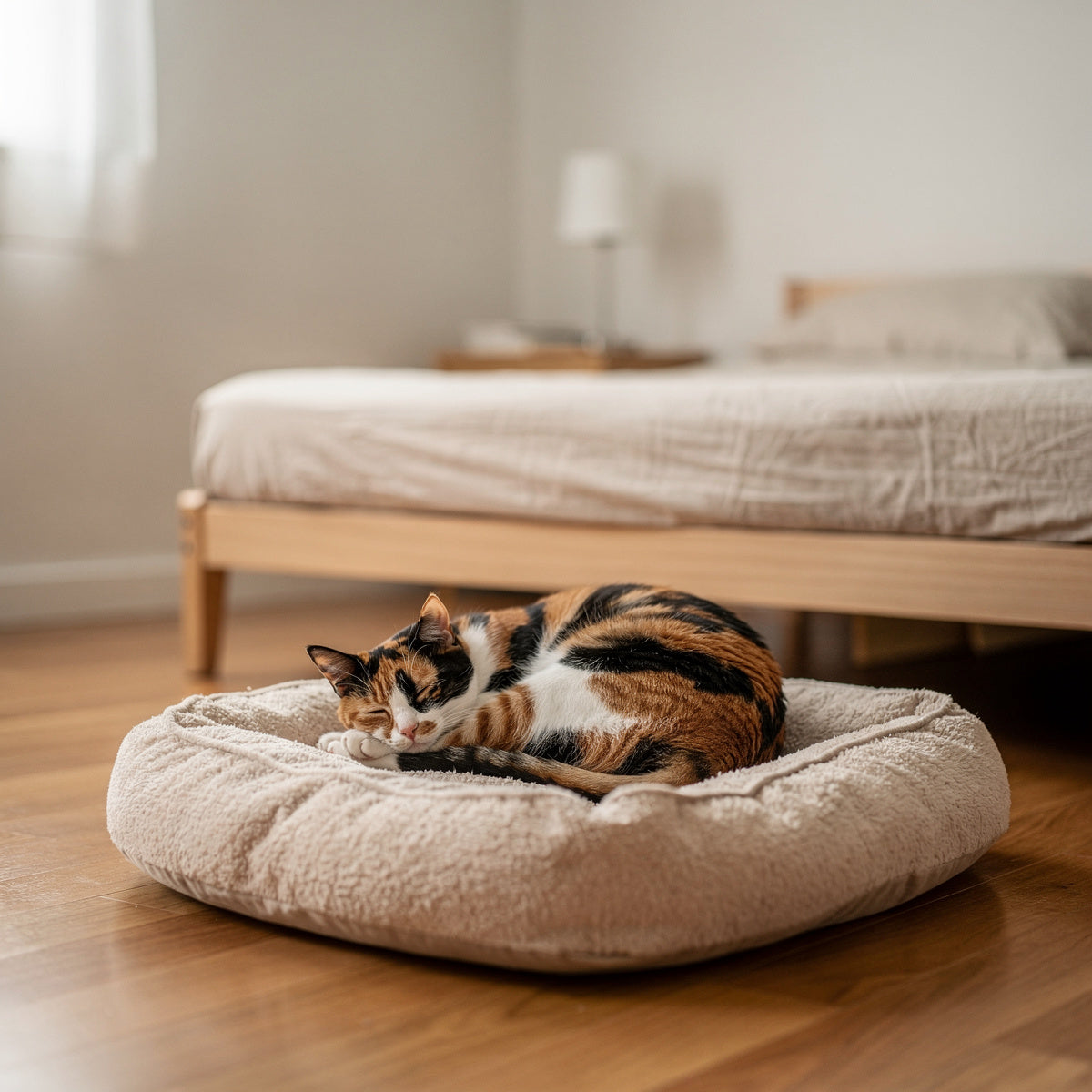
You spent good money on a new cat bed. You placed it in what seemed like a perfectly reasonable spot. And your cat walked straight past it, curled up on your laptop bag, and went to sleep. Sound familiar? We hear this story at least twice a week at our store in Gachibowli. The truth is, cats don't adopt new things the way dogs do. They assess, they judge, and they usually make you work for it.
But here's the thing — once a cat does claim a bed as their own, they'll use it religiously. The goal is just getting them there. This guide is about exactly that: understanding why cats resist new beds, choosing the right one, and using a few simple tricks that actually work.
Why Does My Cat Ignore a Brand New Bed?
Cats are not being dramatic. They're being cats. Their world is built on scent and familiarity. A new bed smells like a factory, a shipping box, or a stranger's hands. From your cat's perspective, it's an unknown object that hasn't earned a place in their territory yet.
This is especially common in Hyderabad apartments where cats have limited indoor space and very defined zones — that one corner of the sofa, that exact windowsill, the top shelf of the wardrobe. Introducing a new object into that space is a bigger deal than most pet owners realize. Your cat isn't being stubborn. They're being cautious, which is actually a healthy instinct.
The fix isn't to force it. It's to make the bed smell and feel familiar before you ever expect your cat to sleep in it.
Watch How Your Cat Sleeps Before You Buy Anything
This is the step most people skip, and it's the most important one. Spend a few days noticing where your cat naturally gravitates. Do they press themselves into corners or under furniture? They'll probably prefer a hooded or cave-style bed. Do they sprawl out in the open on flat surfaces? A wide, cushioned mat-style bed will suit them better. Do they love high perches — the top of the fridge, the wardrobe, the back of the couch? An elevated or wall-mounted option might actually get used.
We had a customer last month with a 4-year-old Persian mix who kept buying beds and getting ignored. When we asked where the cat slept naturally, she said — the narrow gap between the washing machine and the wall. Classic enclosed-space preference. We recommended a covered igloo bed, placed in a similar low-traffic corner, and she messaged us a week later with a photo of her cat fully inside it, completely asleep.
Size matters too. Your cat should be able to stretch fully without hanging off the edge. If anything, go slightly larger than you think you need.
How to Make a New Cat Bed Smell Like Home
This is the single most effective thing you can do. Before the bed ever touches the floor, take an old t-shirt you've worn — or a small blanket your cat already sleeps on — and place it inside the bed. Your scent and your cat's existing scent are the fastest way to make a new object feel safe.
If your cat has a favourite toy, put that in there too. Let the bed sit in the room for a couple of days without any pressure. Don't carry your cat over and place them in it. Don't stare at them while they sniff it. Just let it exist in their environment until curiosity takes over — and it will.
You can also try a small amount of catnip rubbed into the bed surface if your cat responds to it. Not all cats do, but for those who are affected, it's an almost unfair advantage. A few treats scattered nearby — not in the bed itself at first — can also draw them closer without making them feel cornered.
Where You Place the Bed Matters More Than You Think
Location is everything. A bed placed in the middle of a busy hallway, near a loud appliance, or somewhere a child or another pet might disturb them will almost never get used. Cats sleep deeply and they need to feel safe to do that.
Pick a spot that mirrors where your cat already likes to rest. If they love the sunny patch by the balcony door in the morning, put the bed there. If they prefer a quieter corner of the bedroom, that's where it should go. In Hyderabad's warmer months, a spot with a light breeze or near the AC vent might be preferred over a heated location — which is worth keeping in mind if you're buying a heated bed.
Speaking of placement, don't put the new bed right next to an old sleeping spot and expect the cat to naturally migrate. That rarely works. Place it slightly away, let them investigate, and over a few days you can gradually move it to your preferred location if needed.
Which Type of Cat Bed Actually Gets Used?
There's no single answer because cats genuinely differ. But here's what we've observed selling cat products in Gachibowli over the years:
Hooded or cave beds are the most universally accepted type, especially for indoor cats in apartments. The enclosed shape triggers that natural denning instinct. Cats feel hidden, which helps them relax fully. If you're buying a first bed and your cat's preferences are unknown, this is the safest starting point.
Flat or bolstered cushion beds work well for confident, social cats who like to be visible and in the middle of things. Some cats genuinely prefer sleeping where they can see the room. A raised bolster edge gives them something to rest their chin on, which many cats love.
Elevated beds and perches are excellent for cats who are always climbing. If your cat is constantly on top of furniture, they might actually prefer sleeping at height. These work particularly well for multi-cat homes where a lower bed gets claimed by another cat.
If you're ready to invest in something your cat will actually use long-term, have a look at our dog and cat bed collection — we stock options across all these styles. For something more premium with better material and durability, our premium beds are worth the look, especially if your cat has joint issues or is older.
Patience Is the Actual Strategy
Some cats accept a new bed within two days. Others take three weeks. If your cat is still avoiding it after a week, don't give up — try moving the bed to a different location, swapping out the inner liner, or adding a different scent cue. One thing we always tell customers: never force a cat into the bed. Picking them up and putting them in it might feel logical, but it usually makes them associate the bed with stress, which is the opposite of what you want.
Positive reinforcement works far better. Any time your cat sniffs the bed, sits near it, or puts even one paw inside — treat them. A small piece of their favourite snack right after the behaviour creates an association that builds over time. It's not instant, but it works.
If you're dealing with a cat who's recently moved homes or lost a companion animal, the resistance to new objects might last longer. That's normal. Give them more time and more scent familiarity before expecting any change.
A Note on Hyderabad's Climate
This comes up more than people expect. Hyderabad summers are brutal, and a thick, heavily padded bed will be ignored completely from March through June because it's just too warm. If your cat sleeps on cool tile floors during peak summer, that's not laziness — that's thermoregulation. Consider a raised mesh bed or a thin cotton mat-style option during the hotter months, and switch to a plusher bed once the weather cools down post-monsoon. Cats will often return to a cosier bed naturally once temperatures drop.
During monsoon, indoor cats especially tend to sleep more, so if you've been waiting for the right time to introduce a new bed — the cooler, wetter months are genuinely your best window.
Frequently Asked Questions
My cat sleeps on my bed every night. How do I get them to sleep in their own bed?
This is a gradual transition, not an overnight switch. Start by placing their bed on your bed for a few nights so they can get comfortable with it while still near you. Then move it to the floor beside your bed, and eventually to its permanent location. Going cold turkey rarely works and often just causes anxiety.
Is a heated cat bed safe to use in Hyderabad's climate?
Heated beds are best used during cooler months — roughly October through February in Hyderabad. During summer, skip it entirely. If you do use one, ensure it has an automatic thermostat cut-off and never leave it plugged in unsupervised for extended periods. Always check the surface temperature before letting your cat settle in.
My cat keeps dragging their bed to a different spot. Should I let them?
Yes. If your cat is moving the bed somewhere specific, that location is almost certainly where they feel safest. Let them pick the spot, at least initially. Once they're consistently using the bed there, you can try moving it very gradually — a few inches at a time — toward a more convenient location.
How often should I wash my cat's bed?
Every two weeks is a reasonable baseline, more often if your cat goes outdoors or if you're dealing with a flea issue — which is a real concern in Hyderabad's tropical climate. Use a gentle, fragrance-free detergent since strong scents can deter your cat from returning to the bed after washing. Air drying is better than machine drying whenever possible.