
How to Choose the Right Dog Bed for Your Pet
Picking a dog bed sounds simple until you're standing in front of fifteen options with no clear idea what your dog actually needs. Here's what our Gachibowli team looks for — and what most people get wrong.
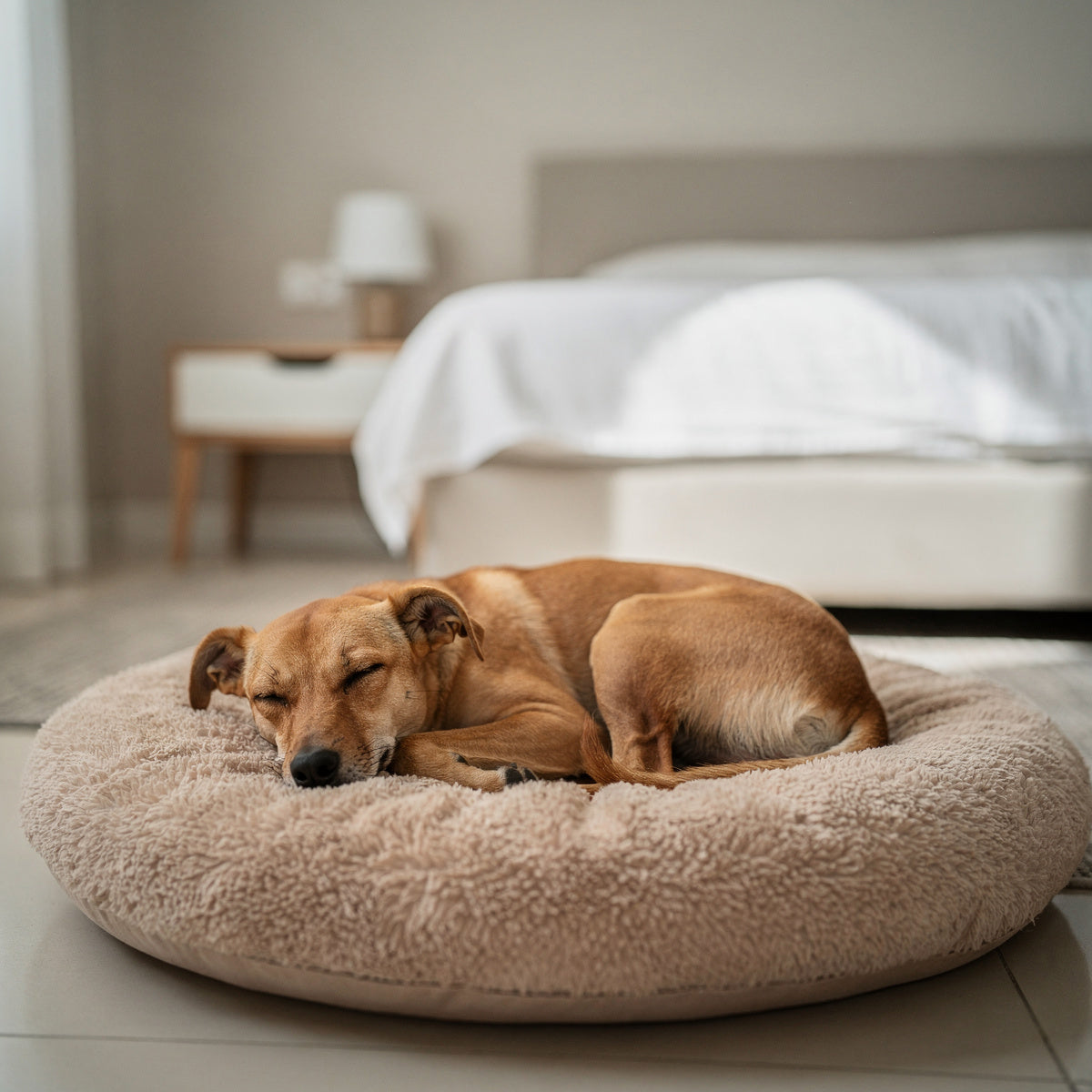
Your dog spends anywhere from 12 to 16 hours a day sleeping, depending on their age and breed. That's more than half their life horizontal. And yet, a lot of pet parents in Gachibowli pick a dog bed the same way they'd grab a random cushion off a sale rack — quickly, without much thought. We completely understand the impulse. Walk into any pet section and there are fifteen options staring at you. But the wrong bed can mean a dog that wakes up stiff, abandons the bed entirely, or wears it out in three months flat. Getting this right matters more than most people realize.
This guide is our honest take on what to look for — based on what we see working for dogs that actually come into our store, not just what looks good on a product page.
What Does Your Dog's Sleep Style Tell You?
Before you even look at products, spend a couple of days watching how your dog actually sleeps. We're serious. It sounds obvious, but most people skip this step entirely.
Dogs that curl up tight — nose tucked near their tail — feel more secure in beds with raised bolster sides. Think of it like sleeping in a corner vs. an open room. The walls help them relax. Dogs that sprawl out on their side, legs going in every direction, need a flat, wide surface with no obstructions. A bolster bed for a sprawler just means they'll hang off the edge and ignore the sides anyway.
Some dogs, especially heavy breeds like Labs and Golden Retrievers, press their chin or cheek against a raised edge while sleeping. For them, one bolstered side is enough. Indian Pariah dogs and Indie mixes we've seen tend to be unpredictable sleepers — sometimes curled, sometimes flat — so a larger flat pillow bed usually works well for them.
If your dog currently sleeps on a sofa, a tiled floor, or a random piece of your clothing, that's also useful data. A floor-sleeper likely prefers something cool and firm. A sofa-stealer wants softness and probably some elevation.
Which Type of Dog Bed Should You Actually Buy?
There are four main types, and each has a real use case.
Orthopedic beds use memory foam or high-density foam to distribute your dog's weight evenly. These aren't just for old dogs — any breed over 20 kg benefits from proper joint support, especially on tiled floors which are common in Hyderabad apartments. If you have a German Shepherd, a Labrador, or any large breed above five years old, an orthopedic bed should honestly be your default choice. We had a customer last month with a seven-year-old Labrador who'd been sleeping on a thin cotton mat. The dog had started limping slightly in the mornings. Two weeks on a memory foam orthopedic bed and she was noticeably better. Sometimes it really is that simple.
Bolster beds have raised edges on some or all sides. Great for dogs that like to rest their head on something or feel enclosed. Smaller breeds like Shih Tzus, Pugs, and Dachshunds tend to love these. The sides double as a pillow and a sense of security.
Flat pillow or mattress beds are exactly what they sound like — a padded surface without walls. Low maintenance, easy to wash, and ideal for dogs that sprawl. These are also the most budget-friendly option and work well for younger dogs whose sleeping habits are still shifting.
Raised or elevated beds have a cot-style frame that keeps your dog off the ground. In Hyderabad's heat — and we're talking about 38 to 42 degrees in March through June — airflow underneath the bed makes a real difference. These are good for outdoor areas, balconies, or any dog that consistently avoids soft beds and gravitates toward the cool floor. Some dogs just run hot, and fighting that preference isn't worth it.
You can browse our full range of dog and cat beds to compare options across all these types, or check out our premium beds if you're looking for something that'll last several years.
How Do You Figure Out the Right Size?
Measure your dog. Literally take a tape measure. Measure from the tip of their nose to the base of their tail while they're lying in their natural sleep position. Add about 25 to 30 cm to that number. That's the minimum bed length you should be buying.
People consistently undersize dog beds. It's easy to do — the dog is standing in front of you and you eyeball it. But a sleeping dog takes up significantly more space than a standing one. A bed that looks right in the store might leave your dog with their head dangling off the edge at home.
On the flip side, going too big can make some dogs feel unsettled, particularly anxious breeds or puppies who need that sense of enclosed security. For puppies, we generally suggest going slightly larger than their current size since they grow fast, but not so large that they look lost in it.
What Material Should You Choose and Why It Matters More Here Than Elsewhere
Hyderabad's climate is the factor most online guides completely ignore when recommending dog bed materials. We're in a hot, humid city. Thick plush fabric might feel luxurious when you're shopping in December, but from February through September it becomes a sweat trap. Your dog will avoid it.
For most of the year here, breathable materials — cotton canvas, mesh panels, microfibre with good airflow — are more practical than heavy velvet or shaggy plush. If you do want something softer and fluffier for the winter months (yes, Hyderabad does get cool from November to January), having a separate seasonal cover or a removable insert is the smarter move than buying an entirely different bed.
Memory foam interiors hold up well in this climate as long as the cover is breathable. The foam itself doesn't trap heat the way it might seem — the outer fabric does. So a memory foam bed with a cotton or microfibre cover is a good year-round option for large breeds.
Also think about ticks and fleas. We deal with this constantly in Gachibowli, especially for dogs that go out in the morning or evening near the tech parks or lake areas. Beds with removable, machine-washable covers make weekly cleaning actually doable rather than a project you keep putting off. If the cover is stitched in and can't come off easily, you're going to struggle to keep it clean.
Special Needs: Senior Dogs and Dogs with Joint Issues
If your dog is above eight years old, or if your vet has mentioned arthritis or hip dysplasia, the bed decision carries more weight. Getting up from a flat-on-the-floor position is harder on joints than it sounds. A bed with some height — not too high that they have to jump, but elevated enough to reduce how far they have to push themselves up — genuinely helps with daily comfort.
Low-entry orthopedic beds designed specifically for senior dogs have a cut-out or lowered front panel so they can walk in rather than step up. We see this make a meaningful difference for older Labs and German Shepherds especially. Pair it with a non-slip base so the bed doesn't slide on your tiles when they're trying to get in or out.
If your dog has recently had surgery or is recovering from an injury, talk to your vet about what surface is appropriate before you buy. Your vet can also guide you on what type of rest surface supports recovery best.
How to Keep the Bed in Good Shape
A dog bed that isn't cleaned regularly becomes a flea nursery and a source of skin issues. In a tropical climate like ours, bacteria and dust mites build up faster than you'd expect. The cover should come off and go into the washing machine at least once a week. Use a mild, pet-safe detergent — strong fragrances can irritate a dog's nose and put them off using the bed entirely.
For the foam interior, sunning it on the balcony for a couple of hours every two weeks is enough to keep it fresh. Don't soak memory foam — it takes forever to dry and can develop mold inside before the surface even feels damp.
Check the bed every couple of months for flattened foam, torn seams, or compressed filling. A bed that's lost its support isn't doing anything useful for your dog's joints anymore, no matter how attached they seem to it.
Does Budget Matter As Much As People Think?
Honestly, mid-range beats cheap and expensive beats nothing. A very cheap bed — we're talking under ₹300 for a large dog — is almost certainly made with thin batting that flattens in a few weeks and a cover that pills and tears quickly. You end up replacing it every few months, which costs more in the long run and means your dog keeps adjusting to something new.
You don't need to spend ₹5,000 either unless you're buying for a large senior dog who needs proper orthopedic support. For most healthy adult dogs, a well-made mid-range bed in the ₹800 to ₹2,500 range will last a couple of years with proper care. If budget is a genuine constraint, our budget bed collection has options that don't compromise on washability or basic structure.
Whatever you pick, pair it with the right accessories. If your dog is a chewer, a separate chew toy nearby can redirect that energy away from the bed. If they're anxious, a worn t-shirt of yours placed on the bed helps with the transition. And if you're also looking at a full setup for a new dog, our dog products collection covers everything from food bowls to harnesses alongside bedding options.
Frequently Asked Questions About Dog Beds in India
Can I use a regular mattress or cushion instead of buying a dog bed?
You can, but it rarely works well for long. Regular mattresses and cushions aren't built to handle a dog's weight distribution, claws, or the regular washing they need. They flatten out quickly and most don't have removable covers. A purpose-built dog bed is a more practical investment, especially in a humid city like Hyderabad where cleaning frequency matters.
My dog keeps ignoring the bed I bought. What am I doing wrong?
Usually it's one of three things: the bed is the wrong size and feels uncomfortable, the material is too warm for our climate, or the bed doesn't smell familiar. Try placing an old piece of your clothing on the bed to introduce your scent. If they still avoid it after a week, reconsider the size and fabric. Some dogs also need time to transition away from the floor — you can try placing treats on the bed for a few days to build a positive association.
How often should I replace my dog's bed?
A good quality bed should last two to three years with regular washing and care. The real signal to replace it is when the foam or filling has flattened to the point where your dog is essentially lying on the floor through the bed. For senior dogs with joint issues, we'd say check the support level every six months and err on the side of replacing sooner.
Is an orthopedic bed worth the extra cost for a young, healthy dog?
For small breeds and young dogs under 15 kg, probably not necessary. For large breeds — Labradors, Golden Retrievers, German Shepherds, Rottweilers — we'd say yes, even from a relatively young age. Their weight puts more strain on joints during rest, and good support early on can delay the onset of joint issues that are extremely common in large Indian dogs as they age.