
How to Bond With Your Cat Using Treats the Right Way
Treats aren't just snacks — used at the right moment, they're one of the most effective ways to build real trust with your cat. Here's how to do it properly.
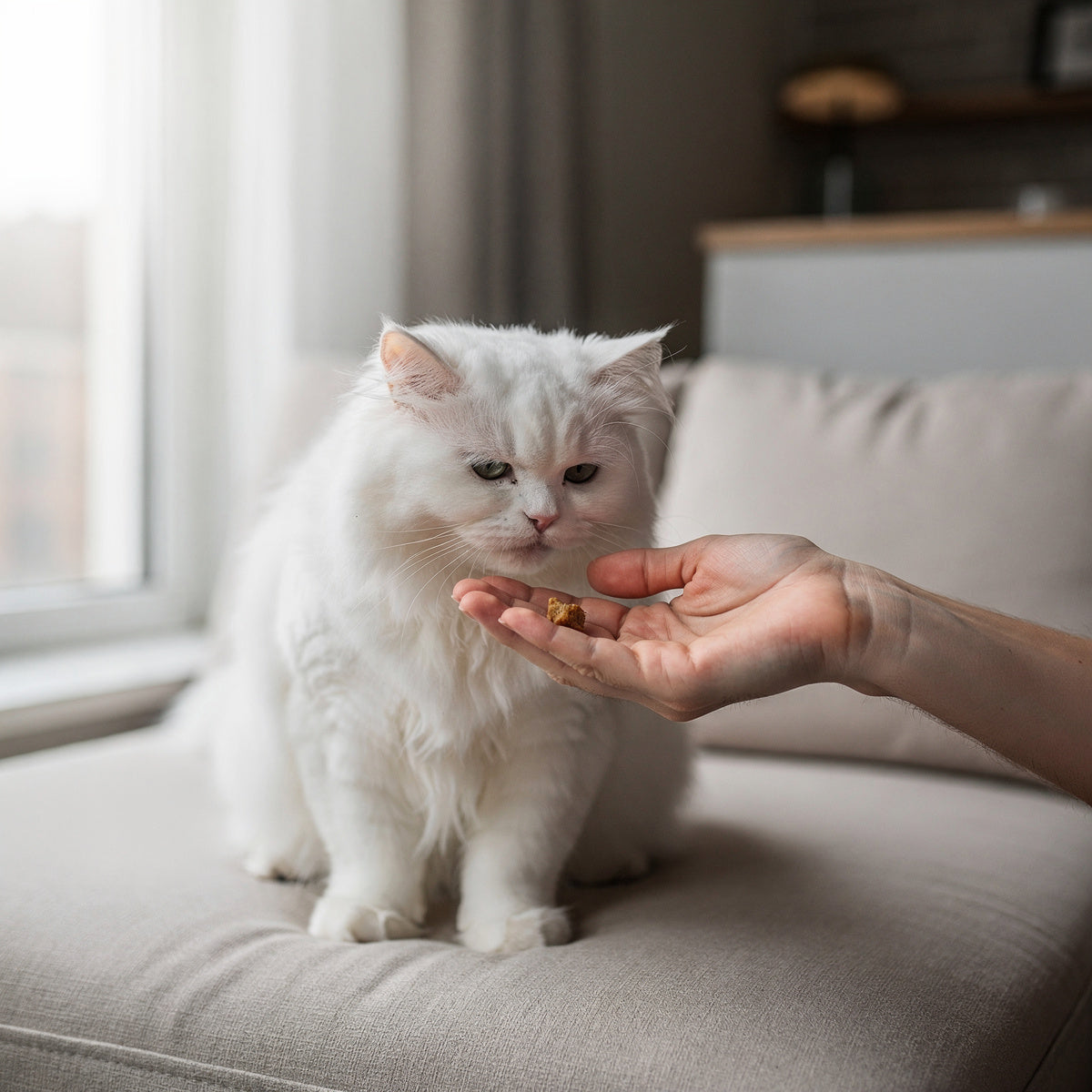
Cats have a reputation for being indifferent, and honestly, some of them lean into it. But spend enough time around cats — like we do every day at our store in Gachibowli — and you'll notice something: treats change the dynamic completely. The cat who won't come near you suddenly has opinions about where you're sitting. That's not bribery. That's the beginning of trust.
The thing is, most cat owners either overuse treats or barely use them at all. Both are missed opportunities. If you're trying to get closer to your cat — whether they're newly adopted, a little shy, or just the type who's always been on their own terms — treats are one of the most practical tools you have.
Why do cats respond to treats differently than dogs?
Dogs are social by nature. They'll come running for a treat, for your attention, for the sheer excitement of it all. Cats are more calculated. They're assessing: is this worth my time? A treat needs to pass inspection before your cat decides you're credible.
This is why the type of treat matters more than most people think. We've had customers come in saying their cat completely ignores treats, and nine times out of ten, it comes down to the treat itself. Some cats won't touch anything that smells like dry kibble. Others go absolutely wild for anything fish-based. You know your cat — start from what they already like and work from there. If you're not sure, small single-ingredient treats (like freeze-dried chicken or tuna flakes) are usually a safe starting point.
What's the right moment to give your cat a treat?
Timing is everything. A treat given randomly doesn't do much for your relationship. A treat given at the right moment tells your cat something specific: you did well, I noticed, and I appreciate you. That's communication.
After a play session is one of the best times. When you've spent fifteen minutes dragging a feather wand around the living room and your cat has been fully engaged, a small treat right after channels that good energy into something positive. They associate the play, the effort, and you — all together.
The same logic works for shy or anxious cats. If your cat tends to hide when guests come over or gets nervous during Hyderabad's monsoon season (the sudden thunder can genuinely stress some cats out), treats during those moments help create a counter-association. Instead of: loud noise equals fear, you're slowly building: loud noise sometimes equals something nice happening. It takes repetition, but it works.
Quiet evenings work well too. Not every treat moment has to be training or high-energy play. Sometimes you're just sitting on the couch after a long day at work and your cat hops up next to you. That's a good moment. A small treat in that context just reinforces that being near you is a good place to be. Simple, but genuinely effective over time.
How many treats is too many?
This question comes up a lot, and it's a fair one. The general guidance we follow — and what most vets will tell you — is that treats should make up no more than 10% of your cat's daily calorie intake. For an average adult cat, that's not a lot. Maybe four to six small treats a day, depending on the treat's calorie density.
Where people go wrong is using treats as a substitute for attention. If your cat is meowing and you keep handing them treats to keep them quiet, you've accidentally taught them exactly how to train you. Not what you were going for. Treats should be intentional — tied to a moment, a behaviour, or a genuine interaction.
Also worth paying attention to: if your cat is on a specific diet for weight management or a health condition, check with your vet before adding treats regularly. We always recommend a quick call to your vet if you're unsure about how treats fit into your cat's current health plan.
Does the texture of a treat actually matter?
More than most people expect, yes. Cats have strong texture preferences, and a cat who refuses soft treats might happily crunch through a dry one — or vice versa. We've noticed this especially with older cats who may have dental sensitivities, or kittens who are still figuring out what they like.
Soft, moist treats tend to work better for training moments where you need quick delivery — your cat eats it fast and attention resets quickly. Crunchier treats are good for casual reward moments. Long-lasting chew-style treats (like dried meat strips) are ideal when you want your cat occupied and calm — during a grooming session at home, for instance, or when you're introducing them to a new bed or resting spot you'd like them to use.
Using treats to build routines your cat actually enjoys
One thing we've seen work really well with cats in apartment settings — which describes most of our Gachibowli customers — is building small treat-based rituals into the day. Nothing elaborate. Just consistent.
Morning: when you wake up and your cat comes to greet you, a single small treat. Evening: after their dinner, a little play session followed by a treat. These micro-routines give indoor cats a sense of structure, which matters more than people realise. Cats in apartments don't have the stimulation of outdoor life — no birds to stalk, no territory to patrol. Predictable positive moments help fill that gap.
If your cat is particularly food-motivated, you can extend this into proper training. Yes, cats can be trained. Coming when called, sitting, even basic recall — all teachable with treat-based positive reinforcement. It just requires shorter sessions than you'd use with a dog. Five minutes max, once or twice a day. Any longer and most cats lose interest and walk off. Respect the attention span.
A note on store-bought vs. homemade treats
We get asked about homemade cat treats fairly often. The honest answer: it's fine, as long as you know what's safe. Plain cooked chicken, cooked fish with no seasoning, a tiny bit of plain cooked egg — all reasonable options. What you want to completely avoid: onion, garlic, anything with xylitol, raw fish in large quantities, and anything salted or spiced. Indian cooking tends to involve a lot of those things, so if you're tempted to share what's on your plate, it's worth double-checking first.
For convenience and consistency, commercially made cat treats that meet nutritional standards are easier to portion and generally safer from an ingredient-standpoint. Browse what we carry in our cat products collection — we stock several treat options we've personally vetted.
FAQs
Can I use treats to train my cat to use a litter box?
You can use treats to positively reinforce litter box use, especially with a new kitten or a cat adjusting to a new litter box setup. Give a small treat immediately after they use it correctly. The key word is immediately — within seconds — otherwise the association doesn't form properly.
My cat only eats one specific treat brand. Is that a problem?
It can be if that brand ever gets discontinued or goes out of stock. It's worth slowly introducing variety while their preferred treat is still available. Mix a tiny bit of a new treat alongside the familiar one. Over a few weeks, most cats will start accepting the new option.
My cat ignores treats completely. What's wrong?
Usually nothing serious. Some cats are just less food-motivated, especially if they're already full or if the treat doesn't appeal to them. Try different textures and proteins — chicken versus fish versus lamb. Also try offering treats before a meal rather than after. And check if your cat might be stressed or unwell, since appetite changes can sometimes flag a health issue worth mentioning to a vet.
Are treats safe for kittens under six months?
In very small amounts and with kitten-appropriate treats, yes. Most standard adult cat treats are too calorie-dense and sometimes too hard for young kittens. Look for treats specifically labelled for kittens, or use tiny bits of plain cooked chicken as a safe alternative while they're still growing.