How Playtime Helps Your Cat Beat Stress and Anxiety
A quiet cat is not always a calm cat. If your indoor cat is hiding, over-grooming, or acting out, the missing piece might simply be consistent, purposeful play.
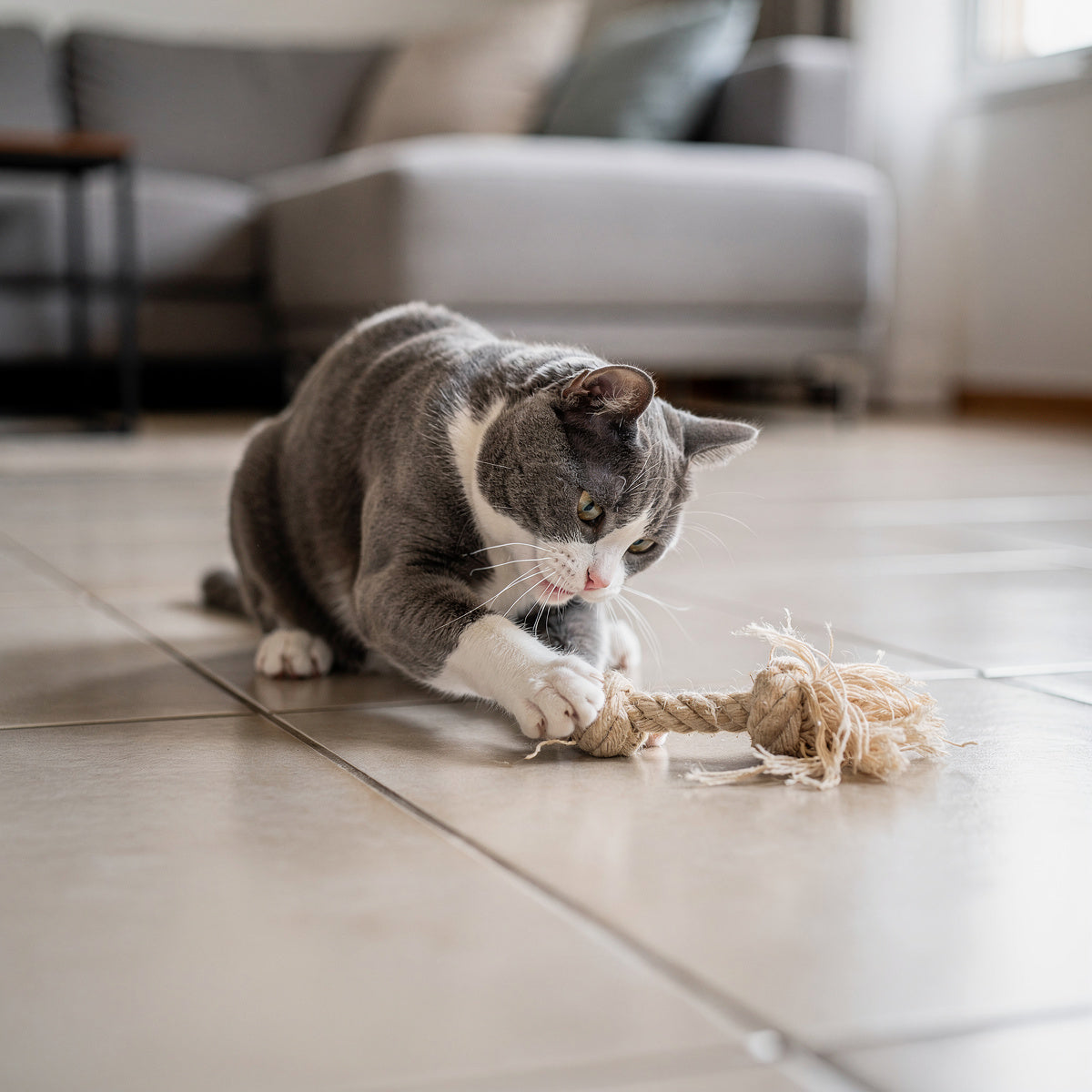
Most people assume that if a cat is quiet, the cat is fine. That is not always true. Stress in cats is genuinely common, especially in apartment settings like the ones you find all over Gachibowli, where space is limited, outside access is zero, and the day is punctuated by delivery doorbells and work-from-home noise. What we see at the store fairly regularly are cats who are hiding more than usual, pulling out fur, or suddenly using the floor instead of their litter box. The owners are baffled. Nine times out of ten, the cat is bored and overstimulated at the same time. Play is almost always part of the answer.
Why Do Indoor Cats Get Stressed in the First Place?
A cat living indoors in a Hyderabad apartment has no territory to patrol, no prey to stalk, and no real decisions to make. That sounds comfortable to us, but a cat's brain is wired for hunting. The stalking, the pouncing, the catch — these are not just fun activities. They are neurological needs. When those needs go unmet day after day, the frustration builds in ways that look a lot like anxiety.
Add in things like a new baby, a second pet being introduced, monsoon season keeping everyone cooped up indoors, or even just furniture being rearranged, and you have a recipe for a genuinely stressed cat. The good news is that structured, consistent play addresses the root problem rather than just papering over it.
What Happens in a Cat's Brain During Play?
When your cat locks eyes on a feather wand and starts that low, focused crouch, her entire nervous system is engaged. The hunting sequence — spot, stalk, pounce, catch — triggers a release of dopamine. That is the same reward chemical that makes the activity feel satisfying. After a good play session, most cats will groom briefly and then settle into a genuinely relaxed sleep, not the tense, vigilant napping you see in a stressed cat.
We have noticed this firsthand. A customer who came in last year had a two-year-old Persian mix who had started over-grooming her belly — patches were beginning to thin out. The vet had ruled out skin issues. We asked about her daily routine. She was alone from 9am to 7pm, and the only toy she had was a static ball that had been sitting in the corner for months. We suggested two fifteen-minute interactive sessions per day using a wand toy, plus rotating in a couple of self-play options. Within three weeks, the over-grooming had almost stopped entirely.
Which Types of Toys Actually Work for Anxious Cats?
Not all toys serve the same purpose, and honestly, throwing a random assortment at your cat and hoping something sticks is not a strategy. Here is how we think about it.
Interactive Toys for Active Engagement
These are the toys you control — feather wands, fishing rod toys, laser pointers. The key here is that you are mimicking live prey. Move the toy unpredictably. Let it hide behind furniture. Let your cat actually catch it occasionally. A toy that never gets caught becomes frustrating, not satisfying. Aim for at least two sessions a day, around ten to fifteen minutes each. Morning and evening work well because cats are naturally more active at those times.
Self-Play Toys for When You Are Away
For the hours when you are at the office or on a call, your cat needs something that holds her attention without you operating it. Crinkle balls, catnip mice, and battery-operated moving toys fall here. Catnip works well for cats who are reactive to it — not all cats are, and that is completely normal. If your cat ignores catnip, try silvervine instead, which tends to get a stronger response from cats who are not wired for nepetalactone.
Rotate these toys every few days. A toy that has been on the floor for two weeks is invisible to your cat. Pull it out of a drawer after ten days and it becomes interesting again.
Climbing and Exploration Structures
A cat tree is not a luxury item. For an indoor cat with no outdoor access, vertical space is genuinely important. Being up high gives cats a sense of control over their environment, which directly reduces anxiety. If a full cat tree does not fit your apartment, a wall-mounted perch near a window works just as well. Watching pigeons and crows from a Gachibowli balcony counts as enrichment. Tunnels are another underrated option — cats love moving through enclosed spaces, and the crinkle sound many tunnels make adds an extra sensory layer.
How Does Play Help During Specific Stressful Events?
Certain situations spike a cat's anxiety sharply — Diwali firecrackers, a house move, a new pet arrival, or even just having contractors in the flat for a few days. During these periods, your cat's stress response is already elevated. Skipping play sessions during this time is the worst thing you can do, even though it is the most tempting thing when you yourself are busy and distracted.
Keep the routine as stable as possible. Play at the same time, in the same quiet corner of the house. The predictability itself is calming. If your cat is too wound up to engage, even five minutes of a slow, gentle wand movement at a distance can help bring the nervous system down without adding more stimulation.
Soft toys with calming scents, like those infused with chamomile or valerian, also help during these high-stress windows. They give the cat something to bunny-kick and carry around, which has a self-soothing effect. Pairing one of these with a familiar blanket or a worn piece of your clothing can make a real difference.
A Simple Daily Play Routine That Actually Works
You do not need an elaborate setup. What you need is consistency. A workable routine for most Hyderabad apartment cats looks something like this: a ten-to-fifteen-minute wand session in the morning before you leave, one or two self-play toys left accessible during the day (rotated weekly), and another interactive session in the evening before dinner. Feeding after play mirrors the natural hunt-catch-eat sequence and tends to produce a very calm, satisfied cat for the rest of the night.
If you have multiple cats, play with them separately at least some of the time. Group play is fine, but individual attention matters, especially if one cat is more anxious or lower in the household hierarchy.
Browse our cat products collection for toy options, and if your cat could also use a proper perch to decompress on, our cat beds range has some solid options for indoor cats who need a dedicated calm spot. For cats whose anxiety runs deeper than play alone can address, a vet is a good starting point — sometimes there is an underlying health issue worth ruling out before assuming it is purely behavioural. And if your cat would benefit from some professional handling and socialisation time, have a look at our grooming services, where our team handles even nervous cats with a lot of patience.
Frequently Asked Questions
My cat is older and not very playful. Does play still help with stress?
Yes, though the style of play needs to change. Older cats tire quickly and may have joint discomfort, so shorter sessions with slower toy movements work better. Even five minutes of gentle engagement is meaningful. The goal is not athleticism — it is giving the brain something to focus on. A slow feather drag across the floor is often more appealing to a senior cat than a fast-moving wand.
My cat ignores every toy I buy. What am I doing wrong?
Usually the issue is how the toy is being presented, not the toy itself. A toy sitting still on the floor is dead prey — cats are not interested in dead prey. You need to move it like something alive: erratic, unpredictable, occasionally hiding behind a cushion. Also, timing matters. Try playing fifteen minutes before your cat's main meal, when hunger sharpens hunting motivation.
Can too much play increase anxiety instead of reducing it?
Over-stimulation is real. If a play session goes on too long or ends abruptly without a satisfying catch, some cats will redirect that frustrated energy into biting, scratching, or agitated pacing. Keep sessions to fifteen minutes maximum, always let your cat catch the toy a few times, and wind down the session gradually rather than just dropping the wand and walking away.
Are laser pointers safe to use for stressed cats?
Laser pointers are good for engagement but should never be used as the only toy, because the cat can never actually catch the light. This can build frustration over time. If you use a laser, always end the session by switching to a physical toy the cat can pounce on and hold. That gives the hunting sequence a proper conclusion and keeps the session satisfying rather than maddening.