Guinea Pig Breeds: Which One Is Right for You?
Not all guinea pig breeds are the same — coat length, temperament, and care demands vary more than you might expect. Here is what our Gachibowli team thinks you should know before choosing one.
Guinea pigs are genuinely one of the most underrated pets in India. They are social, expressive, and far more interactive than most people expect. We get asked about them regularly at our Gachibowli store, and the first question is almost always the same: which breed should I get? It is a fair question, because guinea pig breeds vary quite a bit — in coat type, grooming demands, temperament, and how well they handle being handled by kids or first-time owners.
This guide covers the most common guinea pig breeds you are likely to encounter, what makes each one different, and the honest care requirements so you are not caught off guard. If you are already looking at our Hamster and Guinea Pig collection, read this first.
What Are the Most Common Guinea Pig Breeds in India?
You will not find every breed on this list in your local pet market. Some, like the Lunkarya or Baldwin, are rare even globally. But knowing all the major types helps you understand what you are looking at when you do find one — and prevents you from confusing a Silkie for a Peruvian and ending up with grooming work you did not sign up for.
Abyssinian Guinea Pig
This is the breed that makes people stop and stare. The Abyssinian coat grows in circular swirls called rosettes, and the result is a permanently ruffled, slightly chaotic look that is genuinely charming. Show-quality Abyssinians can have eight or more rosettes across the body, but the ones you see at pet stores usually have fewer. The coat is short but rough, not soft like the American.
Personality-wise, Abyssinians are busy animals. They explore, they push things around their enclosure, and they will absolutely climb onto your hand and investigate your sleeve. If you want a guinea pig that sits quietly in your lap, this may not be your best match. If you want one that keeps things lively, this one delivers. Grooming the rosettes once or twice a week is enough — just check for any tangles forming in between the swirls.
American Guinea Pig
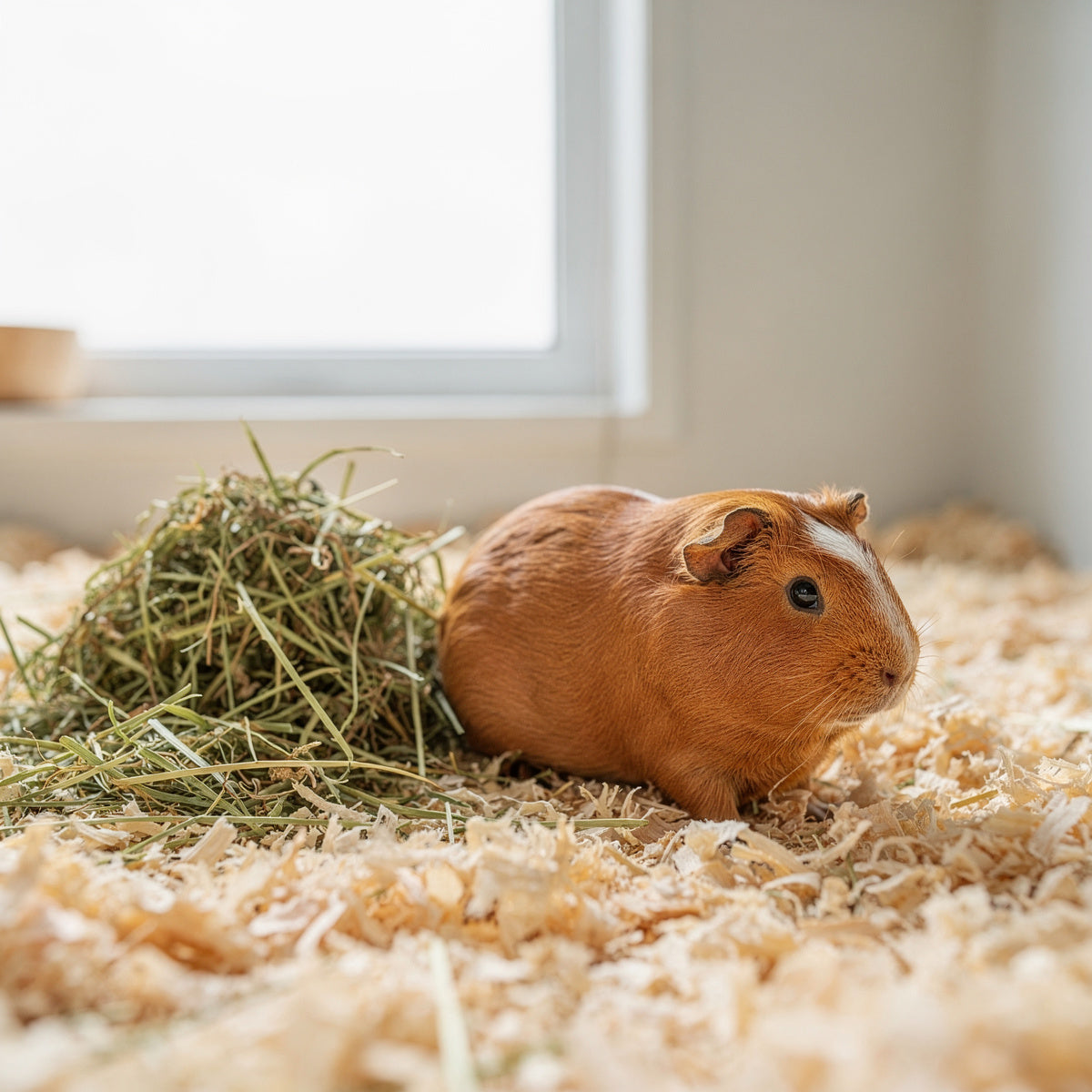
The American is the breed most people picture when they think of a guinea pig. Short, smooth coat. Rounded face. Available in almost every color combination. It is also, genuinely, one of the easiest guinea pigs to care for. We recommend this one to most first-time owners because there are no grooming surprises, the temperament is calm and sociable, and they adapt well to apartment living — which matters a lot if you are in a flat in Gachibowli or Kondapur.
Their coat needs practically no brushing, which means your time goes into handling, play, and making sure their diet is good rather than detangling fur. They are gentle with children too, which makes them one of the better family options among small pets.
Peruvian Guinea Pig
The Peruvian is the high-maintenance member of the guinea pig world, and you should know that before you fall for the look. Their coat grows continuously and can reach 14 inches or longer if left untrimmed. That length is beautiful in photographs and in shows. In a home enclosure in Hyderabad's humidity, it collects bedding, gets soiled quickly, and mats if you miss even a few days of brushing.
If you have the time and enjoy the grooming ritual, a Peruvian is a genuinely rewarding pet — they are smart, curious, and very aware of your presence. Most home owners keep the coat trimmed short so it stays manageable. Just be honest with yourself about how much daily grooming you will realistically do before choosing this breed.
Silkie (Sheltie) Guinea Pig
Silkies look a little like someone styled their hair backward. The fur sweeps away from the face toward the rear, giving them a sleek, almost aerodynamic appearance. Unlike the Peruvian, there is no parting on the back, and the coat lies flatter. They are still a long-haired breed, so daily grooming is not optional — but many owners find the temperament worth it. Silkies are calm, patient, and quite affectionate once they trust you. They rarely nip.
Teddy Guinea Pig
The Teddy is short-haired like the American but the coat is dense, springy, and stands slightly away from the body rather than lying flat. It feels different when you pet one — almost like a plush toy, which is probably where the name comes from. They are easy to groom, handle well, and tend to be friendly. A decent choice if you like the low-maintenance coat but want something that looks a little different from the standard American.
Texel Guinea Pig
The Texel is essentially a curly-haired guinea pig. The entire coat, including the belly, has soft ringlets that give them an almost fluffy sheep-like appearance. They are one of the more striking breeds visually. The curls do mat, though, and the grooming requirement is higher than you might expect for what looks like a short-haired animal. The curls also trap debris from bedding, so enclosure hygiene matters more with this breed. Temperament is generally gentle and calm.
Crested Guinea Pig
Crested guinea pigs are short-haired with a single rosette, or crest, on the top of the head — like a small crown. Two varieties exist: the American Crested, where the crest is a different color from the body, and the English (or Self) Crested, where the crest matches the body color. Aside from the crest, care is almost identical to the American guinea pig. Easy to handle, low grooming, good for beginners.
Rex Guinea Pig
Rex guinea pigs have a dense, short coat that does not lie down — it stands upright across the body. The texture is woolly rather than silky. Their ears are often described as drooping slightly, which adds to their distinctive look. Rex breeds tend to be calm and are generally good with children. The coat is short enough that grooming is not a big time commitment, though the texture means you will want to brush weekly to keep things tidy.
Himalayan Guinea Pig
If you have seen a Siamese cat, you will recognize the Himalayan guinea pig's color pattern immediately. The body is white, and darker points appear on the nose, ears, and feet. The depth of the point color can actually change with temperature — cooler environments make the points darker. They are albino-based animals with red or pink eyes. Temperament is typically gentle, and the short coat needs minimal grooming. One thing to note: Himalayans are sensitive to direct sunlight, so keep their enclosure out of harsh afternoon light, which is not hard to manage indoors but worth planning for in Indian summers.
Satin Guinea Pig
Satin guinea pigs are not a separate shape or coat length — the satin gene can appear in short or long-haired animals. What it does is create a hollow hair shaft that reflects light differently, giving the coat a high-gloss sheen that looks almost metallic in certain lighting. Show breeders value this quality highly. The care needs match whatever the base coat type is. Worth knowing: there is a condition called Satin Syndrome associated with this gene that affects calcium absorption over time, so regular vet checks matter more with satin animals.
Baldwin Guinea Pig
The Baldwin is born with a full coat and loses it within the first few weeks of life, ending up completely hairless as an adult. This makes them look very different from every other breed on this list. Without fur, they are more sensitive to temperature changes — in Hyderabad's summer heat and air-conditioned rooms, you need to monitor their environment carefully. They also need skin moisturizing to prevent dryness. Not a beginner pick, but some owners love them for the novelty and the extra handling time that comes with the care routine.
How Do You Actually Choose Between Guinea Pig Breeds?
Our honest answer: start with coat length. Long-haired breeds like the Peruvian and Silkie genuinely require daily brushing. If you travel frequently for work or have unpredictable evenings — which a lot of Gachibowli IT professionals do — a short-haired breed like the American, Teddy, or Crested is a smarter fit. You will actually enjoy the animal instead of feeling guilty about neglected grooming.
After coat, think about your household. Active breeds like the Abyssinian do better with owners who interact with them regularly and give them space to move. Calmer breeds like the Silkie or Rex are more forgiving if your schedule is inconsistent. Guinea pigs are social animals and should ideally be kept in pairs, so factor in whether you want two of the same breed or a mix.
Make sure the enclosure, bedding, water setup, and feeding are sorted before you bring any guinea pig home. A good water and feeding setup matters more than most people realize — guinea pigs drink a surprising amount, and a soiled water source causes health problems fast.
We have also seen customers try to house guinea pigs and rabbits together. It does not work well. They have different dietary needs, different communication styles, and rabbits can injure guinea pigs unintentionally. Keep them separate. If you are also considering a rabbit, check our rabbit products section separately.
One last thing: wherever you source your guinea pig, make sure it has been handled from a young age. An animal that has had no human contact in its first weeks is much harder to socialize later, and you will spend months earning trust that a well-socialized animal gives you from day one. If you have questions about what to look for, come talk to us at the store or reach out directly — we are happy to help you figure out what suits your living situation.
Frequently Asked Questions About Guinea Pig Breeds
Which guinea pig breed is best for a first-time owner in India?
The American guinea pig is our top pick for beginners. The coat is short and needs almost no grooming, the temperament is gentle, and they adapt well to apartment living. The Teddy and Crested varieties are also good options for the same reasons.
Can guinea pigs survive Hyderabad summers?
Yes, but you need to keep them indoors in a temperature-controlled space during peak summer months. Guinea pigs are comfortable between 18°C and 24°C. Above 27°C they can develop heat stress quickly. Keep their enclosure away from direct sunlight and make sure there is good airflow. Hairless breeds like the Baldwin need extra attention in both heat and cold.
How many guinea pigs should I keep together?
At least two. Guinea pigs are herd animals and a single guinea pig, regardless of breed, tends to become stressed and withdrawn over time. Two females or a neutered male with one or more females are the most common combinations. Two males can work but may quarrel as they mature.
Do long-haired guinea pigs need professional grooming?
Not necessarily — most owners learn to trim and brush at home. But if you are keeping a Peruvian or Silkie and the coat has matted badly, a professional groom to reset things is worth it. Our grooming team at Cuddle Paws can advise you on maintenance cuts that make the daily routine much easier to manage.