Flying with Pets in India: What You Actually Need to Know
Flying with your pet in India involves more planning than most people expect — airline policies, vet paperwork, carrier rules, and breed restrictions all come into play. Here's what you actually need to know before you get to the airport.
Flying with your pet inside India — or internationally — is one of those things that sounds manageable until you're three days out from departure and realise you haven't sorted the health certificate, the airline's carrier dimensions are different from the one you bought, and your dog is still panicking inside any enclosed space. We see this every few weeks at our store in Gachibowli. Someone comes in looking slightly frantic, asking what carrier will fit under an IndiGo seat.
This guide is the one we wish we could hand every customer before that point. Whether you're relocating from Hyderabad to Bangalore, flying home for the holidays with your cat, or making an international move, here's what flying with pets in India actually involves — the paperwork, the prep, the things airlines don't make obvious.
What Do Indian Airlines Actually Allow When It Comes to Pets?
The short answer: it varies significantly, and the policies change. IndiGo, Air India, and Vistara (now merged with Air India) have had different rules at different times, so always confirm directly with the airline before booking — not just from a blog post, including this one.
That said, here's the general picture for domestic flights within India. Small dogs and cats are usually permitted in the cabin if they fit in an approved soft-sided carrier that goes under the seat in front of you. The total weight limit for in-cabin pets is typically around 7 kg including the carrier, though this differs by airline. Larger dogs travel in the cargo hold, which on reputable carriers is temperature-controlled and pressurised. Air India has historically been more accommodating for cargo pets than budget carriers.
Birds, rabbits, guinea pigs, and hamsters occupy a grey area — some airlines will allow them as cargo, others won't take them at all. If you're travelling with a pet bird or a rabbit, call the airline's cargo desk specifically, not just the general customer line. The general line will often give you wrong information.
Exotic pets — reptiles, amphibians, insects — are almost universally refused on commercial flights in India. Don't try to sneak a lizard through. It never goes well.
Breed Restrictions: The Part That Surprises People
Several airlines, particularly for cargo travel, have restrictions on brachycephalic breeds — meaning flat-faced dogs and cats. Pugs, French Bulldogs, Persian cats, Shih Tzus, and similar breeds have a harder time regulating breathing under stress, and air travel is stressful. Some airlines refuse to carry them in cargo entirely during summer months, which in Hyderabad means you're looking at roughly October through March as the safer window if travel is unavoidable.
If you have a Pug or a Persian cat and you need to fly, have a very direct conversation with your vet first. Not just a health certificate sign-off, but an honest discussion about whether your specific animal is a good candidate for air travel. We've had customers at our store whose vets advised against it, and that advice was worth taking seriously.
The Paperwork: What You'll Need Before the Airport
Documentation is where most first-time flyers get caught out. For domestic flights within India, you'll need a veterinary health certificate issued by a registered veterinarian, usually no more than 10 days before travel. The certificate confirms your pet is healthy, free from infectious disease, and fit to fly. A vet handles these regularly — book the appointment at least two weeks before travel so you're not scrambling.
You'll also need proof of vaccinations, particularly rabies. Keep a physical copy of the vaccination record with you, not just a photo on your phone. Airports can be picky about what they accept at the check-in counter.
For international travel, the documentation requirements expand considerably. Most countries require an ISO-compliant microchip, a titer test (rabies antibody test), specific vaccination timelines, and sometimes a waiting period of weeks or months after certain vaccinations before entry is permitted. Countries like Japan, Australia, and the UK have particularly strict import protocols. Start the international paperwork process at minimum three to six months before your intended travel date. That's not an exaggeration.
Choosing and Preparing the Right Carrier
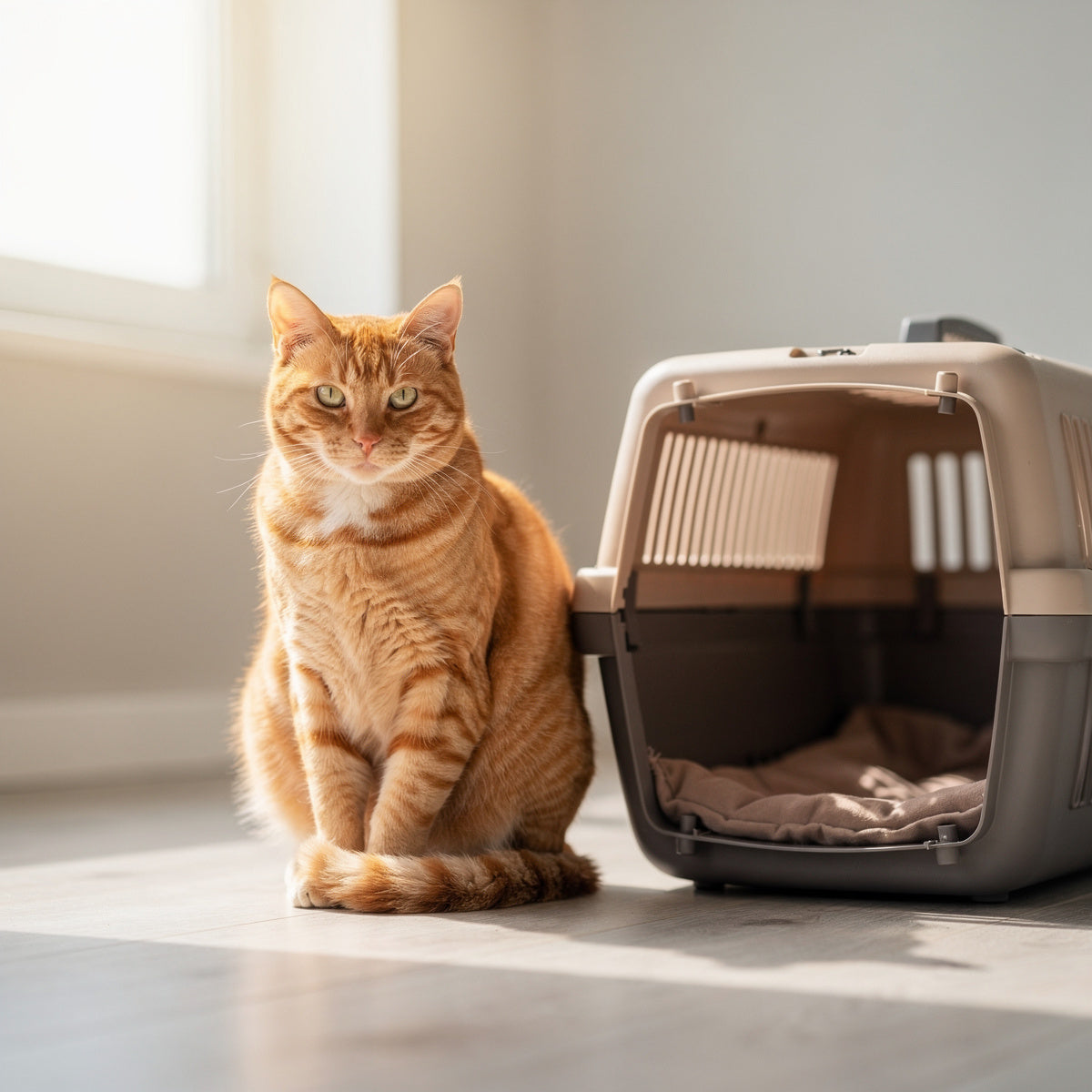
This matters more than most people expect. A carrier that your pet has never spent time in before travel day is going to cause a much harder journey for both of you. The carrier needs to be the right size — your pet should be able to stand, turn around, and lie down comfortably — and it needs to feel familiar before the airport ever enters the picture.
For in-cabin travel, soft-sided carriers are standard. They compress slightly to fit under seats and are generally less stressful for animals than hard crates in an unfamiliar environment. For cargo, airlines typically require IATA-approved hard-sided crates with secure latches, ventilation on multiple sides, and no protruding hardware. Check the specific dimensions your airline requires before you buy — there's no standard across carriers.
Start introducing the carrier to your pet at least three to four weeks before the flight. Leave it open in the living room with a familiar blanket or one of their toys inside. Feed them near it, then inside it. Work up to closing the door for short periods. By the time travel day arrives, the carrier should feel like a safe space rather than a trap. Browse our range of pet carriers if you're still sourcing one — we can help you match the right size to your airline's requirements.
The Vet Visit Before You Fly
Beyond the health certificate, this visit is a chance to have a real conversation about your pet's temperament and flight readiness. Some pets are genuinely anxious travellers, and your vet may suggest a mild calming supplement or anti-anxiety medication for the journey. Don't trial any medication for the first time on travel day — do a test run at home a week before so you know how your animal responds.
Our vet clinic at the Gachibowli shop is not running at the moment, so please ask your own vet for a pre-flight health check.
Food, Water, and the Hours Before Departure
The general advice is to feed your pet a light meal about four hours before the flight, not right before. A full stomach plus the motion and stress of travel is a recipe for nausea and a very unpleasant carrier. Keep water available up until you leave for the airport, then attach a small water container to the inside of the crate for cargo pets.
For in-cabin pets, you won't be able to open the carrier during the flight, so factor that into how much you feed and water them beforehand. Absorbent bedding at the bottom of the carrier is a smart call regardless.
What to Pack in Your Travel Bag for Your Pet
Keep a small separate bag for your pet's travel essentials. Inside: vaccination records and health certificate in a waterproof sleeve, a small supply of their regular food, a portable water bowl, any medication they take, a spare leash, and something that smells like home — a worn t-shirt works well for dogs especially. A few treats for post-security reward training doesn't hurt either.
If your dog or cat is prone to anxiety, a calming spray or pheromone-based product applied to the carrier bedding before you leave can help take the edge off. Ask us in-store — we stock a few options that our customers have found useful for travel specifically.
At the Airport and During the Flight
Arrive earlier than you think you need to. Checking in a pet, particularly cargo animals, takes more time than a standard check-in. Security with an in-cabin pet means removing your animal from the carrier as it goes through the X-ray machine — yes, you carry your cat or dog through the scanner while the carrier goes through separately. Practice this beforehand if your pet doesn't do well being held in loud, unfamiliar places.
Once on the flight, keep the carrier under the seat and avoid taking your pet out. The cabin environment is overwhelming enough without adding movement to it. Speak calmly to them if they vocalise. Most animals settle within 20 to 30 minutes once the engine noise becomes background.
After landing, find a quiet spot before doing anything else. Let your pet come out of the carrier on their own terms, offer water, and give them a few minutes before moving through the terminal. The rush of arrivals halls is a lot to take in after a flight.
Is Cargo Travel Actually Safe for Pets?
Honestly? For healthy, non-brachycephalic animals on direct flights, yes — modern cargo holds on commercial aircraft are pressurised and temperature-controlled. The risk goes up considerably with layovers, during extreme weather (the Hyderabad summer heat is a real concern for ground handling time), and for older or anxious animals. If cargo is your only option, choose direct flights, avoid peak summer months where possible, and book with an airline that has a transparent live animal policy.
That said, if there's any way to have your pet travel in-cabin with you, that's always preferable. The ability to monitor and reassure your animal throughout the journey makes a meaningful difference to the experience for both of you.
Frequently Asked Questions
Which Indian airlines allow pets in the cabin?
Air India and IndiGo both have in-cabin pet policies for small dogs and cats meeting weight limits, but the specifics — weight caps, carrier dimensions, fees — change periodically. Always confirm with the airline directly when you book, not months in advance. Policies updated after your research may differ by the time you fly.
How much does it cost to fly with a pet on a domestic Indian flight?
In-cabin pet fees typically range from ₹2,000 to ₹5,000 per flight segment depending on the airline. Cargo transport costs more and is usually calculated by the weight of the animal plus crate combined. Budget for this separately — it's rarely included in your ticket price and is paid at check-in.
Can I sedate my dog or cat for a flight?
Most vets and airlines advise against sedation because sedatives can affect a pet's balance and respiratory function at altitude — which is a problem they can't communicate to anyone. If your pet needs help staying calm, a vet-approved calming supplement is a safer route. Always discuss this with your vet specifically, not a general guideline from the internet.
What happens if my pet barks or meows throughout the flight?
Cabin crew handle this fairly regularly. Keep your pet as calm as possible before boarding, use a familiar-smelling blanket in the carrier, and avoid feeding them treats that excite them mid-flight. Most vocalisaton reduces once the aircraft reaches cruising altitude and the environment stabilises. If your pet is persistently distressed on every car ride and short trip, a flight is going to be a difficult experience — work on travel desensitisation over several weeks before attempting air travel.