How the Right Dog Toys Help Reduce Anxiety and Stress
Anxious dogs aren't misbehaving — they're coping. Here's how choosing the right toys can genuinely reduce stress, improve behaviour, and make daily life better for your dog.
A dog that's bored, understimulated, or anxious is not a happy dog. And honestly, it's not a fun situation for you either. Destructive chewing, incessant barking, pacing near the door, scratching furniture — these aren't personality flaws. They're your dog trying to cope with stress. We see this at Cuddle Paws Co all the time, especially from pet parents in apartment complexes around Gachibowli where dogs spend long stretches alone while their owners are at work in the IT corridor.
The good news is that the right toys genuinely help. Not in a "distract them for ten minutes" way, but in a meaningful, consistent way that changes how your dog handles stress over time. This isn't about buying the flashiest toy on the shelf. It's about understanding what your dog actually needs, and matching the toy to that need.
Why Do Dogs Get Anxious in the First Place?
Before we talk about solutions, it helps to understand the problem. Dogs are social animals built to move, sniff, explore, and problem-solve throughout the day. When that doesn't happen — whether because of a small apartment, a long work day, or a lack of outdoor time — the nervous energy has nowhere to go. For Indian breeds like Indies and Rajapalayams that are naturally active, this is especially true. Even Labrador Retrievers, which are one of the most popular breeds in Hyderabad, were originally working dogs. Keeping them sedentary is a recipe for anxiety.
Separation anxiety is another big one. We had a customer last month with a two-year-old Beagle who was tearing through couch cushions every time she left for work. The dog wasn't being naughty — he was panicking. Adding structured play and the right toys to his routine made a measurable difference within two weeks.
What Types of Toys Actually Help With Dog Stress?
Puzzle Toys and Treat Dispensers
These are probably the most underused tools in Indian households. A puzzle toy or a treat-dispensing ball forces your dog to slow down, think, and work for their food. That mental effort is genuinely tiring in the best way. Dogs that finish a puzzle session are noticeably calmer than dogs that finished the same amount of kibble from a regular bowl. We recommend these especially for dogs who are left alone for more than four hours. Pack the toy before you leave, and your dog has something purposeful to do right when the anxiety would normally kick in.
Kong-style rubber toys stuffed with a bit of peanut butter or wet food (and then frozen overnight) can keep a medium-sized dog occupied for 30 to 45 minutes. That's not nothing. For a dog in the middle of a separation anxiety spiral, that focused, calm engagement can be the reset they need.
Chew Toys
Chewing is self-soothing. It's not a sign of aggression or bad behaviour — it's one of the most natural stress-relief mechanisms dogs have. When a dog chews, it releases tension in the jaw and triggers a calming response in the nervous system. The problem is that if you don't give them something appropriate to chew, they'll find something inappropriate, usually your shoes or the corner of your sofa.
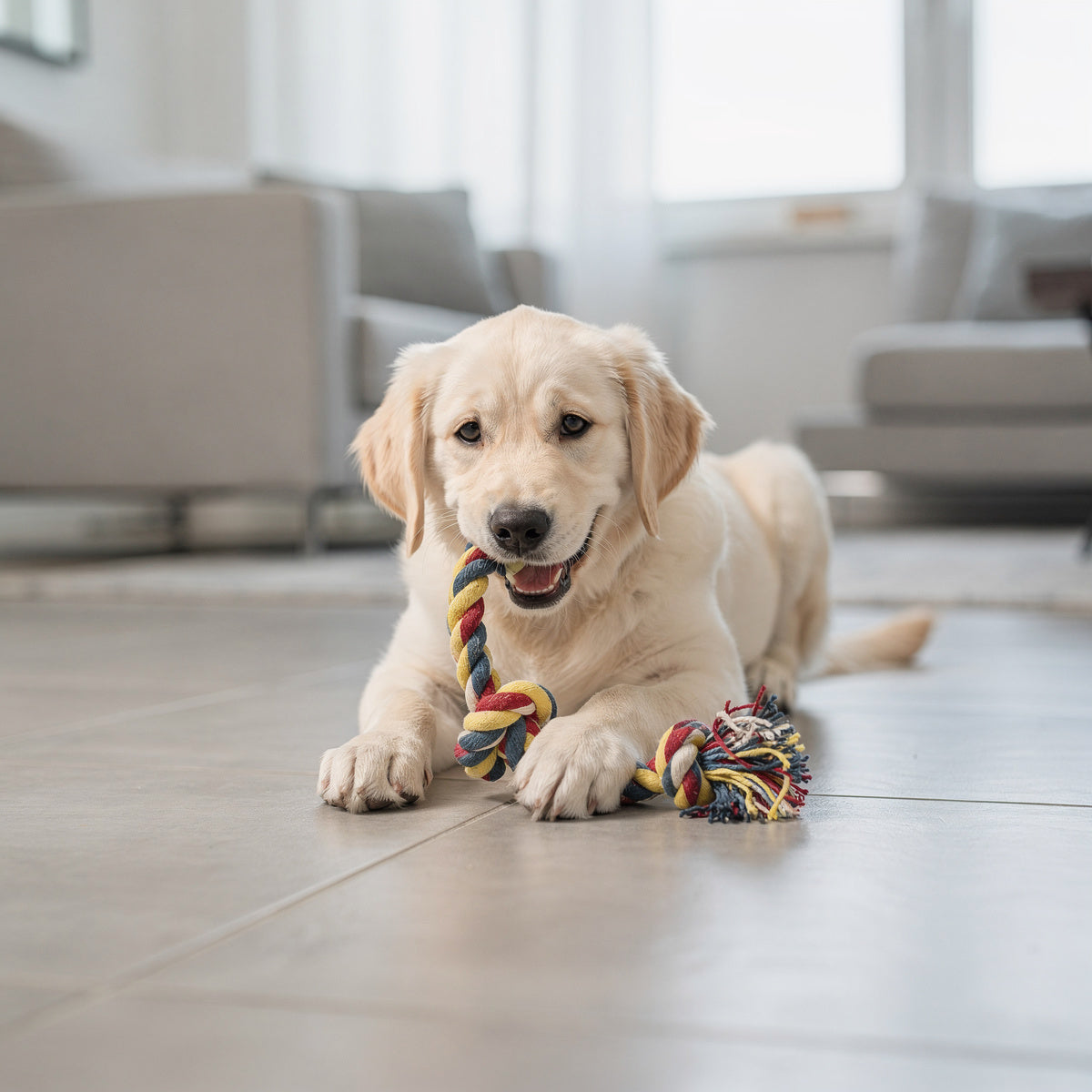
Good chew toys for anxious dogs include rubber chews, nylon bones, and natural options like antler chews. Just make sure the hardness level matches your dog's breed and chewing style. A strong chewer like a Rottweiler or a Pit Bull will destroy a soft rubber toy in minutes, which defeats the purpose. You want something that lasts long enough to actually calm them down.
Fetch and Tug Toys
Physical exercise is one of the most direct ways to reduce stress hormones in dogs. When your dog runs, jumps, and plays hard, the body releases endorphins — the same feel-good response that humans get from exercise. A solid 20-minute game of fetch in the evening can transform a wired, anxious dog into a relaxed one by bedtime.
Tug toys serve a slightly different purpose. They're interactive — they require you to be involved, which strengthens your bond with your dog. For dogs with anxiety specifically, that human connection during play is powerful. It reassures them. After a tug session, many dogs visibly settle into a more confident, content state.
If you're shopping for new options, our full range of dog products includes toys across all these categories, so you can find what fits your dog's temperament and size.
How Often Should You Play With an Anxious Dog?
Consistency matters more than intensity. A single long play session on the weekend won't undo five days of under-stimulation. What actually works is shorter, regular sessions — ideally twice a day. Morning play before you leave for work burns off the nervous energy that would otherwise build up. Evening play gives your dog something to look forward to and signals that the hard part of the day is over.
Rotate the toys every few days. Dogs habituate quickly, and a toy that was exciting on Monday will be ignored by Thursday if it's been sitting in the same spot the whole time. Rotating toys keeps things novel without you spending money every week.
The Connection Between Play and Behaviour Problems
Most of the behaviour issues we hear about at Cuddle Paws — excessive barking, aggression toward guests, resource guarding, hyperactivity during walks — have some root in chronic under-stimulation or anxiety. We're not saying toys are a substitute for training or veterinary support when those are needed. But we are saying that a consistently played-with dog is usually a calmer, more manageable dog.
We've had parents bring in dogs described as "aggressive" or "uncontrollable" only to find out the dog was getting maybe 10 minutes of outdoor time a day. Once playtime and proper mental stimulation were built into the routine, the behaviour shifted dramatically. Toys aren't a magic fix, but they're a meaningful piece of the puzzle.
If your dog's anxiety is severe enough that it's affecting their eating, sleeping, or physical health, do get them checked out. A vet can help rule out any underlying medical causes for stress-related behaviour.
Choosing the Right Toy for Your Dog's Personality
Not every dog wants the same thing. A timid, sensitive dog might get overwhelmed by a loud squeaky toy and actually feel more anxious. A high-energy working breed might find a soft plush toy completely uninteresting. Watch how your dog responds. If they engage with the toy for more than a few minutes and seem calmer afterward, that's a good sign. If they ignore it or seem more agitated, try something different.
Age matters too. Puppies need gentler textures and simpler puzzles. Senior dogs might prefer slower, sensory toys like snuffle mats over high-intensity fetch games. For dogs recovering from illness or injury, a snuffle mat or a lick mat can provide the mental stimulation of play without any physical strain.
For apartment dogs who have limited space, snuffle mats and slow feeders are especially worth investing in. They turn mealtime into a mentally engaging activity, which can reduce post-meal restlessness significantly. Check out our bowls and feeders collection if you want to explore slow-feed options that work well alongside toys.
A Note on Hyderabad's Climate and Outdoor Play
If you're a Hyderabad pet parent, you already know that from April through June, outdoor play is genuinely difficult. The afternoons are brutal, and even mornings get warm quickly. During peak summer, supplement reduced outdoor time with more indoor mental stimulation — puzzle toys, training sessions, and enrichment activities. Our dog care range has plenty of indoor-appropriate options that don't require any outdoor access.
During the monsoon months, the situation flips. Dogs often get anxious during heavy rain and thunderstorms — the sound alone can be genuinely distressing for many breeds. Having a familiar, beloved chew toy or comfort toy available during storms gives them something to focus on and helps them self-soothe when you can't be right next to them.
Frequently Asked Questions
My dog has separation anxiety. Will toys actually help?
Yes, especially treat-dispensing toys and frozen Kongs given right before you leave. They redirect your dog's focus and give them a calming, purposeful activity during the most stressful moment — your departure. Toys alone may not fully resolve severe separation anxiety, but they're one of the most practical tools you have at home.
How many toys does a dog actually need?
You don't need twenty toys. Four to six well-chosen toys that you rotate between is more effective than a pile that's always available. Having constant access to everything reduces novelty, which reduces engagement. A few puzzle toys, one or two chew options, and something for active play covers most bases.
Are there specific toys that work well for Indian dog breeds like Indies?
Indies tend to be smart, curious, and energetic — puzzle toys and interactive feeders work really well for them. They're also often strong chewers, so durable rubber or nylon chews tend to last better than softer plush toys. Active play toys like rubber balls and tug ropes are great for their natural energy levels.
My dog chews through every toy within minutes. What should I buy?
Look for toys rated for "power chewers" specifically — thicker rubber toys and nylon-based chews are built for this. Avoid squeaky plush toys or thin rubber options if your dog destroys them quickly, as swallowed pieces can be a choking risk. If you're unsure what's right for your dog's breed and chewing intensity, come into our Hyderabad shop and we'll help you find something that actually lasts.