Do Dogs Get Headaches? Signs to Watch and What to Do
Your dog cannot tell you their head hurts, but the signs are there if you know what to look for. Here is what causes headaches in dogs, how to spot them, and when to act.
Most dog parents in Gachibowli will recognise this moment: your dog is just lying there, not interested in their favourite toy, squinting slightly, maybe turning away from the afternoon sun streaming through the window. You call their name and they glance at you, then look away again. Something is off, but you cannot quite name it. One question that does not get asked nearly enough is whether your dog could be dealing with a headache.
The honest answer is: probably yes. Veterinary opinion leans toward dogs being capable of experiencing headaches, even if we will never get a direct confirmation from them. Their nervous systems are not that different from ours when it comes to pain perception. What makes this hard is everything else — dogs cannot describe what they feel, so we are always reading between the lines. As a team that works with dogs every single day at our store in Gachibowli, we have seen plenty of cases where a dog's unexplained grumpiness or low energy turned out to have a physical cause that owners had not considered. Head pain is one of those things worth knowing about.
Can Dogs Actually Feel Head Pain the Way Humans Do?
Veterinarians do not have a way to definitively confirm a headache in a dog the way a doctor can with a human patient. No dog has ever pressed their paw to their temple and whimpered "throbbing pain, three out of ten." But the underlying biology supports the idea that yes, head pain is possible. Dogs have the same basic neurological wiring — pressure changes in the skull, inflamed sinuses, or increased cranial pressure from an infection could all create the same kind of discomfort that a headache produces in us.
What is interesting is that some of the medications used for headaches in humans are also used in veterinary practice. That parallel is not proof, but it does tell you something about how similar the experience might be across species. The bigger challenge is just this: because dogs mask pain instinctively, a mild or moderate headache could come and go without you ever noticing anything significant.
What Actually Causes Headaches in Dogs?
Dehydration is probably the most common and most overlooked cause. In Hyderabad's heat, especially between March and June, dogs lose water faster than most owners realise. If your dog is not drinking enough, reduced blood flow and pressure changes in the skull can cause real discomfort. We always tell customers who come in asking about lethargic behaviour in summer to check water intake first. A good water fountain or automatic feeder makes a genuine difference — dogs tend to drink more from moving water, and staying hydrated in this climate matters more than people give it credit for.
Sinus infections and allergies are another big one. Hyderabad has a fairly heavy pollen and dust season, and dogs with allergies can develop sinus congestion that creates pressure headaches. If your dog is sneezing more than usual, has discharge from the nose, and seems withdrawn, that combination deserves attention.
Head trauma is obvious but worth mentioning. A knock to the head from jumping off a bed, a collision during play, or even a fall in an apartment — any of these can cause swelling or pressure that results in pain. Sometimes the incident looks minor and the dog seems fine immediately after, but symptoms show up hours later.
Beyond these, there are less common but more serious causes: high blood pressure, brain tumours, meningitis, or severe dental infections where inflammation spreads toward the skull. These are not things you diagnose at home — they are the reason a vet visit matters when symptoms persist.
What Does a Dog with a Headache Actually Look Like?
This is where you need to trust your gut. You know your dog's baseline better than anyone. The signs are subtle and easy to dismiss individually, but together they tell a story.
Squinting or narrowed eyes in a normally bright-eyed dog, especially when there is nothing in their eye, can indicate light sensitivity. Dogs with head pain often avoid bright rooms or turn away from windows. A dog who is usually excited to eat but suddenly backs away from the bowl — not because they have lost appetite entirely, but because lowering their head to eat increases pressure — is worth watching closely.
Pawing at the face or rubbing their head on furniture or the floor is another signal. It is easy to assume this is an ear issue, and it might be, but it can also indicate head discomfort. Unusual stillness in an active dog, reluctance to go on walks they normally love, and irritability when you try to pet them near the head or neck — these all point in the same direction.
Head pressing is a more alarming sign. This is when a dog presses their head against a wall or floor without any apparent reason. This is not just a headache symptom — it can indicate serious neurological issues and should be treated as urgent. Do not wait on that one.
How Do Vets Diagnose This?
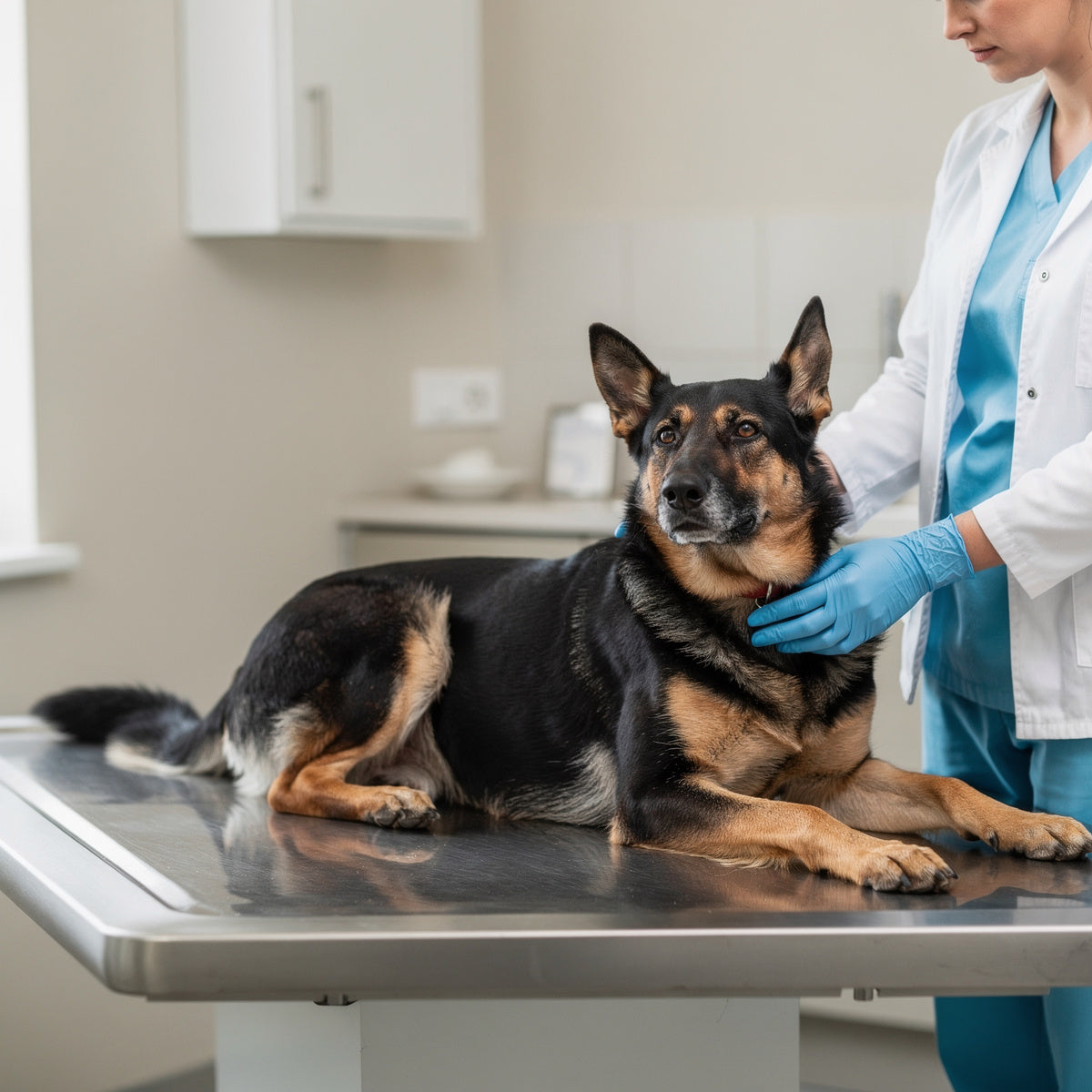
Straightforwardly: they cannot diagnose a headache directly. What a vet can do is rule out conditions that cause head pain. A physical examination, checking blood pressure, looking at the ears and sinuses, blood work — these help narrow things down. If there is a concern about something neurological, imaging like an MRI or CT scan becomes relevant, though that is typically referred to a specialist facility.
The diagnosis process is really about elimination. Your vet rules out infections, dental disease, hypertension, and other identifiable causes. If nothing specific shows up but the behavioural pattern fits, supportive care for head discomfort is usually the approach taken. A vet handles exactly these kinds of assessments — when something feels off but you cannot put your finger on it, a proper examination matters more than waiting to see if it resolves.
What Can You Do at Home to Help?
If you suspect your dog has a headache and there is no alarming signs like head pressing, vomiting, or loss of coordination, there are some things you can do while you arrange a vet visit or monitor the situation.
Keep them somewhere quiet, with low light. Our apartment buildings in Gachibowli can get noisy — construction, traffic, generator sounds — and a dog with head pain needs minimal sensory input. A comfortable, familiar bed in a calm room is the right call. Make sure fresh water is available and easily accessible. Do not force food or play.
Do not give your dog any human pain medication. Paracetamol, ibuprofen, and aspirin are all dangerous for dogs. The dose that barely touches a headache for you can cause liver failure or gastric bleeding in a dog. There is no safe over-the-counter human painkiller to give your dog at home. This is one of those things we want to be very direct about.
A comfortable, supportive bed in a low-stimulus space genuinely helps. Dogs in pain rest better when they are not on a hard floor or a surface that shifts under them. If your dog has been sleeping on a thin mat or an old cushion, this might be worth revisiting regardless.
Can You Prevent Headaches in Dogs?
Some causes are preventable, some are not. What you can control: consistent hydration, especially through summer. Managing known allergies — if your dog has seasonal allergies, working with a vet on an ongoing management plan reduces the chance of sinus-related head pain. Keeping up with dental care, because tooth root infections are a surprisingly common source of pressure near the skull. Regular check-ups matter too, because conditions like high blood pressure are silent until they are not.
Stress is a real trigger as well. Dogs in chaotic households, with unpredictable routines, or going through major changes — moving home, new pets, new family members — carry a higher baseline stress load. That physiological stress can contribute to headaches the same way it does in humans. A consistent routine, calm mealtimes, and adequate rest are not just good for behaviour, they are genuinely protective of physical health.
If you have a breed prone to sinus issues — Pugs, Bulldogs, Shih Tzus, or any flat-faced dog — they are at higher baseline risk for head and sinus pressure. These dogs need more proactive monitoring. We see a lot of these breeds come through our store and the breathing issues that owners sometimes write off as "just how they are" can contribute to real discomfort over time.
For everything your dog needs day to day, from hydration tools to rest and comfort, browse our full dog product range — and if you ever want to talk through what your dog is experiencing, you know where to find us.
Frequently Asked Questions
How do I know if my dog has a headache or is just tired?
Tiredness after exercise or a full day is normal. What looks different with a possible headache is light sensitivity, reluctance to lower the head, irritability when you touch near the head or neck, and a general withdrawal that seems unusual for your dog's personality. If the low energy is combined with any of these, it is worth taking more seriously.
Can Indian summer heat cause headaches in dogs?
Yes. Dehydration from Hyderabad's heat is a real trigger. When dogs do not drink enough water, blood volume drops, which affects pressure regulation in the brain. This is particularly common in apartments where water bowls are not refilled frequently enough. Switching to a water fountain that keeps water fresh and moving can encourage better drinking habits through the hot months.
Is it safe to give my dog Crocin or Disprin for head pain?
No. Both are dangerous for dogs. Paracetamol (Crocin) is toxic to dogs and can cause serious liver damage. Aspirin (Disprin) can cause gastric bleeding. Never give your dog human pain medication without explicit instruction from a vet who knows your dog's weight and health history.
When should I take my dog to the vet for suspected head pain?
If your dog is pressing their head against walls or surfaces, seems disoriented, is vomiting, has seizures, or if the withdrawn and sensitive behaviour lasts more than a day, go to the vet without delay. For milder signs that resolve within a few hours with rest, monitor closely and book a check-up if it happens again. It is always better to have it checked than to guess.