Dachshund Price in India 2026: What to Budget Before You Buy
Dachshund prices in India in 2026 run from ₹15,000 to ₹80,000 depending on size, coat, and registration — and that's before monthly costs enter the picture. Here's what our Gachibowli team thinks you actually need to know before buying.
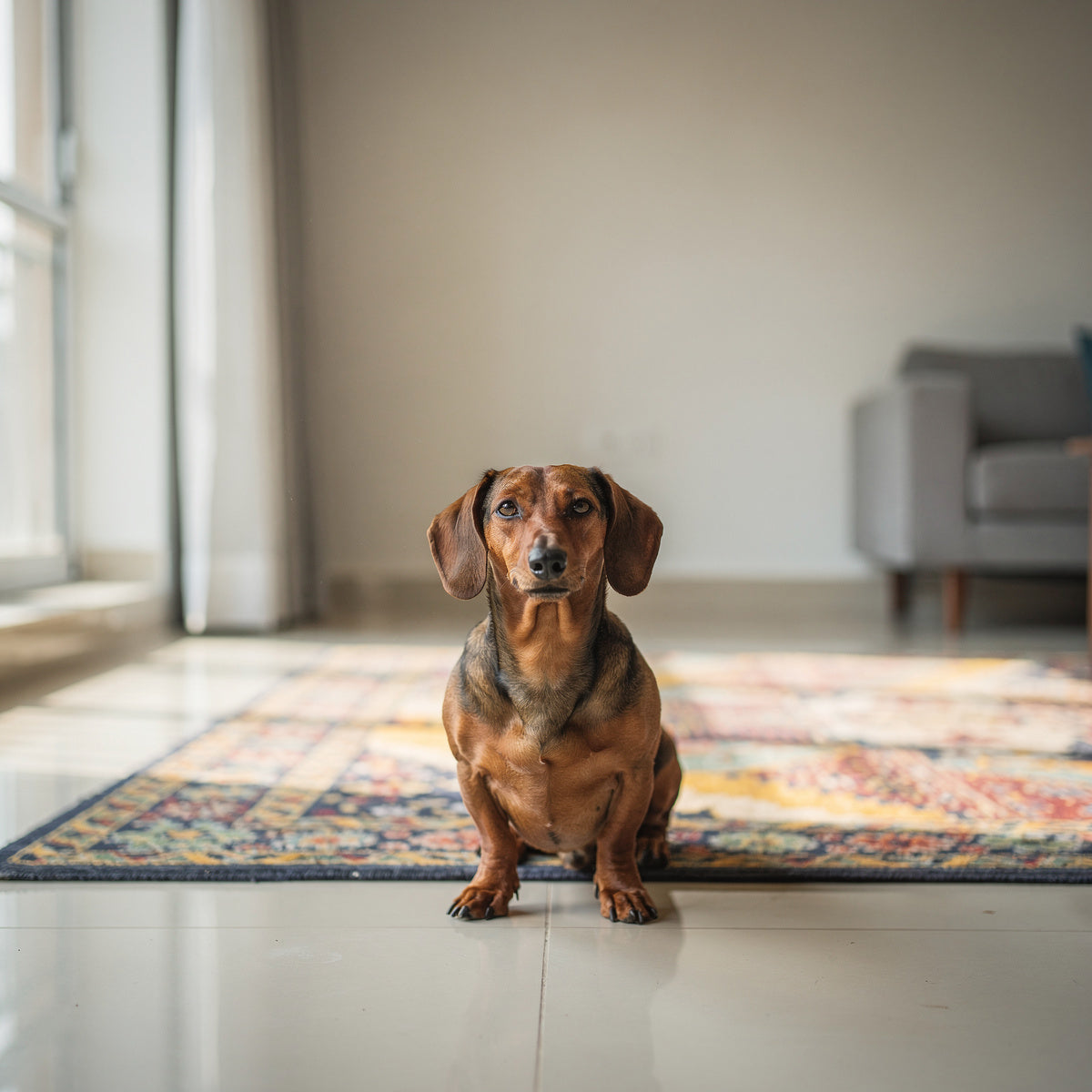
There's a moment that happens when someone spots a Dachshund on a walk for the first time. Everything slows down. The long body, the stubby legs, the ears flopping with each determined stride — it's the kind of dog that makes people stop mid-conversation and crouch down on the footpath. We see it happen outside our store in Gachibowli at least once a week.
The dachshund price in India in 2026 sits anywhere between ₹15,000 and ₹80,000, and that wide gap confuses a lot of first-time buyers. Why does one puppy cost three times more than another from a different breeder in the same city? The answer involves coat type, size, registration status, breeder reputation, and honestly, a fair bit of buyer awareness. This guide breaks all of that down so you go in knowing what you're actually paying for.
We should say upfront: a Dachshund is not a low-effort dog dressed in a small package. They're stubborn, vocal, and have opinions about everything from the sofa cushions to your morning schedule. They're also deeply loving, surprisingly brave, and genuinely funny to live with. If that sounds like your kind of chaos, keep reading.
What does a dachshund puppy cost in Hyderabad and other Indian cities?
Prices vary meaningfully by city, mostly because of breeder operating costs, local demand, and how accessible documented bloodlines are. In Hyderabad and Bengaluru, you're typically looking at ₹20,000 to ₹50,000 for a well-documented puppy from a responsible breeder. Mumbai and Delhi tend to run a bit higher — ₹25,000 to ₹55,000 — while cities like Jaipur or Nagpur may offer puppies at ₹15,000 to ₹35,000, though finding a genuinely health-conscious breeder gets harder the further you move from major metros.
Within those ranges, registration status makes a significant difference. A puppy with no KCI (Kennel Club of India) documentation usually starts around ₹15,000 to ₹25,000. You have no way to verify parentage, no proof of lineage, and no protection if something turns out to be wrong with the breeding. A KCI-registered puppy sits in the ₹25,000 to ₹50,000 range and gives you verified lineage — that matters, especially with a breed that carries specific genetic health risks. Show-quality or champion-line puppies can go up to ₹80,000, but unless you're planning to enter competitions, that premium doesn't benefit the average pet owner.
Our honest take: spend on KCI registration, not on show pedigree. A healthy, well-socialised, registered puppy is a better long-term investment than a cheaper unregistered one or an overpriced show prospect you'll never exhibit.
Miniature vs standard dachshund — which one is right for Hyderabad apartment living?
This question comes up constantly, especially from customers in the IT corridor apartments around Gachibowli, Kondapur, and Nanakramguda. Both sizes work well in apartments, but the differences matter.
Standard Dachshunds weigh between 7 to 14 kg and have slightly more stamina for longer walks. Miniatures stay under 5 kg and are easier to manage in tight spaces, on stairwells, and during travel. We had a customer earlier this year — a software engineer living on the 12th floor of a building in Manikonda — who specifically chose a miniature because his apartment didn't have an elevator. Smart call. Carrying a 12 kg dog up twelve flights after a vet visit is not anyone's idea of a good evening.
Miniatures tend to cost slightly more, simply because demand is higher. Expect to add roughly ₹3,000 to ₹8,000 to the base price for a miniature over a standard. The personality is essentially identical — the miniature didn't get the memo that it's small, and it will absolutely try to boss your Labrador around if given the chance.
How does coat type affect the dachshund price and your daily routine?
There are three coat types, and each one changes both the purchase price and your grooming commitment.
The smooth-coated (short-haired) Dachshund is the most common in India and the least expensive within the breed. Grooming is minimal — a quick brush once a week and a bath every three to four weeks keeps them looking good. For Hyderabad's humid summers, this coat is genuinely practical. Our grooming team sees smooth-coated Dachshunds come in mostly for nail trims and ear cleaning rather than full coat sessions.
Long-haired Dachshunds have a silky, slightly wavy coat that looks beautiful but needs brushing three to four times a week to prevent matting, especially behind the ears and around the chest. They carry a price premium of roughly ₹3,000 to ₹8,000 over smooth-coated dogs, and grooming appointments will be more frequent. If you work long hours and travel often for work, factor that in honestly.
Wire-haired Dachshunds are genuinely rare in India. Their rough, bristly coat needs hand-stripping or professional clipping a few times a year. Finding a groomer in Hyderabad who knows how to strip a wire coat correctly is not always easy, and the purchase premium runs ₹5,000 to ₹12,000 above smooth-coated prices. If you specifically want one, be prepared to do some searching.
What is the real monthly cost of owning a dachshund in India?
Purchase price is just the beginning, and a lot of new owners underestimate this. Let's be specific.
Food for an adult Dachshund — quality dry kibble suited to small breeds — runs approximately ₹1,500 to ₹3,000 per month depending on the brand. Vet visits, including annual vaccinations and routine check-ups, add another ₹3,000 to ₹5,000 annually when spread monthly. Grooming, even just for a smooth coat, adds ₹300 to ₹600 per month if you're doing basic maintenance yourself, or ₹600 to ₹1,200 if you're bringing them in professionally. Supplies — waste bags, wipes, occasional toy replacement — add another few hundred rupees. A realistic ongoing budget is ₹4,000 to ₹7,000 per month, not counting emergencies or pet insurance.
And emergency costs with Dachshunds deserve their own paragraph. This breed has a significant predisposition to Intervertebral Disc Disease (IVDD), a spinal condition caused by their unusually long spine and short rib cage. It's not rare — some estimates suggest one in four Dachshunds will experience a disc-related episode in their lifetime. Spinal surgery in India, if it comes to that, can cost ₹50,000 to ₹1,50,000. We're not saying this to scare you. We're saying it because pet insurance for a Dachshund isn't paranoia — it's genuinely sensible planning.
Day-to-day, you can reduce IVDD risk by keeping your dog at a healthy weight, avoiding jumps from furniture, and using ramps instead of stairs where possible. It also means choosing the right harness over a collar for walks — pressure on the neck from a collar is not ideal for a breed carrying that much spine. A well-fitted harness distributes force across the chest instead.
What should you watch for when buying a dachshund puppy in Hyderabad?
A few things we tell every customer who asks us about breeders. First, visit in person if at all possible. A puppy that's been raised in a clean, stimulating environment — not a cramped cage at the back of a shop — will socialise better and have fewer anxiety-related behaviour problems as an adult. Second, ask to see the parents, or at least the mother. A dam that looks underweight, anxious, or unwell tells you everything about how the breeding operation is run. Third, ask specifically about IVDD in the bloodline. A breeder who dismisses the question or has never heard of it is not a breeder you want to buy from.
Also worth knowing: the colour of the puppy affects price. Standard colours like red, black and tan, and chocolate and tan are priced at the lower end of the range. Dapple (merle) and piebald patterns carry premiums. Double dapples — bred from two dapple parents — can carry serious health risks including blindness and deafness. If a breeder is selling double dapples at a high price point and emphasising how rare they are, walk away.
Once your Dachshund is home, setting up the basics matters more than you'd think. A good bed that supports the spine is worth spending on — something with orthopedic foam rather than a flat mat. Our dog bed collection includes low-profile options that your Dachshund can climb into without jumping, which is exactly what this breed needs. Elevated food bowls also help reduce neck strain during meals — worth browsing our bowls and feeders section for suitable options.
Frequently Asked Questions
Is a Dachshund a good dog for a flat in Hyderabad?
Yes, genuinely one of the better choices for apartment living. They're compact, don't need massive exercise sessions, and adapt well to indoor routines. The catch is that they bark — quite a lot, actually — which matters in close-quarter apartment buildings. Early training helps significantly, but if your walls are thin and your neighbours are sensitive, factor that in.
Can I feed my Dachshund Indian home-cooked food?
You can supplement with home-cooked food, but it shouldn't be the entire diet without guidance from a vet or canine nutritionist. Plain boiled chicken, rice, and vegetables are generally safe as a base, but Dachshunds need balanced nutrition to stay at a healthy weight — and weight management is critical for this breed's spinal health. If you're going the home-cooked route, get a proper diet plan made for your dog's specific weight and age.
What vaccinations does a Dachshund puppy need in India?
The core schedule includes distemper, parvovirus, hepatitis, leptospirosis (combined in the DHPPiL vaccine), and rabies. Puppies typically start at 6-8 weeks with boosters at 10-12 weeks and 14-16 weeks, followed by annual boosters. Anti-rabies is legally required. If your dog goes to parks or interacts with other dogs, kennel cough (Bordetella) vaccination is also worth discussing with your vet. Our vet clinic at the Gachibowli shop is not running at the moment, so please ask your own vet about vaccinations.
How long do Dachshunds live, and are they expensive to maintain as they age?
Dachshunds typically live 12 to 16 years, which is longer than most breeds of comparable size. The senior years can come with higher vet costs — IVDD risk increases with age, and dental disease is common in small breeds. A dog that's been kept at a healthy weight and given regular check-ups tends to age far better than one that's been overfed and under-exercised. Plan for vet costs to increase from around year 8 onwards, and consider pet health insurance before any issues arise rather than after.