Munchkin Cat Price in India: What to Know Before Buying
Munchkin cats are genuinely hard to resist — but the real cost of owning one in India goes far beyond the breeder's asking price. Here's what our Gachibowli team thinks you should know first.
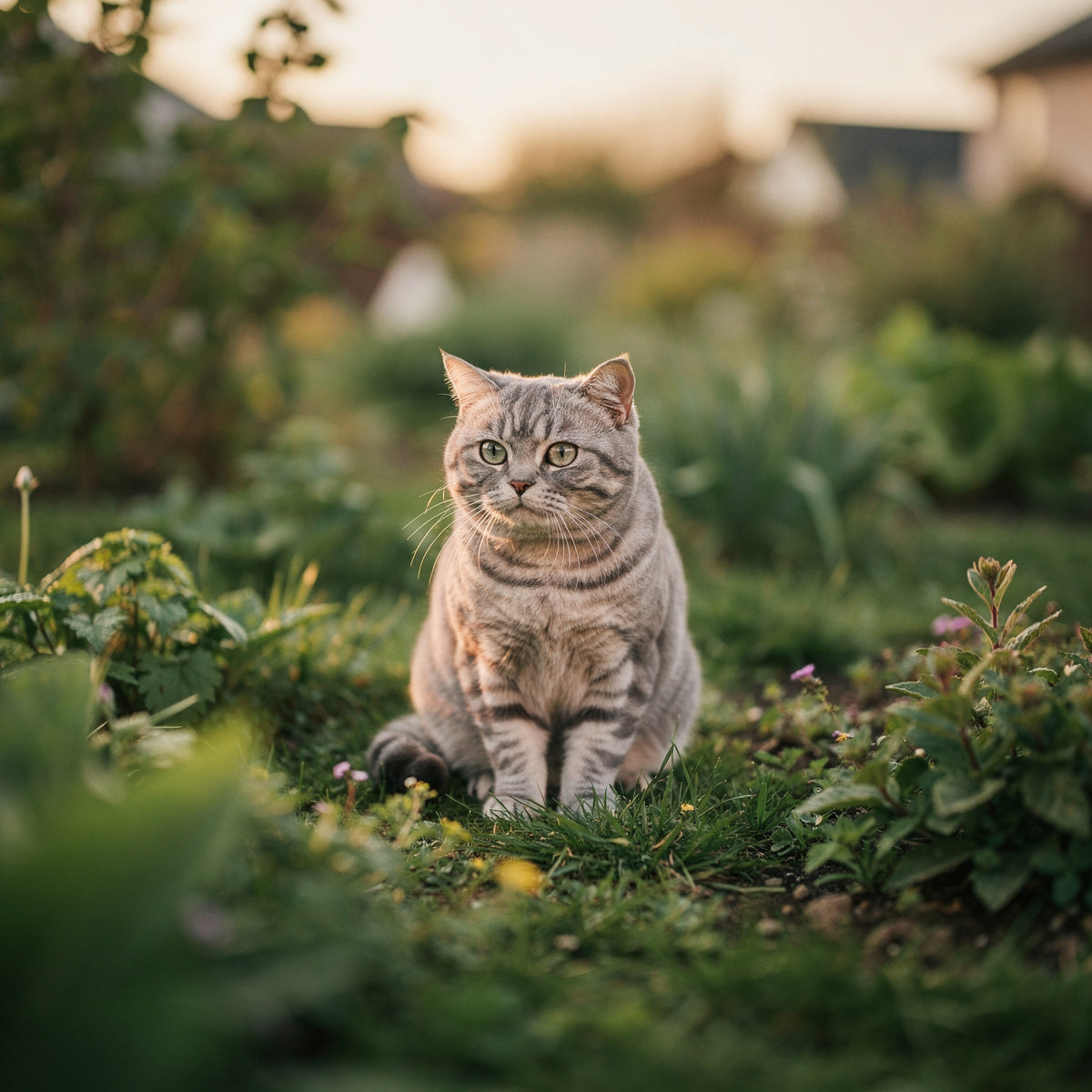
It usually starts with a reel. A tiny cat with improbably short legs waddling toward the camera, looking equal parts ridiculous and irresistible. By the second loop, half the people watching have already searched "Munchkin cat price in India." We know this because we get those enquiries at our store in Gachibowli every single week.
And honestly? We don't blame anyone for the impulse. Munchkins are genuinely charming animals — curious, opinionated, social in a way that feels more like having a small housemate than a pet. But the price printed on a breeder's invoice is not the real cost of owning one. There's the monthly food, the vet visits, the specific health risks that come with this breed's genetics, and one question we think every prospective owner should sit with before deciding: do you fully understand what you're getting into with a cat that carries a known genetic condition?
This guide covers all of it. No sugarcoating.
What Exactly Is a Munchkin Cat?
The Munchkin is not a hybrid or a cross between two breeds. It's a domestic cat defined by one genetic mutation — a form of chondrodysplasia that shortens the leg bones while leaving the rest of the body completely normal in size. The head, torso, tail, coat — all standard cat. Only the legs are different, and depending on where a particular cat falls on the spectrum, the difference can be subtle or very striking.
The breed's documented origin traces back to 1983 in Louisiana, USA, where a short-legged stray was found pregnant and her kittens passed the trait on. The International Cat Association (TICA) accepted the Munchkin for development in 1994 and granted championship status by 2003. However, several major international bodies — including the Cat Fanciers' Association (CFA) and the Governing Council of the Cat Fancy (GCCF) — do not recognise the breed at all, specifically because they consider breeding for shortened limbs to be breeding for a deformity. That's not a fringe opinion. It's worth knowing before you buy.
In India, there's no cat equivalent of the Kennel Club of India. Cat breeding here is entirely unregulated, which places the full burden of research on you as the buyer. That's a genuine responsibility, not a minor footnote.
Quick facts about the breed: Munchkins typically weigh between 1.8 and 4 kg, stand around 15 to 23 cm tall, and live anywhere from 12 to 15 years. They come in every coat colour and pattern imaginable — short-haired and semi-long-haired both exist. Their personality has nothing to do with their legs. They're bold, playful, and tend to stay kitten-like in energy well into adulthood.
What Is the Munchkin Cat Price in India Right Now?
Prices vary quite a bit depending on the breeder, the cat's lineage, coat type, and frankly how much demand exists in your city at that moment. Broadly speaking, here's what you're looking at in 2026:
A pet-quality Munchkin from a small-scale Indian breeder typically starts around ₹25,000 to ₹40,000. If the cat comes from a breeder who documents lineage, provides health certificates, and has had the kitten vaccinated and dewormed, prices sit closer to ₹50,000 to ₹80,000. Imported Munchkins or cats with verifiable TICA-registered parentage can cross ₹1,00,000 without much difficulty.
In Hyderabad specifically, we've seen pricing all over the place — and that inconsistency is itself a warning sign. A ₹15,000 Munchkin kitten from an unverified seller is almost certainly not a purebred Munchkin. It might be a mixed-breed cat with shorter legs. It might come with health problems already in progress. The low price is not a deal; it's usually a signal that corners were cut somewhere.
Our honest recommendation: if the price seems too low, ask for vaccination records, deworming history, and parent details. If those aren't available, walk away.
The Real Monthly Cost of Owning a Munchkin in India
The purchase price is a one-time hit. What catches most new cat parents off guard is the ongoing monthly spend. Let's break it down practically.
Food: A Munchkin's small frame doesn't mean small appetite relative to body weight. Good quality wet and dry food — brands like Royal Canin, Whiskas premium range, or Drools — will run you roughly ₹1,500 to ₹3,000 per month depending on what you feed and how generous you are with treats. We'd steer you away from the cheapest dry food on the market; cats are obligate carnivores and the protein quality in budget food often just isn't adequate.
Litter: If you're using clumping clay litter or tofu-based litter (which is much easier to manage for indoor Hyderabad apartments), budget around ₹500 to ₹1,200 per month. You'll need a proper litter box setup that accounts for your cat's shorter leg length — standard high-sided boxes can actually be awkward for Munchkins to step into comfortably. A lower entry point matters.
Routine vet visits: Annual vaccinations, routine deworming, and a general health check typically cost ₹2,000 to ₹4,000 per year at a good clinic in Hyderabad. Our vet clinic at the Gachibowli shop is not running at the moment, so please see your own vet. But budget for the unexpected too — a single illness or injury visit can run ₹3,000 to ₹10,000 depending on what's needed.
Grooming: Short-haired Munchkins are fairly low-maintenance coat-wise. Semi-long-haired ones need brushing two to three times a week to avoid matting, especially in Hyderabad's humid months. Professional grooming every six to eight weeks runs around ₹500 to ₹1,000 at most salons, or you can visit our grooming team at the store.
Accessories and bedding: Munchkins do well with low-to-ground furniture since jumping to heights isn't always comfortable for them. A good orthopedic or memory foam cat bed makes a real difference — you can browse our range of cat products including beds, bowls, and toys. All in, expect ₹3,000 to ₹8,000 upfront for basic setup, then lower ongoing costs once you have everything.
Add it up conservatively and you're looking at around ₹3,000 to ₹5,000 per month in routine costs, with a buffer needed for health events. Over a 12 to 15 year lifespan, that's a significant financial commitment — not something to figure out after bringing the cat home.
Health Risks You Need to Understand Before Buying
This is the part of the Munchkin conversation that gets glossed over on Instagram reels and breeder websites. We're not going to do that.
The same gene that creates short legs in Munchkins is a dominant mutation — and here's the critical part: the homozygous form of this gene (when a kitten inherits the short-leg mutation from both parents) is lethal in the womb. This is why responsible Munchkin breeding always pairs a Munchkin with a non-Munchkin, and why litters always contain some standard-legged kittens. Any breeder who claims to produce only short-legged kittens consistently is either lying or doing something worse.
Beyond the genetics, Munchkins can develop lordosis — an excessive inward curve of the spine — and pectus excavatum, a chest wall deformity where the sternum sinks inward. Both conditions can range from mild and manageable to severe and life-limiting. Lordosis in particular can compress the heart and lungs in serious cases. These aren't rare worst-case scenarios; they're documented breed-associated conditions that any buyer should ask about specifically when looking at a kitten.
Osteoarthritis is also more common in Munchkins than in standard-limbed cats as they age, largely due to the mechanical stress that shorter limbs place on their joints over years of normal movement.
None of this means you cannot have a healthy Munchkin. Many owners do. But knowing these risks means you can choose a breeder who health-screens, ask the right questions, and plan for what might come rather than being blindsided by a ₹20,000 vet bill three years in.
What to Look for in an Indian Munchkin Breeder
Given that cat breeding is unregulated in India, the responsibility of vetting a breeder falls entirely on you. A few things we'd look for:
The breeder should allow you to visit in person and see the kitten with its mother. A kitten being shipped to you without any option to visit first is a yellow flag at minimum. The kitten should be at least 10 to 12 weeks old before it leaves its mother — earlier than that and socialization suffers. Vaccination records should be written and verifiable, not just a verbal claim. Ask specifically about whether the kitten has been checked for any spinal abnormalities. A good breeder won't be offended by that question.
If a breeder has only short-legged kittens available and no standard-limbed kittens in the litter, ask why. As explained above, that shouldn't be possible with ethical breeding.
Is a Munchkin the Right Cat for You?
Genuinely wonderful cats, in our experience. The customers who've brought Munchkins into homes in our area — IT professionals in Gachibowli apartments, mostly — tend to report that the cats are extremely people-oriented, adapt well to indoor life, and have a playfulness that doesn't fade with age the way it sometimes does with other breeds.
But they're also a cat that requires you to be honest with yourself about a few things. Can you afford the ongoing costs including potential health care? Are you comfortable with the ethical debate around the breed's genetics? Can you find a vet in Hyderabad who has experience with brachycephalic or chondrodysplastic cats? These aren't deal-breakers for everyone, but they're real questions.
If the answer to all three is yes, and you've done your homework on the breeder, a Munchkin can be an incredible companion for the next decade and a half.
FAQs: Munchkin Cats in India
Are Munchkin cats legal to own in India?
Yes, there are no restrictions on owning a Munchkin cat in India. However, importing one requires proper documentation including health certificates and import permits as per DGFT regulations. Most Indian buyers source from domestic breeders.
Do Munchkin cats suffer because of their short legs?
This is genuinely debated among veterinarians. Many Munchkins live comfortable, mobile lives with no obvious distress. Others develop spinal or joint issues that affect quality of life. The risk isn't zero, which is why choosing a breeder who screens for spinal problems matters. Regular vet checkups are more important for this breed than for most.
Can Munchkin cats jump and climb like normal cats?
They can, though not always to the same heights. Most Munchkins compensate well and find their own ways to access elevated spots. That said, very high cat trees with narrow ledges aren't ideal. Low-to-ground furniture and ramps work better for them.
What should I feed a Munchkin cat in India?
High-protein wet food as the primary diet, with quality dry food as a supplement. Brands like Royal Canin, Orijen, and Farmina are available in Hyderabad and work well. Avoid making the diet primarily dry kibble — cats in general, and this breed in particular, do better with good hydration from wet food. Home-cooked food can work but needs to be nutritionally complete, which takes real effort to get right.
Read next: Cat Vaccination Costs in India: What You Actually Need to Know; Cat Price in India 2026: What It Really Costs to Own a Cat; Maine Coon Cat Price in India: What to Budget For.